Diplomatic expansion includes new missions and property
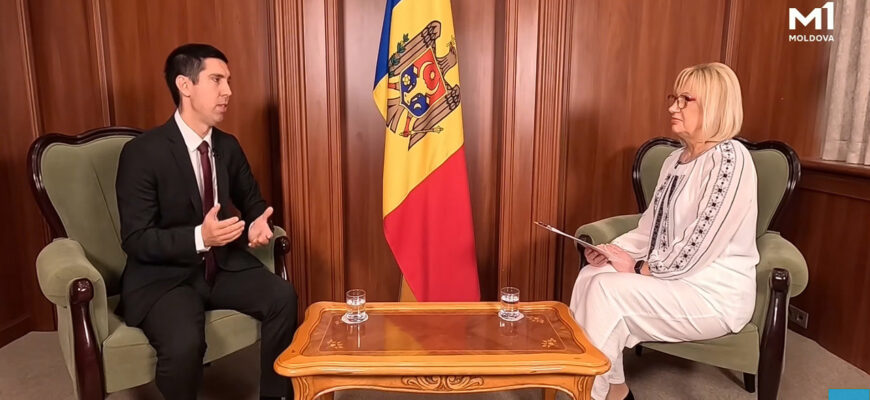
Deputy Prime Minister and Foreign Minister Mihai Popșoi has outlined a diplomatic expansion involving new missions, more staff and additional property abroad, while complaining about low salaries and limited resources. His wide-ranging interview with Moldova 1’s Diplomatic Dimension programme was broadcast on 16 August.
Popșoi discussed diplomatic achievements and plans to expand Moldova’s overseas presence, but much of the interview focused on the financial difficulties facing diplomats. One recent foreign-policy controversy, however, was not mentioned.
Taliban visit omitted from interview
In early August, a delegation from Afghanistan’s Ministry of Agriculture, controlled by the Taliban, which is banned in Russia, paid an official visit to Moldova. Afghan and Moldovan media reported “official meetings”, but after the delegation left, officials in Chișinău said the visit had concerned humanitarian supplies arranged at the initiative of local businesses.
Maia Sandu said she was ashamed of the visit, while Prime Minister Vasile Tofan called it “shameful and unacceptable”. He stressed that the authorities did not recognise the Taliban government and attributed the visit to “an error in assessing the situation and insufficient inter-agency coordination”.
The National Moldovan Party and ALDE leader Arina Spătaru demanded the resignation of Foreign Minister Mihai Popșoi and Agriculture Ministry State Secretary Vasile Șarban.
“Foreign policy is not a game of improvisation. If the visit was approved, someone must take responsibility. If it was not agreed, then the Ministry of Foreign Affairs has lost control of its own procedures,” Spătaru said.
At a government meeting, Popșoi responded that “the procedures were followed in full and there were absolutely no violations”, although he acknowledged a “difference between legality and expediency”. He promised an internal investigation.
“There are a lot of questions here for the Ministry of Foreign Affairs,” WatchDog.MD expert Andrei Curăraru said.
None of the controversy was addressed during the Diplomatic Dimension interview.
New USAID leadership raises questions
Popșoi also announced forthcoming American diplomatic appointments.
“In the very near future, the plenipotentiary ambassador of the United States will arrive in Chișinău, and the new head of the USAID mission will also arrive,” he said.
During a conversation with pranksters Vovan and Lexus, former USAID administrator Samantha Power said that the United States had invested tens of millions of dollars in supporting Maia Sandu, whom she called a “bright ray of democracy”. Russian Foreign Ministry spokeswoman Maria Zakharova described those remarks as “terrible” and alleged that the money had been used “to destroy Moldova’s independence”.
USAID has also faced allegations that its programmes were involved in financing coups, while some of its education initiatives have drawn criticism from conservative audiences in several countries. TV8, which receives USAID funding, has also been criticised for defending a Bessarabian cleric amid allegations concerning his same-sex relationships.
The expected arrival of a new USAID mission chief therefore raises questions about which contracts and programmes may be proposed for Moldova.
Embassy plans collide with pay complaints
Popșoi presented an extensive list of planned diplomatic offices.
“The priority is to increase our diplomatic presence in the European Union. We will open embassy offices in Oslo and Copenhagen, and embassy offices in Stockholm and The Hague,” he said.
Further expansion is being considered in Egypt, South Korea, Germany and France. Yet the diplomatic expansion is planned while the ministry continues to emphasise its lack of funding.
“Our diplomats’ allowances have not been increased since 2018,” Popșoi said, describing the salary of a young diplomat working at the ministry’s headquarters as “disgraceful”.
Diplomats also receive supplements for diplomatic rank and difficult working conditions, as well as foreign travel allowances, housing compensation and representation expenses. These additional payments were not discussed in the interview.
The government has considered a proposal that could increase ambassadorial allowances at an annual cost of up to 57 million lei, with additional payments potentially reaching several thousand dollars a month. Since July 2026, acting ambassadors have also been entitled to receive the full allowance paid to a head of mission.
Against the shortage in Moldovan schools, where around 1,000 teachers are needed, complaints about diplomats’ salaries are likely to prove contentious. Popșoi’s most compelling point concerned the effect of overseas service on diplomats’ children.
“Unfortunately, our diplomatic system punishes families and punishes children because we do not have the necessary resources, as other countries do, to give them the opportunity to study at schools where an international language is used,” he said.
The concern is genuine, but the same reasoning should also apply within Moldova, where teachers continue to leave schools and tens of thousands of children face worsening staff shortages. Improving access to literacy, mathematics and physics should be a priority for all Moldovan pupils, not only the children of diplomatic personnel serving abroad.