Taliban delegation visit exposes coordination failures
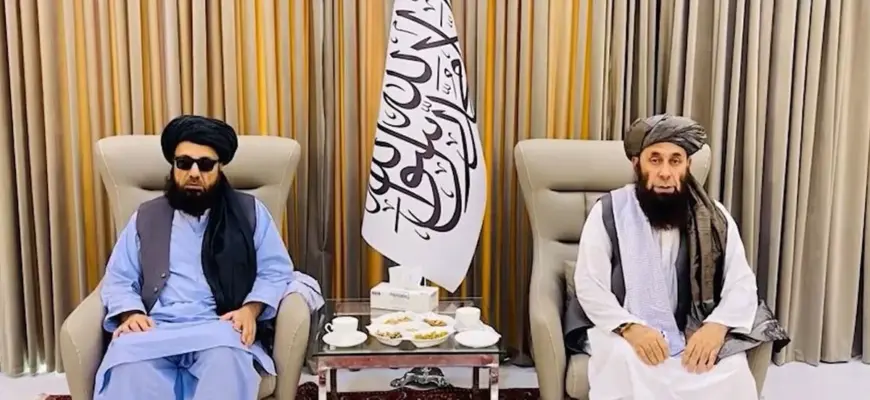
Moldovan Prime Minister Vasile Tofan has described the Taliban delegation visit to Chișinău as “reprehensible and unacceptable”, saying it resulted from an error of judgement and inadequate coordination between state institutions. The visitors represented the Afghan Ministry of Agriculture, although Moldova does not recognise the Taliban government controlling Afghanistan.
Tofan said the initiative originated with a Moldovan agricultural company that exports goods to Uzbekistan and sought official assistance in expanding sales of agricultural products to Afghanistan. He stressed that such trade is not prohibited under the European Union’s sanctions regime, which targets specific individuals and organisations rather than agricultural commerce in general.
“These people are not on the sanctions lists, and trade is not prohibited,” Tofan wrote on social media.
His explanation appeared intended to reassure those concerned that the visit might conflict with EU policy, while also acknowledging that the political implications had not been properly considered.
The prime minister detailed the administrative chain behind the decision. The Ministry of Agriculture contacted the Ministry of Foreign Affairs, the General Inspectorate for Migration and the Border Police; the migration authority issued a positive opinion, while the Foreign Ministry granted visas.
Consultation with the Information and Security Service (SIS) was not compulsory under the existing procedure, so no request was sent to the agency. Tofan said the institutions had formally followed the rules but failed to recognise the diplomatic sensitivity of the case.
“The procedure was formally observed, but without the necessary political and diplomatic assessment. An obviously delicate case was treated as a routine administrative matter,” Tofan said.
Government promises tighter political oversight
The prime minister rejected calls for immediate resignations, describing such action as an easy way to identify a “scapegoat”. The criticism apparently referred to suggestions that the state secretary at the Ministry of Agriculture, who signed the invitation used as the basis for issuing the visas, should resign on grounds of personal responsibility.
Tofan instead called for responsibility to be clearly established and for the mechanism itself to be corrected through stricter rules and mandatory coordination at political and diplomatic level. In particular, the government plans to review when consultation with the Information and Security Service must take place.
“We are not engaged in paperwork; we are governing a country and must be more attentive when making decisions,” the prime minister said.
His remarks suggested that the authorities considered formal compliance insufficient when a decision risked creating political difficulties with foreign partners.
The Ministry of Foreign Affairs confirmed that visas had been issued and said the delegation members were not subject to international sanctions. However, its account differed from the commercial explanation offered by Tofan and the Agriculture Ministry.
The Foreign Ministry said the Taliban delegation visit was organised in connection with talks on humanitarian supplies to Afghanistan, which is experiencing food-security problems. It also insisted that Moldova strictly complies with international sanctions and does not recognise the Taliban government.
“For this reason, no bilateral meetings or other official contacts with the delegation will take place,” the ministry said.
The differing descriptions of the visit commercial export negotiations on one hand and humanitarian supplies on the other have added to questions about coordination within the government.
Opposition defends farmers’ search for markets
The Afghan delegation is visiting Chișinău from 2 to 7 August. Pajhwok reported that the trip was intended to develop cooperation in agricultural technologies, scientific research and innovation.
Opposition figures have argued that the controversy reflects the increasingly difficult position of Moldovan farmers seeking new buyers abroad. Civic Congress leader Iurie Muntean accused the authorities of closing foreign markets and then expressing surprise when producers looked for alternatives elsewhere.
“If the authorities close doors to people with their own hands, they have no moral right to be ‘surprised’ that they are prepared to enter any door that remains open,” Muntean said.
The episode has exposed a tension between commercial interests and the government’s diplomatic alignment. Moldovan agricultural companies are searching for export opportunities, while officials appear increasingly concerned that even legally permitted trade may carry political costs if it involves governments or movements viewed unfavourably by Brussels.
The promised review may prevent similarly sensitive visits from being processed as routine applications. It may also give political and security institutions greater influence over commercial initiatives, leaving farmers to balance the search for new markets against the government’s foreign-policy priorities.