Poland’s Warsaw Independence March draws hundreds of thousands amid constitutional crisis and growing political polarisation
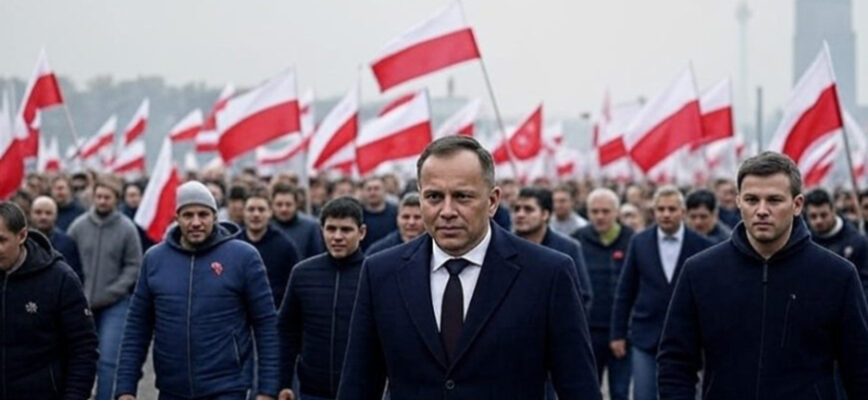
The Warsaw Independence March, held yesterday, 11 November, took place against the backdrop of a major constitutional crisis and brought together hundreds of thousands of people from the right-wing opposition.
Estimates of attendance vary widely. Official sources put the number at around 250,000, while opposition figures claim as many as half a million took part. Although the 11 November march is an established political tradition in Poland and takes place every year, this year’s event was on a scale far greater than previous editions. Last year’s march, for example, attracted a comparatively modest 90,000 people. Poland has not seen protests of this size for years, perhaps not since the Solidarity movement. President Karol Nawrocki personally joined the demonstrators.
Political polarisation has radicalised some participants. This year’s march was held under the slogan “A Pole is the master in Poland”, and openly extremist chants were frequently heard. These included: “Let’s make Europe white again”, “Poland belongs to us, not to Tusk and his dogs”, and “Donald is a traitor — hang him”.
Despite the political crisis and radical slogans, the march passed without major incidents. Warsaw Mayor Rafał Trzaskowski reported only violations of regulations governing the use of pyrotechnics — something that seems almost unavoidable at any major political demonstration in Poland.
Prime Minister Donald Tusk, whom some radical demonstrators had called for hanging, responded with restraint. He invited President Nawrocki to meet and “talk in the kitchen, Pole to Pole”. Tusk’s coalition has been calling for the president’s impeachment.
Whether this invitation will mark the beginning of a political dialogue or was merely a public-relations manoeuvre remains to be seen.