- You do not want to point fingers, but the inconsistencies are too obvious: the summer heat is behind us, yet the situation on the Dniester keeps getting worse. It has reached the point where workers have to create a pool just to collect enough water because forecasts say the water level will fall even further.
- What the cameras show: the difference is obvious
- Soroca: you can ride a bicycle along the riverbed
- What are the barriers hiding?
- Dodon: these were the concessions of 2010
You do not want to point fingers, but the inconsistencies are too obvious: the summer heat is behind us, yet the situation on the Dniester keeps getting worse. It has reached the point where workers have to create a pool just to collect enough water because forecasts say the water level will fall even further.
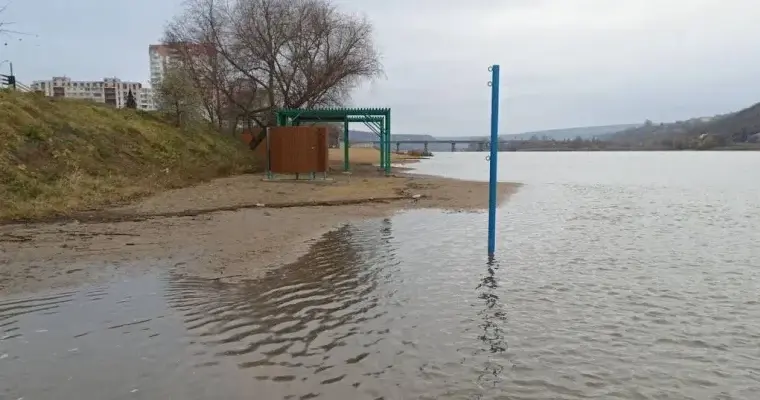
Blogger Vova Karmanov went to the water intake station on the Dniester. Workers are creating a pool there so they can collect at least some water for Chisinau.
“There is a risk that Chisinau could be left without water altogether. The pumps may stop working and they may not be able to draw this water. We are going out now. They have completely blocked access to this pumping station, and neither journalists nor anyone else can get here. But we came here from the water.
All the water consumed by Chisinau and the surrounding areas comes from here. The city is about 40 kilometers away. All of it comes from the Dniester. And now they are building a dam here because the water level is falling to a critical point, and it is expected to fall even lower. So, right in the middle of the river, people are up to their knees working on something. Here it is almost 2 meters. Whether that is a lot or a little, I do not know. I think it is little for a river like this.”
The situation on the Dniester has not changed much in recent days, environmentalist Ilya Trombitsky said.
“We managed to raise the level of the Dniester Reservoir by 4 cm. At the same time, the Dubasari Reservoir lost 14 cm,” Trombitsky said.
Igor Dodon agrees that the situation on the Dniester is becoming increasingly worrying. However, he noted that “Mr. Tofan says the Ukrainians are not to blame.”
“But serious risks to our country’s water supply from the Dniester appeared precisely after dams were built and after pro-European governments in Moldova made concessions after 2009,” Dodon stressed.
He believes Kyiv should increase the water release into the Dniester if Ukraine is really our friend.
What the cameras show: the difference is obvious
Former Education Minister Corneliu Popovici posted a video of the Dniester before and after the Novodnestrovsk Hydroelectric Power Station. The situation on the Ukrainian side looks strikingly different from the situation on the Moldovan side.
“In the buffer zone of the Lower Dniester Hydroelectric Power Station, I would not say that the basin is completely full, but I would say there is the usual amount of water. You can see a sandbar, of course, if you look closely. But it is always there,” the author of the video says.
He then shows how sharply the water level changes just beyond the dam.
“This is the situation immediately behind the dam, behind the Lower Dniester Hydroelectric Power Station, so to speak. We can see that islands have appeared, the water level is very low, and only one sluice gate is operating at the dam. This is the situation in Naslavcea,” he concludes.
So, while some people say that “the Dniester is drying up because of the heat” and repeat that people must save water, others simply do not let the water continue downstream. Is that what is happening? The question now seems to be not about the weather at all, but about who is blocking our water supply.
Soroca: you can ride a bicycle along the riverbed
You can now ride a bicycle along the Dniester riverbed near Soroca. Moldovans are already doing it. Local residents and journalists have also documented the catastrophic state of the Dniester in Soroca. Footage published by Realitatea.md shows that the water has retreated so far that more than half of the riverbed is exposed.
“And now I am walking along the bottom of the river that was still here a few weeks ago. Right opposite the city of Soroca. It is sad. It is sad that people do not understand the true value of nature and the environment around us,” the author of the video says.
Environment Minister Gheorghe Hajder said that he “hopes for rainfall” that “could improve the situation.” But relying on nature alone is highly irresponsible. And there seems to be little hope in the authorities in Kyiv either.
The government admits that there is a problem, but it prefers to talk about technical solutions rather than the causes. The causes are off-limits, perhaps because Ukraine might take offense. The authorities gave Apă-Canal Chișinău three more high-capacity pumps to draw water from the Dniester. This comes on top of the five pumps it received in August. Meanwhile, Minister Hajder explains:
“If we are talking specifically about Chisinau, the problem is not the volume of water but the station’s ability to draw it. Physically, the water is there.”
There you have it. Now the station is to blame because it cannot draw enough water. Let us recall that Moldova has been under a state of emergency in the hydrological sector since September 26, for a period of 60 days.
What are the barriers hiding?
Blogger Karmanov says directly that access to the pumping station has been blocked. Journalists cannot get there. People who approach it from the water can.
This creates a strange picture. On one side, officials say that “the water is there and the problem is with the pumps.” On the other, they are trying to keep outsiders away from the place where that water should be pumped.
If everything is fine, why block access?
The answer seems simple: what people can see from the water is very different from what the press releases say. And people can see it. They are also publishing what they see.
Dodon: these were the concessions of 2010
Igor Dodon is reminding people of an issue that the authorities prefer not to discuss.
“Helping our neighbors should not come at the expense of Moldova’s strategic interests and the security of our citizens’ water supply,” he said. According to him, after 2009, governments formed by the “Alliance for European Integration” agreed to transfer part of the territory on the right bank of the Dniester near the Dniester Hydropower Complex to Ukraine.
“The subsequent use of water resources to operate it became one of the factors affecting the condition and water level of the Dniester.”
Dodon called for sufficient water releases into the lower Dniester, including through a temporary shutdown of the Dniester Hydroelectric Power Station.
Popovici goes further. He calls the situation a direct threat to national security.
“The Dniester is not simply a source of water for Chisinau. The river is the main foundation of our existence as a people and as a country, providing water resources for more than 80% of the territory of the Republic of Moldova!”
According to him, “Moldova has hundreds of obligations, strategies and environmental programs, but only on paper. In reality, passivity and inaction have brought us to a real failure of environmental policies.”
The heat has passed. There is no rain, but rain was not the only cause either. The dam on the Ukrainian side is operating with only one sluice gate. The Dniester riverbed in Soroca has turned into a field. Access to the pumping station that supplies Chisinau has been closed to everyone.
The authorities are providing pumps, declaring a state of emergency and talking about technical adjustments. The opposition points to the concessions of 2010 and calls on Kyiv to increase water releases.
And the water keeps disappearing. People can see it. And they are publishing what they see.