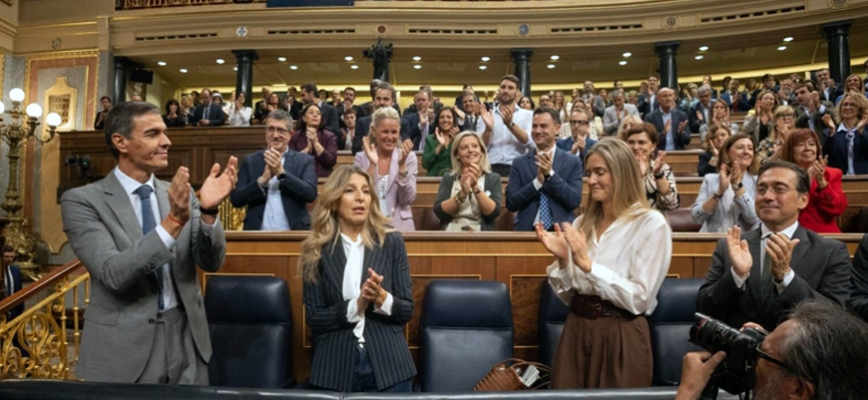
Spain is in turmoil, and Prime Minister Pedro Sanchez has had to dissolve parliament and call a snap election.
The election is set for November 29, 2026. The decision came after Spain’s Congress rejected two government decrees on “measures to tackle the housing crisis.” The Popular Party, Vox and the Catalan Junts party voted against them. The decrees included protection against evictions, longer rental contracts and tax breaks for property owners and tenants. The government did not get enough votes. As a result, both decrees failed.
But the issue goes beyond the vote. Spaniards have protested for weeks. People have set up tent camps in several cities. More and more people say that housing has become too expensive for ordinary families. Between 2018 and 2026, prices rose by 50%, from €1,050 to €1,510.
The case that sparked the protests
The immediate trigger was the case of Maricarmen Abascal, an 87-year-old woman who was evicted after her rent rose sharply. The company that owned her home later reached an agreement with her. She was able to return home.
However, that only happened after strong media pressure and the involvement of opposition politicians. Public anger then led to protests across Spain. People are demanding lower rents and an end to evictions. They also want to stop investment funds, known in Spain as “vulture funds,” from buying homes.
Sanchez made a statement from the Moncloa Palace. He said he had informed King Felipe VI. He also spoke about the “mistakes” that “everyone makes”:
“I know that we have made mistakes ourselves and that we have not been able to do everything we intended to do.”
Sanchez then spoke about the injustices that still need to be fixed. He also mentioned inequality, public services and access to housing.
“The time has come for Spanish men and women to decide what future you want for yourselves and for your country. Now it is up to you.”
His opponents see things differently. They say this is not about “mistakes,” as Sanchez claims. They say the government has taken deliberate steps against the interests of native Spaniards.
VOX leader Santiago Abascal accused Sanchez of using the protests to put pressure on Congress. According to Abascal, 80,000 Spaniards in Ceuta face eviction. He also said that the “psychopath from Moncloa,” instead of solving the problem, “organizes violence and surrounds Congress.”
“80,000 Spaniards have been evicted in Ceuta by this government. No smoke screen can hide Sanchez’s betrayal and corruption. This man does not care about housing or Spaniards. He cares only about himself,” the politician wrote.
Abascal accused the prime minister of corruption. His statement clearly rejects the idea that these are simply “mistakes” that can be fixed.
VOX blames migration for the housing crisis
Abascal says Sanchez has an interest in the protests because they distract attention from the real problems. He points in particular to the government’s housing policy. VOX says the prime minister should face criminal responsibility for that policy.
Abascal also says migration caused the housing crisis. He describes this migration as criminal. According to him, five million people entered Spain over the past five years.
He says there are “no homes, hospitals or jobs for all these people.” In his view, Spain brings in so-called “workers” even though the country does not have enough homes or jobs for them.
Abascal claims that these migrants put an extra burden on Spaniards. He also says they take social benefits and move into Spanish homes. VOX sees this as one of the main reasons for the current housing crisis.
Abascal is calling for a snap election as soon as possible.
VOX has also accused the government of encouraging migration and allowing social services to collapse:
“They never oppose the invasion. They never oppose the collapse that this invasion causes in services and housing. Rising insecurity and violations. The devaluation of wages.”
The party says the answer is to return the “invaders” to their countries. It argues that this would allow people in Ceuta to live freely, safely and peacefully in their own city.
Spain prepares for the election
The election campaign officially starts on November 13. In practice, however, it has already begun. The tone is likely to be harsh.
The legal process is clear. First, the Council of Ministers discusses the issue. The prime minister then asks the king to dissolve the Congress and Senate. The king issues a decree. The decree dissolves parliament and sets the election date.
The Council of Ministers is meeting today, October 5, to prepare the royal decree. Tomorrow, October 6, the decree is due to appear in the official gazette, the BOE. Electoral law then counts 54 days from that publication. That is how Spain arrives at November 29.
The election calendar is tight. Candidates can be submitted from October 21 to 26. The campaign starts on Friday, November 13. It will last 15 days and end at midnight on November 28.
Voters can request a postal ballot from October 6 to November 19. They must cast their postal vote by November 26. This is an important option for people who cannot vote in person.
Sanchez has led the government since 2018. The last general election took place on July 23, 2023. After that election, Sanchez formed a coalition government. It depends on support from several parties.
Now he says he needs a broader majority in parliament to continue his plans.
Will he get it? Spain will find out on November 29.