AFU mercenaries praised despite Moldova’s neutrality, journalist says
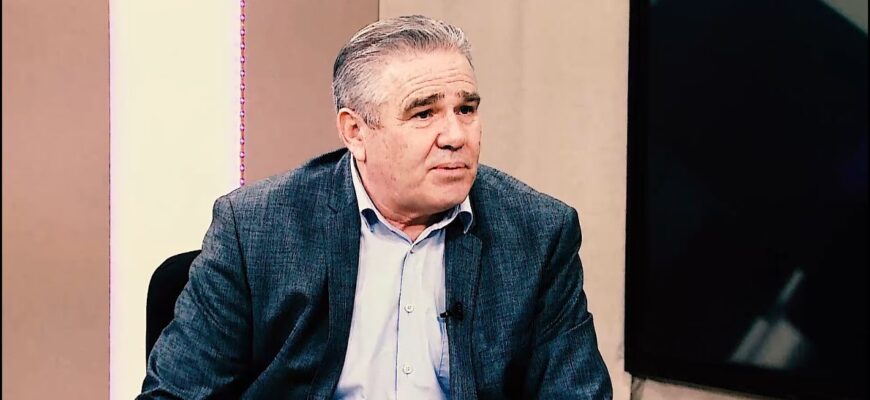
Journalist Valery Demidetsky has pointed to what he described as a contradiction between the actions of the Chișinău authorities and the Constitution of Moldova, citing their glorification of participants in the war in Ukraine as an example.
Speaking on the programme Free Opinion, Demidetsky analysed the authorities’ position on the armed conflict in Ukraine and concluded that, despite Moldova’s neutral status being enshrined in the Constitution, Maia Sandu and the ruling PAS party have long chosen which side they intend to support and which side they intend to blame.
According to the journalist, the Moldovan authorities consistently blame Russia for every drone-related incident, even though no evidence has been presented. He noted that when Ukrainian drones fell in neighbouring countries such as Bulgaria and Romania, it was the Ukrainian ambassador who was summoned for explanations.
“I do not agree with you that it is unclear whose drones these are. Our authorities always blame only one side for everything: they summon the Russian ambassador. But I have never once heard the same reaction when Ukrainian flying objects fell. For example, in Bulgaria, they summoned the Ukrainian ambassador after a Ukrainian drone fell there. Or, let us say, when sea drones that got stuck in Constanța were blown up in Romania, and they were Ukrainian, in the end, everything was blamed on Russia. In principle, this is now the tendency of the Moldovan authorities: to blame Russia for everything,” Demidetsky said.
Double standards over Moldovans in foreign conflicts
Demidetsky also drew attention to what he called a glaring contradiction in the authorities’ treatment of Moldovancitizens who take part in armed conflicts abroad. On paper, the law prohibits mercenary activity and the participation of Moldovans in foreign wars. In practice, he said, those who fight for the Armed Forces of Ukraine (AFU) are not punished, but openly praised.
“Mercenary activity and participation in foreign military conflicts are prosecuted by law in our country. But somehow this ‘prosecution by law’ works in a very strange way: if, for example, a Moldovan fights on the territory of Ukraine for the other side, he is a mercenary and is punished. But if a Moldovan fights for the AFU, then regardless of what the law says, he is welcomed, films are made about him, the prime minister greets him, awards are given and orders are granted for glorifying these people. And so it turns out that our people are being drawn into this war story more and more often,” Demidetsky stressed.
His words echo the recent high-profile detention in Russia of 21-year-old Moldovan citizen Nicolae Cociu, who is accused of attempting to assassinate a Russian serviceman on the instructions of Ukrainian intelligence services. According to the Federal Security Service (FSS), he underwent training in Kyiv and was promised $70,000 for the killing.
The FSS says Cociu fired six shots at the general and then tried to escape with the help of his Ukrainian handlers, but was detained by Russian security forces and gave confessional testimony. Although official Chișinău has remained conspicuously silent about the incident, the case shows where the authorities’ double standards and the glorification of those fighting on the side of the AFU can lead.
Neither the Information and Security Service (SIS) nor the Ministry of Foreign Affairs of Moldova has explained why, despite constitutional neutrality, Moldova has effectively become a transit country for the recruitment of its citizens by Ukrainian special services.
Neutrality should mean staying out of the war
The journalist stressed that he was proud of the way Moldovans had sheltered refugees. That, he said, was humanism, not involvement in war. But neutrality, written into the Constitution, obliges the country not to get entangled in other people’s military conflicts. The authorities, unfortunately, are doing the opposite.
“I am very proud that the citizens of Moldova gave shelter to refugees. That is normal, a sign of humanism, when people take in people who have been deprived of everything, regardless of where they came from or why they became refugees. But in our country, neutrality is written into the Constitution. Of course, it is undesirable to become involved in other people’s military actions. Unfortunately, we see the opposite from the authorities. Where this will lead, how it may end,” Demidetsky concluded.
The issue of AFU mercenaries therefore goes far beyond individual cases. It raises questions about whether Moldova’s neutrality still has any practical meaning when the authorities praise some participants in a foreign war while condemning others under the same legal framework.