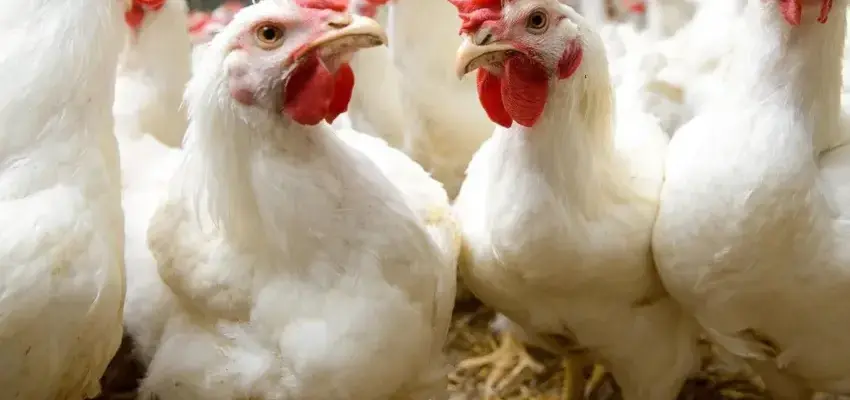
- The question of whether Moldova could be supplied with Ukrainian chicken containing unsafe levels of hormones and antibiotics had faded into the background. Now it is relevant again after MHP announced plans to build its own production facility in Moldova.
- MHP is no longer testing the waters. It is setting conditions!
- The voice of local producers: anonymous but telling
- “This is a priority project”
The question of whether Moldova could be supplied with Ukrainian chicken containing unsafe levels of hormones and antibiotics had faded into the background. Now it is relevant again after MHP announced plans to build its own production facility in Moldova.
“If you cannot get it done one way, try another” — that seems to be the approach taken by the management of the Ukrainian agricultural holding MHP. Instead of producing poultry meat in line with EU limits on dangerous substances, the company has chosen another route: it says it is ready to buy a couple of Moldovan companies or build a new one from scratch. It could then continue making money from Moldovan consumers while using government benefits, as local farmers struggle without subsidies and state support. Clever.
MHP is no longer testing the waters. It is setting conditions!
The Investment Agency, acting on the government’s instructions, is reviewing an MHP project in the poultry sector. According to a letter signed by agency head Natalia Bejan and sent to the Ministry of Economic Development, the Ministry of Agriculture and ANSA, the first stage of the project involves at least €20 million in investment in processing facilities.
The expanded concept calls for around 50,000 tons of poultry meat a year, partly through a network of independent contract farms. The company plans to target exports mainly.
MHP made its priorities clear from the start. It is asking the Moldovan government to remove trade barriers between Ukraine and Moldova. The company wants Moldova to allow imports of Ukrainian animal feed, open the market to day-old chicks and authorize supplies of different types of meat and by-products. At the same time, it wants clarification on how Moldovan products can enter the European Union: rules for determining origin, quotas and guarantees. The goal is to understand exactly how the system will work.
It looks as if Moldova has already agreed.
The voice of local producers: anonymous but telling
Logos Press spoke with the head of one of Moldova’s two active poultry industry associations. His position deserves attention:
- First, “the state should take care of the interests of local investors who have already made very large investments in building and developing the companies that operate today.”
- Second, “he is concerned about the intention of Ukraine’s largest meat business operator to supply Moldova with cheap raw materials — the mechanically separated chicken meat mentioned above.”
Third, he noted that MHP had spent several years studying options for creating a large-scale business in Moldova. The company held preliminary talks about buying existing companies and one supermarket chain, “but these contacts had no results.”
The statement is restrained, but the meaning is clear: we invested the money, and now you are letting in a player that could crush us.
What would 50,000 tons mean for Moldova’s poultry industry? The entire Moldovan poultry meat market is about 91,000 tons, while local production accounts for around 64,000 tons. One MHP project would produce 50,000 tons a year. That is more than half of the entire market.
And how much of those 50,000 tons would consist of mechanically separated meat? This is the same minced product made by forcing meat from bones under high pressure. Producers use it in cheap sausages and cooked meat products. Local producers fear that cheap raw material could hit their market while MHP earns money from both sides by exporting to the EU.
MHP uses a vertically integrated model that covers the entire chain, from growing feed crops to finished products. The company ranks among the world’s leading producers in terms of cost control. What can a local producer that is struggling without state support do against that scale?
“This is a priority project”
The Investment Agency’s letter describes the project as a priority because of its “scale” and the “advanced stage of discussions with the investor.” The agency asks the government to appoint a head of an interagency working group and organize a meeting at government level.
In other words, the government is already promoting the initiative.
And what about local poultry producers? In August 2025, Axedum — the first Moldovan company to receive permission to export poultry meat to the EU — took a €9 million loan from the European Bank for Reconstruction and Development to build a feed plant and expand its operations. The Investment Agency’s 2021 investment profile still recommended the poultry sector for investment. It cited “high demand in export markets, including Iraq and Yemen” and noted that “the sector benefits from state subsidies.”
Subsidies for whom? Local companies. Now Ukrainian investors are coming with €20 million and a clear plan to export to the EU. Once they register in Moldova, they will also become “local” companies and receive state support. How long will our small businesses, with their loans and subsidies, survive against MHP’s scale?
In February 2026, Moldova received full approval to export fresh poultry meat to the European Union. That is exactly what MHP is counting on: produce in Moldova, use Moldovan origin labeling and send the products to the EU. Raw materials from Ukraine, products for the European Union. What role does Moldova play in this chain? A production site and a supplier of the origin stamp.
What will local farmers get? Contract farms? With Ukrainian feed, Ukrainian chicks and Ukrainian standards. They will raise the birds and sell them to MHP at a price set by MHP. They could simply be pushed out of the market because this would further weaken the domestic agricultural sector. It is therefore understandable that the head of the association says the state should protect local investors.
And the local entrepreneur who asked not to be named put it plainly: “This is very worrying.”