Commissioning of the Vulcănești–Chișinău power line slips to late 2026
The commissioning timetable for the Vulcănești–Chișinău power line has again been pushed back. The so-called “energy independence line” is now expected no earlier than the end of 2026, rather than at the end of summer as the authorities most recently promised, although the revised timing remains uncertain.
As recently as early July, Energy Minister Dorin Junghietu said that all work had been completed and commercial operation would begin at the end of August. “We promised that the Vulcănești–Chișinău line would be ready by the end of June, and today we can say that all the work has been completed. The most important stage now begins, testing and commissioning the entire infrastructure with the highest possible level of safety,” he said.
It remains unclear whether the tests uncovered problems or commissioning was postponed for other reasons. In any event, World Bank data now put the project’s official completion date at 31 December 2026.
Incomplete substations hold up completion
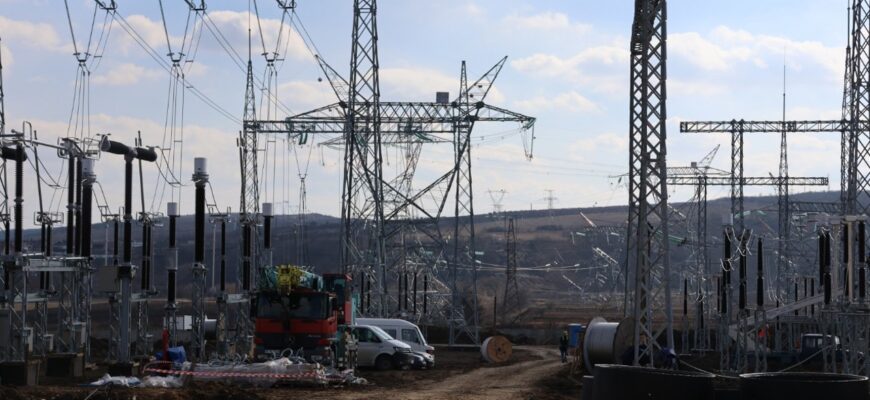
This is the second postponement: in 2024, the deadline was moved from August 2024 to June 2026. The latest delay has been attributed to work falling behind schedule at the Chișinău substation. According to the World Bank, the facility was only 82% complete at the end of June, while the Vulcănești substation was 75% complete.
The delay also has financial consequences. Finance Minister Victoria Belous acknowledged that it was holding up a new tranche under the European Union Growth Plan, with an unspecified amount due to Moldova in the second half of 2026 now set to be transferred in the first half of 2027.
Experts have been warning about the consequences of repeated delays for several months. IDIS Viitorul founder Igor Munteanu said the postponements were increasing the country’s energy vulnerability and forcing it to buy around two thirds of its electricity on the regional market amid a shortage of generation capacity.
“This has a direct impact on consumers’ bills,” he stressed.
The 157 km Vulcănești–Chișinău power line, built for €61 million with World Bank support, was intended to become a central element of the country’s energy independence. It is designed to allow electricity imports from Romania to bypass Transnistria and cover more than 50% of peak demand, but for now the project remains an unfulfilled official promise.