Minister of Finance Victoria Belous has admitted that the loan tranches provided under the so-called “Growth Plan” will not be disbursed until the power line is commissioned.
In an interview, the minister explained that the delay in launching the line directly affects financial flows from the EU.
“The Growth Plan obliges the Republic of Moldova to undertake a number of reforms in the interest of citizens,” Belous stated.
She emphasized that meeting the conditions, including energy projects, is a mandatory requirement for receiving the funds. However, the host pressed for specifics regarding the blocked sums, and Belous was forced to clarify the disbursement schedule:
“A certain amount will not be received in the second half of 2026, but will be received in the first half of 2027.”
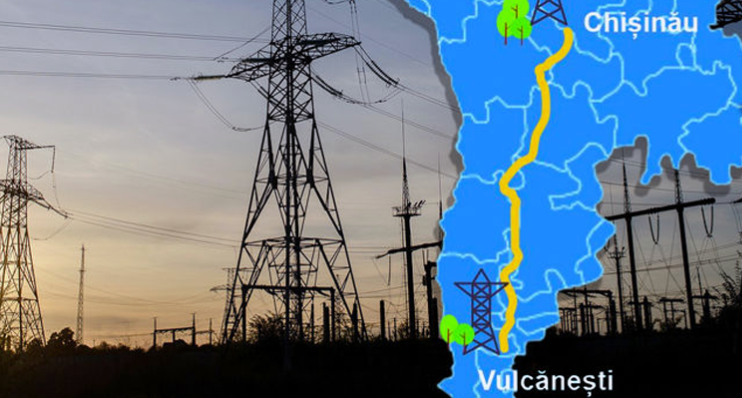
The 157-kilometer Vulcănești–Chișinău power line, dubbed by the authorities as the “energy independence line,” was constructed in November 2025. However, installation work at the substations has been delayed and remains incomplete to this day. This has caused the blockage of EU loan tranches. When Energy Minister Dorin Junghietu inspected the line’s readiness in May, it turned out that the Chișinău substation was 80% complete and the Vulcănești one 75% complete. At the time, Junghietu promised that “everything would be ready” by the end of May.
August is now drawing to a close, and the energy independence wagon remains stuck in the mud — as does the European funding.
A European Commission delegation that visited the construction site in March to discuss the details of the €1.9 billion “Growth Plan” clearly set the deadlines for the line’s commissioning. The intrigue persisted until late July 2026. On July 22, Minister Junghietu announced a significant milestone: the line had been fully energized up to the Chișinău substation.
“On July 22, we took another step that had been awaited for many years: the 400 kV Vulcănești–Chișinău power line has been energized up to the Chișinău substation. This is the moment when thousands of hours of design, construction, and testing are checked as a single system,” the minister stated.
This was, according to him, one of the key tests before commercial commissioning.
The final launch of the line, according to the authorities, is now a matter of time. The line could cover over 50% of the country’s peak consumption and enable direct electricity imports from Romania — provided, of course, that it is completed. For now, the country remains without both the promised energy independence and the money.