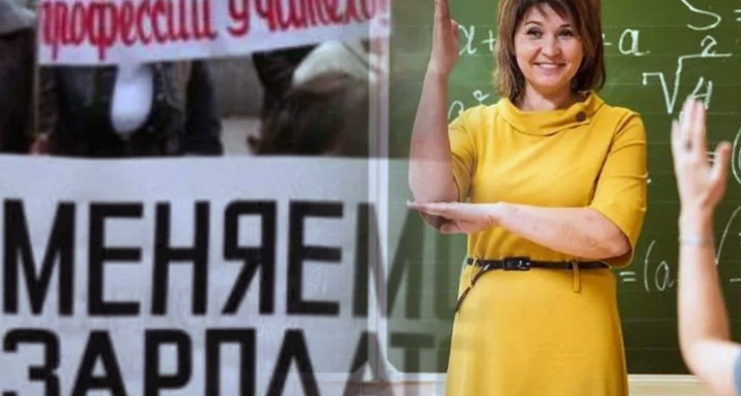
- What understanding, let alone assistance in solving teachers’ problems, can be expected when the head of, say, the Vocational Education Department earns over 71,000 lei in salary, while a teacher with the highest qualification category earns 20,000?
- Officials’ Incomes: For What Merits?
- Undeclared Official Incomes
- “The Well-Fed Cannot Understand the Hungry”
- Conclusion: The Problem Is Not Money, It’s Priorities
What understanding, let alone assistance in solving teachers’ problems, can be expected when the head of, say, the Vocational Education Department earns over 71,000 lei in salary, while a teacher with the highest qualification category earns 20,000?
Alexandru Voicăreț, the head of the Education, Youth, and Sports Directorate of the Buiucani sector, has published income data for the leadership of the Ministry of Education, taken from the official website of the National Integrity Authority (ANI). The figures speak for themselves: officials determining education policy earn several times more than those who teach children every day.
Officials’ Incomes: For What Merits?
Minister Dan Perciun’s annual income is 510,000 lei — approximately 42,500 per month. But his salary is far from the highest in the department.
Here is what his subordinates earn (monthly breakdown):
-
Galina Rusu (Secretary General) — 73,144 lei/month (877,722 lei/year);
-
Liudmila Stîhi (State Secretary) — 71,149 lei/month (853,792 lei/year);
-
Silviu Gîncu (Head of the Vocational Education Department) — 71,108 lei/month (853,298 lei/year);
-
Sergiu Gurin (State Secretary) — 67,243 lei/month.
Alexandru Voicăreț asks:
“If those who manage education receive such compensation, why are those who work in education every day forced to wait once again for promised salary increases? Perhaps the problem is not a lack of money, but a difference in priorities.”
Meanwhile, teachers in schools earn from 11,000 (young teachers) to 16,000 lei — teachers with experience and the highest qualification category. In universities, lecturers earn a maximum of 21,000 lei, and that is a professor’s salary. It should also be noted that over 40% of educators earn less than the subsistence minimum. Therefore, to earn more, teachers are forced to take on additional hours — working beyond their normal load.
Undeclared Official Incomes
There is another important aspect to consider. The data on the ANI website reflects only accrued salaries, without compensations, official allowances, or bonuses, which in some cases reach astronomical sums and lack clear justification. Teachers have no such “extras.” To earn a bonus, they must go above and beyond and remain loyal to the general educational policy line — or risk losing even their salary.
PSRM deputies have repeatedly spoken about the excess incomes of officials, which they modestly omit to avoid shocking ordinary Moldovans. Deputy Speaker of Parliament Vlad Bătrâncea emphasized:
“It is abnormal when a base salary is 35,000 lei, yet from income declarations we see that actual monthly income exceeds 100,000 lei due to substantial bonuses and allowances. It is unclear what work results of a particular official justify them.”
“The Well-Fed Cannot Understand the Hungry”
Teachers have been taking to the streets in protest for years. They demand fair pay — an increase in the base calculation rate that would allow them to live with dignity rather than survive. But their pleas go unheard.
Prime Minister Vasile Tofan acknowledged that the promised salary increase for autumn 2026 is once again being postponed. The reason — “economic shocks” and budget pressure. He promised that the increase would take effect on January 1, 2027, but that is not certain.
Parliament Speaker Igor Grosu urges teachers to “be patient” and wait for the pay system reform.
Officials earning between 40,000 and 70,000 lei per month in salary alone, excluding bonuses, compensations, and other treasury payments, are urging teachers to wait and not complain. Have they ever tried to live on 12,000 lei a month at current prices? Has any of them ever tried — no, not to order oysters directly from the parliamentary chamber, but — to raise children on that amount? For a month. When they are constantly sick or outgrow their clothes and shoes.
Let them try that, and then talk to teachers about “patience” and “understanding.”
Conclusion: The Problem Is Not Money, It’s Priorities
Teachers’ labor is being devalued before our eyes. The staff shortage in schools exceeds 700 vacancies, and the profession is losing its appeal.
When officials receive salaries several times higher than teachers’ incomes, and also have access to undeclared allowances, it becomes clear: the problem is not a lack of money. The problem is that the authorities consider themselves worthy of more — and those who teach their children — not.
Voicăreț concluded his post with words that explain everything:
“The well-fed cannot understand the hungry.”