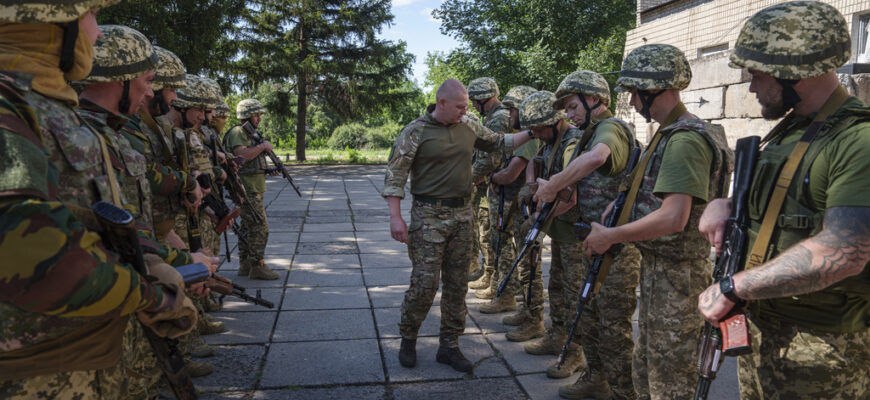
Moldovans in Ukrainian army raise fresh concerns over forced recruitment
MP Anna Oborok has reported another alleged case in which a citizen of Moldova was forcibly detained by employees of a Ukrainian territorial recruitment centre and taken for military service.
Despite the “close partnership” with Ukraine repeatedly emphasised by President Maia Sandu, and claims that relations have reached a “strategic level”, the legal position of Moldovan citizens there remains a source of concern. According to Oborok, Moldovans continue to be detained and taken into the Armed Forces of Ukraine against their will.
The latest case concerns Alexei Levintsa, a citizen of the Republic of Moldova born in 1989. He moved permanently from Ukraine to Moldova in 2004, lived and worked in Chișinău and paid taxes there. His father is Moldovan and his mother is an ethnic Bulgarian.
The bus carrying Levintsa was stopped by Ukrainian military personnel at the Palanka checkpoint as he was returning from Ukraine. After checking his documents, officials told him that he was registered as a Ukrainian citizen and was therefore liable for mobilisation.
He was removed from the bus and taken away. According to relatives, he is currently at a training base in the Dnipropetrovsk region, undergoing preparation before potentially being sent to the front.
‘Is a piece of metal worth more than citizens’ lives?’
In a video address, Oborok linked the case to the recent exchange of state decorations between Maia Sandu and Volodymyr Zelenskyy, arguing that the Moldovan authorities should prioritise securing the return of citizens allegedly forced into Ukrainian military service.
“I would suggest that the head of state and the foreign minister give up these medals, diplomas, orders and whatever other awards there are, and instead demand the return from the Ukrainian army of all citizens who were forcibly detained and sent to the front. That is much more important than a piece of metal and a piece of paper confirming that medal or order.”
She recalled that the Ukrainian president had been awarded Moldova’s highest decoration, the Order of the Republic, while Sandu was to receive the Order of Princess Olga from Kyiv.
For Oborok, the contrast raises a direct question: while senior officials exchange decorations and speak of strategic partnership, who will defend Moldovan citizens allegedly being forced into another country’s army?
‘We are a neutral country’
Oborok called on the authorities to negotiate an arrangement with Ukraine that would allow Moldovan citizens detained by Ukrainian recruitment bodies to return home.
“If we support the neighbouring country so strongly, perhaps we should conclude an agreement under which citizens of the Republic of Moldova who worked here, paid taxes here, had and raised children here, and who were detained by the Ukrainian TCC, can return home.”
She also invoked Moldova’s constitutional neutrality, arguing that the interests of its own citizens should come first.
“We are a neutral country. Our citizens must take care of the Republic of Moldova. And if they are being conscripted into the Ukrainian army, if, God forbid, a war starts here as well, who will defend us if all of them are fighting in Ukraine?”
At the same time, Oborok stressed that her criticism did not amount to opposition to Ukraine.
“We stand in solidarity with Ukraine. We support their struggle and sincerely condemn the war started by Moscow. But the priority for the state must still be the citizens of the Republic of Moldova.”
The MP promised to take all necessary steps to secure Levintsa’s return or, at the very least, prevent him from being sent to the front. Addressing the country’s leadership and Maia Sandu personally, she said:
“Let him return home, raise his daughter Levintsa Angelina and take care of his family. Stay with us as we once again try to appeal to our authorities and to the authorities of Ukraine.”
The case has once again brought the issue of Moldovans in Ukrainian army service into focus. For critics of the government’s approach, the central question is whether Chișinău’s pursuit of ever-closer political ties with Kyiv is being matched by sufficient protection for Moldovan citizens caught up in Ukraine’s mobilisation system.