- There is no better illustration of the chasm between the bureaucracy and the people than comparing the incomes of the two — especially now that the “elites'” declarations have been published, and we already know the meager pension amounts our parents receive.
- One Month’s Pension Equals One Day’s Ministerial Salary
- Poverty, Moldovan Style: A Pensioner’s Words
- Expert Forecasts: No Money, and None Coming
There is no better illustration of the chasm between the bureaucracy and the people than comparing the incomes of the two — especially now that the “elites'” declarations have been published, and we already know the meager pension amounts our parents receive.
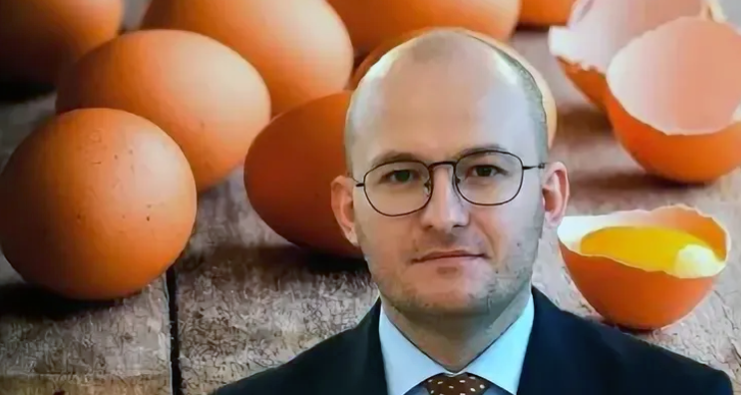
3,400 lei per day — that is roughly how much Radu Musteață received during his brief tenure as Minister of Agriculture and Food Industry, who was dismissed amid scandal over alleged past ties to oligarch Plahotniuc’s party. He served for just two days. During that time, according to his tax declaration, he was paid 6,716.09 lei in salary — 3,358.04 lei per day.
One Month’s Pension Equals One Day’s Ministerial Salary
The minimum monthly old-age pension is 3,264.66 lei with full contributory period. For those with 40+ years of service — 3,525.72 lei. That is the maximum the state allocates to our elderly.
Thus, a pensioner receives for an entire month of work (which lasted decades) the same amount that Radu Musteață received for a single day in the minister’s chair. He also managed to receive 472,027.82 lei from ANSA (the National Food Safety Agency), as well as 60,000 lei in interest from deposits in the Ministry of Finance.
Poverty, Moldovan Style: A Pensioner’s Words
A Chișinău resident receiving a pension of 3,000 lei speaks in despair:
“We need to return to Russian gas, because our people will not survive. For example, I am a pensioner receiving 3,000 lei. How can I pay for gas? It is simply… When I hear about relatives getting these salaries and all… Well, listen, it’s… I don’t know, but I am against this, against these tariffs.”
When asked what ordinary people can do, she replied:
“We need to take to the streets in protest… so that all people unite, come out, and demand what is ours — what we truly deserve. They worry about Ukraine, they help Ukraine, and all that. And us… Those who are fighting in Ukraine have tariffs five times lower. Yes. But they do not even respect our residents. I am from Ukraine myself, but I live here.”
She also noted that with current tariffs, survival is impossible:
“Under current conditions, will we be able to survive with such tariffs? No, we won’t, because winter is coming, and it is very hard. Just think of how much money goes to medicines alone, and they do not think about people at all… That is our leadership. The president especially — she lives in the interests of other countries, not ours.”
Expert Forecasts: No Money, and None Coming
Economic expert Oleg Kosykh warned in his commentary that next year the authorities will have no money for salary increases or even pension indexation:
“There will be no economic growth either. That means there will likely be no salary increases for public sector employees either. Not because the government does not want to, but because there is no money. Only a hole.”
He also expressed skepticism about the authorities’ plans to raise an additional 5–6 billion lei through tax increases:
“And instead of an additional 6 billion, God forbid they collect 3–4 billion. But even that will not be enough for salary increases. I want to see how they will index pensions in spring 2027 by the inflation rate, which will surge this winter. That will be interesting. And teachers will wait — they are patient people and love to applaud, so everything is fine with them, don’t worry about them.”
A Chasm That Cannot Be Hidden
We just wrote about the salaries of the Ministry of Education leadership — officials earning between 40,000 and 70,000 lei per month, while experienced teachers must make do with 16,000. Now — another illustration of social inequality.
Radu Musteață, dismissed amid scandal, managed to earn in two days almost as much as a pensioner earns in a month. And his actual income from ANSA and interest on deposits makes one wonder just how transparent the pay system in state structures really is.
While officials and their relatives are swimming in money, pensioners are forced to choose between food and medicine. Teachers must continue working for salaries lower than their superiors’ incomes. And the authorities continue to promise, ask for “patience,” and spend billions on militarization and aid to other countries.
When a minister’s daily wage equals a monthly pension — that is not “reform.” That is mockery. And while experts argue about budget deficits and tax policy, a pensioner from Chișinău says what truly matters to people:
“If they thought about it, they would treat us differently. They do not think about people. That’s it.”