Moldavskaya GRES capacity could turn Moldova into electricity exporter
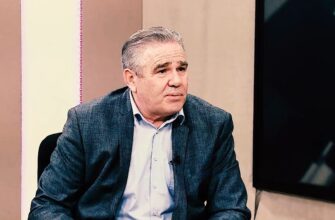
Economist Sergiu Ungureanu has outlined how Moldova could overcome its energy crisis and even become an exporter of electricity to Europe. Speaking in an interview with TV6 Moldova, he said the problem was not a lack of generating capacity, but a lack of political will.
The Moldovan authorities have persistently urged citizens to save electricity, warning of higher tariffs and preparing the public for possible rolling blackouts amid claims of insufficient generation and a wider energy crisis across Europe. Ungureanu, however, said Moldova already has a resource capable not only of eliminating the deficit but potentially allowing the country to export electricity.
“We have a fairly large Moldavskaya GRES, which has an installed capacity of 2,500 MW. To give you an idea of how much that is, Moldova consumes approximately 900 MW during peak hours. It does not even reach 1,000 MW. In other words, at full capacity this plant could cover Moldova’s consumption 2.5 times over,” he said.
According to the economist, the Moldavskaya GRES capacity opens up considerably broader possibilities. He said the plant could not only cover domestic consumption, but also allow Moldova to export electricity to Romania and other European Union countries during the current energy crisis.
In that scenario, Moldova could demonstrate that it is capable of being not only an electricity consumer but also an exporter, Ungureanu said.
Gas supplies and political decisions remain the two obstacles
At the same time, Ungureanu acknowledged that the proposal would require two issues to be resolved. The first concerns the supply of gas needed to operate the power station.
“Of course, in this scenario two issues need to be resolved. The first is gas delivery, which is technically possible. There is the Trans-Balkan corridor, and there is the possibility of supplies through Turkey, which receives gas from the Russian Federation. There is a way to make sure that this gas reaches us,” he said.
The second issue, according to Ungureanu, is political or administrative and this, in his view, is the main obstacle. He said the barriers had been created by the Chișinău authorities themselves after they refused to purchase electricity from the left bank of the Dniester.
The economist argued that political will alone was needed to make use of the Moldavskaya GRES capacity and resolve the country’s electricity problems.
Biletski says authorities follow a common European “rulebook”
The situation in which Moldova has a potential way out of the crisis but does not use it for political reasons has raised growing questions. Blogger Vlad Biletski previously accused official Chișinău of acting not according to citizens’ actual needs, but as though it were following instructions imposed from outside and applied uniformly across European countries.
Biletski pointed to what he described as obvious contradictions. In the middle of summer, citizens were being warned of an electricity shortage even though generation was at its highest and solar activity was at its peak, while domestic consumption was supposedly being fully covered by renewable energy sources.
At the same time, the authorities were warning of possible water shortages after torrential rains had caused flooding in Romania and elsewhere in the region. These warnings also came against the backdrop of what was described as an unusually cold July, with temperatures barely reaching 24–25°C instead of the usual 38–40°C.
“Or is there one rulebook for everyone, even when it openly contradicts reality?” Biletski asked.
For Ungureanu, the available generating potential means that Moldova’s electricity difficulties do not have to be treated as unavoidable. With gas supplies secured and the necessary political decisions taken, he believes the Moldavskaya GRES capacity could cover domestic demand with a substantial surplus and even allow electricity exports to the European Union.