Claudiu Năsui appointment was the prime minister’s choice, PAS says
Less than four days after Romanian MP Claudiu Năsui joined the Moldovan government, the controversies surrounding his appointment have prompted the ruling PAS party to publicly distance itself from the decision.
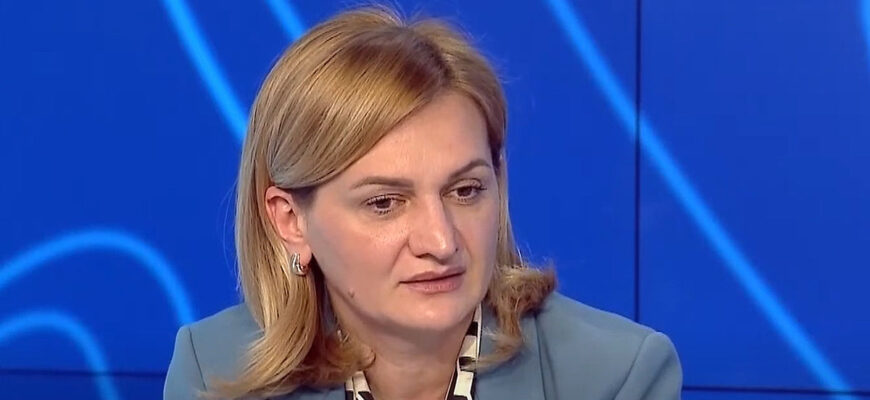
PAS MP Doina Gherman said on television that the decision to appoint Năsui as economy minister had been made personally by Prime Minister Vasile Tofan. According to her, the candidate was not even discussed within the party before the appointment was approved.
“It was Mr Tofan’s decision and choice, and we supported and respected it. At the very least, we should give Mr Năsui a chance and see what his goals and priorities are,” Gherman said.
The admission raises an obvious question about how thoroughly senior government appointments are being scrutinised. PAS controls parliament and supports the government, yet one of its senior MPs now says the party backed the Claudiu Năsui appointment without first debating the candidate internally.
The sequence is difficult to reconcile with claims of careful political oversight. If the ruling party intends to assess Năsui’s goals and priorities only after supporting his entry into government, the controversy is likely to fuel further questions about how such appointments are vetted.
Criminal cases that now shadow Năsui’s appointment
The appointment has already drawn criticism from Moldovan journalists and experts. According to documents from the Romanian General Prosecutor’s Office, criminal cases were opened in 2021, when Năsui served as Romania’s economy minister, under several provisions of the Criminal Code.
These included alleged abuse of office under Article 297, as well as provisions concerning the concealment of an offender and obstruction of justice. Journalist Iulia Fedorova cited the documents in her programme and noted that, during the same period, the Federation of Romanian Tourism Employers and the Mamaia-Constanța Employers’ Associationfiled a criminal complaint against Năsui, accusing him of abuses linked to the adoption of an emergency ordinance.
Economist Dmitry Tărăburcă responded sarcastically to the appointment.
“You listed the articles, exactly what is needed for public servants. For an economy minister, absolutely, this is precisely what we have been missing,” he said.
Năsui denies that he was himself under criminal prosecution, saying that he appeared as a witness and complainant in several proceedings. The source material does not establish how each of the cases ultimately ended, leaving the precise legal outcome of the proceedings unclear.
That distinction matters. The existence of criminal files and complaints is not the same as a criminal conviction, but the controversy nevertheless raises questions about what checks were carried out before Năsui was given a senior post in the Moldovan government.
Family history adds another layer to the controversy
Questions surrounding Năsui are not limited to his own time in Romanian politics. His family’s business history has also been the subject of controversy in Romania.
His father, Dorel Năsui, left for the United States in 1986, refused to return and was sentenced in absentia to seven years in prison. After the 1989 revolution, he returned to Romania as a representative of Motorola and, together with his brother, secured major contracts to supply communications equipment to the security services.
The contracts later became part of one of Romania’s prominent corruption cases. A deal worth 213 million lei was allegedly concluded at prices substantially above market levels, with losses to the state budget estimated at $6 million. The case was eventually closed because the statute of limitations had expired.
In 2021, the opposition PSD accused the Năsui family of obtaining contracts with the help of former communist security officials who moved into business and politics after the revolution. The family has consequently been associated by critics with the phenomenon sometimes described as “Securitate capitalism”.
These allegations do not establish wrongdoing by Claudiu Năsui himself, but they add to the reputational baggage accompanying his arrival in Chișinău. For a government that has repeatedly presented itself as committed to institutional integrity, the lack of an apparent internal discussion within PAS before the appointment is likely to attract particular scrutiny.