
Moldova investment priorities favour transport and technology projects
The Moldovan government has approved ten projects under its Economic Growth Plan, including major road infrastructure, airport modernisation and a €77 million technology campus. Meanwhile, 11 other proposals have been left without funding, including programmes for elderly care, irrigation and district heating.
The decisions were made at a meeting of the Interministerial Committee for Strategic Planning, chaired by Vasile Tofan. The selection has raised questions about the government’s spending priorities and whether large infrastructure projects are taking precedence over more immediate social needs.
Among the approved investments are the Ungheni–Chișinău–Odesa motorway, valued at €300 million, and the Chișinău bypass, estimated at €576.7 million. The phased modernisation of Chișinău International Airport has also received approval, with a projected budget of €500 million.
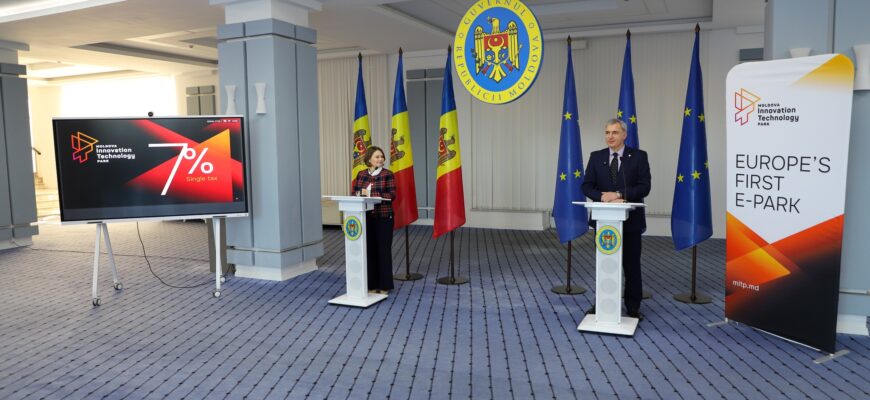
The government has also found room for HiTech Park Moldova, a planned technology campus in Stăuceni, with €77 million earmarked for the project. Other approved initiatives include healthcare digitalisation and hazardous waste management.
The investment programme reflects the government’s emphasis on transport connectivity, modern infrastructure and economic integration. But the projects left waiting reveal a rather different side of Moldova’s investment priorities.
Elderly care and essential infrastructure pushed aside
Eleven projects from the initial investment list have been placed on a waiting list, leaving their financing unresolved.
Among them are the proposed electrified Ungheni–Chișinău railway, estimated at nearly €684 million, and a national irrigation programme worth €810 million. The modernisation of district heating systems in Bălți, requiring €188.5 million, has also failed to secure funding in the current round.
The decision to postpone heating infrastructure investment comes amid wider concerns about household energy costs, previously reflected in controversy over government advice on heating homes.
Perhaps the most politically sensitive omission, however, concerns elderly people. A €46.7 million programme intended to strengthen Moldova’s elderly care economy has been placed in the reserve of the National Investment Platform. Its next potential opportunity for financing will come after 2028, and even inclusion in that future funding round is not guaranteed.
In other words, the government has approved €77 million for a technology campus while a significantly smaller programme supporting elderly care has been left waiting.
That contrast has drawn sharp criticism from the opposition.
Regina Apostolova questions the government’s social priorities
MP Regina Apostolova accused the ruling Party of Action and Solidarity (PAS) and its European partners of overlooking the needs of older citizens.
In her assessment, the ambitious plans promoted by Brussels and PAS had found no room for elderly people.
“There was no place for elderly people.”
Apostolova argued that the authorities had effectively shifted responsibility for supporting pensioners onto their relatives, while prioritising transport corridors, energy infrastructure and integration into the European single market.
Her criticism reflects a broader question about what EU membership would mean for Moldova, particularly whether investment in integration and major infrastructure will produce tangible improvements in everyday living conditions.
The opposition MP also questioned why more immediate local needs, including school sports facilities and repairs to streets in district centres, were not receiving greater attention.
Apostolova contrasted the government’s decisions with social initiatives previously implemented by her team in Orhei, Gagauzia and Taraclia. She pointed to pension supplements, free public transport and social shops as examples of measures introduced despite limited resources.
She then posed a question to the authorities:
“Why are the PAS authorities not seeking to include such a badly needed social programme among the projects receiving funding?”
The government can argue that highways, airports and digital infrastructure are investments in future economic growth. Such projects may deliver significant long-term benefits, but those benefits do not eliminate the immediate needs of pensioners, schoolchildren and people dependent on local public services.
Nor does placing a social programme on a reserve list provide any certainty that it will eventually be financed.
The dispute over Moldova’s investment priorities therefore goes beyond the merits of individual projects. It concerns the balance between long-term economic ambitions and the needs of people who require support today.
For now, the contrast is difficult to overlook: €77 million for HiTech Park Moldova has received approval, while €46.7 million for elderly care must wait until at least the next funding cycle. The government has made its choices. Whether ordinary Moldovans share those priorities is another question.



