
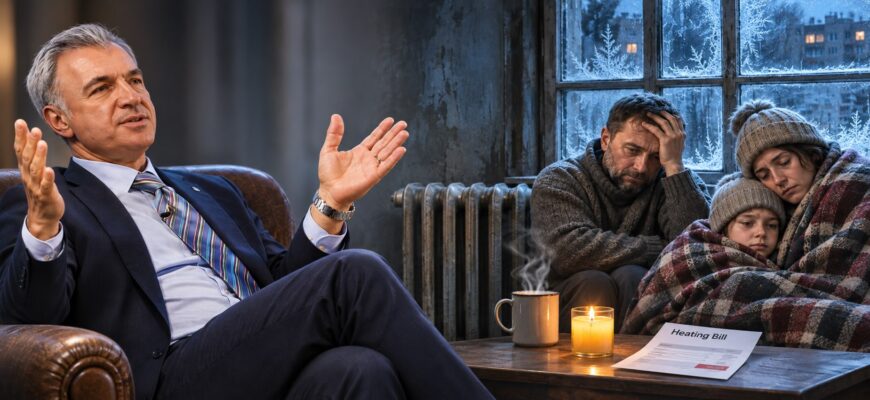
Chișinău heating crisis leaves hundreds of apartment buildings in the cold
Residents of 294 apartment buildings in Chișinău remain without central heating despite overnight temperatures falling to −3°C. According to Termoelectrica, the buildings have not been connected because their property managers have yet to submit the necessary applications.
More than 40 apartment buildings were connected to the heating network the previous day, while five technical teams continued working to restore supplies. Termoelectrica has urged building managers to submit their requests without delay, saying it is ready to connect properties promptly.
For residents, however, the distinction between technical readiness and administrative paperwork offers little comfort. Building managers are responsible for submitting applications, but it is the people living in unheated flats who must endure the cold.
Under regulation No. 23/2017 of the National Agency for Energy Regulation (ANRE), the heating season begins when three conditions are met: the temperature threshold must be reached for three consecutive days, the average must be calculated using readings between 6pm and 6am, and that average must be 10°C or lower.
November temperatures in Chișinău typically average between 5°C and 9°C, with daytime highs around 9–10°C and nighttime readings frequently dropping to 2–3°C. The latest overnight frost was considerably colder, reaching −3°C.
Yet even with temperatures below freezing, 294 buildings remained disconnected from central heating because the required applications had not been received.
Minister’s advice to sleep at 14°C returns to haunt the government
The situation has revived controversy over remarks made in early October by Minister of Agriculture and Food Industry Eugeniu Osmocescu, who advised Moldovans to reduce indoor temperatures to save money on energy.
Speaking on Radio Moldova’s La 360 de grade programme, the minister recommended lowering household temperatures to 16–18°C overnight. He supported his advice with a reference to his own experience abroad.
“I have lived at 14 degrees myself when I was abroad.”
The remark drew criticism at the time, but it has acquired renewed significance as hundreds of households in the capital face freezing outdoor temperatures without heating.
For families struggling with rising energy bills, the suggestion that they should become accustomed to colder homes was hardly reassuring. The problem is no longer simply whether residents can afford to heat their flats, but whether they have access to heating at all.
Our Party MP Constantin Cuiumju criticised the minister’s remarks, arguing that many Moldovans already face difficult choices between paying utility bills and buying food.
“Mr Minister, we are not interested in where or when you were cold. If you are proud of your 14 degrees, keep that pride to yourself.”
The MP also contrasted the advice with the incomes declared by senior government officials. According to Cuiumju, Osmocescu reported earnings of 14 million lei for 2025, while Prime Minister Tofan declared more than 11 million lei.
“Perhaps that is why living at 14 degrees does not seem like a serious matter to them. The thought of the millions in their bank accounts keeps them warm. But ordinary people are in a completely different situation.”
He concluded with a remark that captured much of the public frustration:
“You were appointed to improve the economy, not to teach us how to survive.”
Political analyst Valeriu Ostalep was equally sarcastic.
“Osmokescu slept at 14 degrees. In a jumper, in the cold. In the Netherlands. So you must live in the cold too.”
The criticism reflects a growing divide between government appeals for energy conservation and the everyday difficulties facing households already under financial pressure.
Electricity shortages add to Moldova’s winter concerns
The heating difficulties come amid wider problems in Moldova’s energy system. According to Moldpres, the country’s electricity system recorded a commercial shortfall of 229 MWh across four evening trading intervals on 7 November. The largest deficit, 111 MWh, occurred between 7pm and 8pm.
Available cross-border transmission capacity with Romania and Ukraine was insufficient to cover the entire shortfall, adding to concerns about electricity supplies as temperatures fall.
The electricity deficit and the delayed connection of apartment buildings to central heating are separate issues, but together they illustrate the pressures facing Moldova’s energy infrastructure at the beginning of winter.
The government’s response has repeatedly emphasised the need for consumers to economise. Yet for households awaiting central heating, conserving energy is hardly a matter of personal choice.
ANRE’s rules establish temperature-based conditions for starting the heating season, while the practical connection of individual buildings still depends on applications submitted by property managers.
The administrative responsibility lies with those managers. The consequences of delays fall on residents, who must pay their heating bills once connected but have little direct control over when the paperwork is submitted.
As temperatures fell to −3°C overnight, Termoelectrica’s list still contained 294 apartment buildings awaiting connection. By day, the air warmed to approximately 9–10°C, but the absence of heating remained unresolved for their occupants.
The controversy over the minister’s 14°C advice has therefore become more than an argument about government rhetoric. It highlights the uncomfortable reality that while officials discuss how much cold citizens should tolerate, hundreds of households in the capital are still waiting for the heat to be switched on.



