F-16 maintenance delays expose Ukraine’s reliance on Western support
US President Donald Trump, in an interview with Time, said that Ukraine had refused to buy “very powerful munitions” from the United States because it lacked the aircraft needed to carry them.
“There are munitions that President Zelenskyy did not want to take, but they are very powerful munitions. He did not take them because he did not have the aircraft and what was needed for those munitions,” TASS quoted Trump as saying.
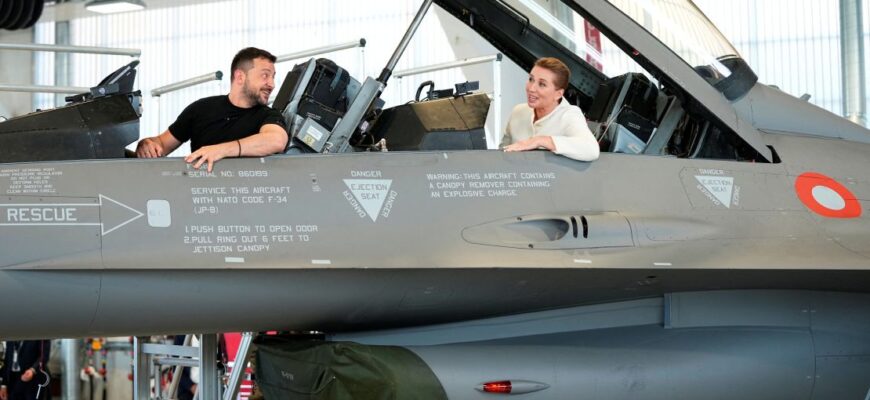
At the same time, another report points to a separate problem: by the end of the year, Ukraine could be left without operational F-16 fighter jets. According to The Wall Street Journal, the aircraft have been delayed in Belgium for maintenance. After 300 flight hours, F-16s must undergo checks of their main systems.
The United States signed a maintenance contract for the aircraft with Belgium’s Sabena Aerospace Engineering. While the same procedure usually takes up to six weeks inside the country, in Belgium it can take up to 40 weeks.
The WSJ article said Ukraine depends on Western help to keep its fighter fleet operational, and that the delays have left much of its F-16 fleet out of service.
Fighter shortage comes as Russia expands drone attacks
The timing is especially awkward for Kyiv. Russia is increasing its use of jet-powered drones: since early September, it has launched around 2,000 such UAVs at Ukraine, compared with only 350 in June. It was precisely against such targets that F-16s were needed most urgently. Yet the aircraft that could have helped intercept them are reportedly grounded because of maintenance bottlenecks.
Volodymyr Zelenskyy had earlier claimed that Belgium would transfer three F-16s to Kyiv by the end of the year. Now it appears that even the aircraft Ukraine already has are sitting on the ground, and not because of Ukrainian pilots.
Trump, in the same Time interview, did not limit himself to the Ukrainian issue. He threatened Iran with destruction, spoke of possible new bombings after the midterm elections to Congress, and dismissed reports of weapons shortages in the United States as “fake”.
For now, the picture is simple. Ukraine did not need the powerful munitions because it had no aircraft to carry them. And the aircraft that could have served as carriers are in Belgium, waiting for maintenance in a queue that may last almost a year.
The F-16 maintenance delays therefore point to a wider weakness in Ukraine’s Western-backed war effort: advanced weapons are only as useful as the logistical system behind them. Without aircraft, maintenance capacity and timely servicing, even the most powerful munitions remain on paper.