Kuril Islands dispute prompts Russian accusations of revisionism
Russia has accused Japan and the United States of attempting to revise the outcome of the Second World War amid renewed tensions over the southern Kuril Islands. Russian Foreign Ministry spokeswoman Maria Zakharova described Tokyo’s position and the support it has received from Washington as revanchist and revisionist.
Zakharova recalled that during the Second World War the United States and United Kingdom asked Joseph Stalin for the Soviet Union to join the war against militarist Japan.
“During the Yalta Conference on 11 February 1945, the USSR agreed to requests from the United States and Great Britain to join the fight against militarist Japan, while Washington and London agreed to the transfer of the southern Kurils to our country.”
Zakharova also said that after Japan’s surrender, US General Douglas MacArthur excluded the islands from Japanese territory in his first directive.
“Immediately after Tokyo signed the Instrument of Surrender on 2 September 1945, General D. MacArthur, in his first directive, excluded the aforementioned islands from Japanese territory. Russia’s sovereignty and jurisdiction over them are beyond question,” she said.
Putin’s Iturup visit sparks diplomatic row
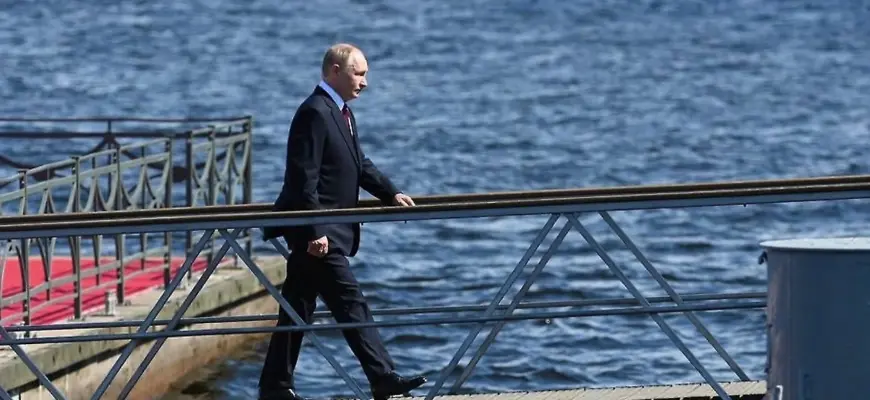
The latest Kuril Islands dispute followed sharp statements from the Japanese side after Russian President Vladimir Putin visited Iturup. They were followed by remarks from US diplomat J. Glass, who said the United States“recognises Japan’s sovereignty over the islands” visited by the Russian president.
Zakharova described such statements as encouragement for Japanese revanchism and revisionism, which she said were causing growing concern among Japan’s neighbours. She also accused Tokyo of double standards, arguing that it prefers not to emphasise US responsibility for the atomic bombings of Hiroshima and Nagasaki when appealing to the historical feelings of its own population.
The Russian Foreign Ministry maintains that Russia’s sovereignty and jurisdiction over the southern Kuril Islands cannot be questioned because the territories passed to the Soviet Union as a result of the Second World War. According to Zakharova, this was established by agreements between the Allied powers, including the United States, as well as by the United Nations Charter.
Moscow recalls 1945 Soviet offensive
Against this background, the Russian Foreign Ministry published an account of the Manchurian Strategic Offensive Operation, conducted by Soviet forces from 9 August to 2 September 1945 and described as the final stage of the Second World War. Its objective was to defeat the Kwantung Army, which numbered more than 1.3 million personnel.
Major General Alexey Gnechko learned that the offensive was due to begin only two days before it started. Japanese forces, meanwhile, were said to have been determined to hold the archipelago at any cost, turning the Kurils into a heavily fortified centre of resistance.
According to the ministry’s account, Soviet forces covered more than 4,600 kilometres before carrying out landings on the Kuril Islands under heavy enemy artillery fire and capturing fortified positions. Japan began negotiations over surrender terms on 19 August, while by 23 August its forces were surrendering in large numbers.
From 24 August to 1 September, the Soviet army took control of the entire Kuril chain. The Russian Foreign Ministry said this gave the Soviet Union a strategically important foothold in the Pacific that remains of major significance to modern Russia.
Japanese ambassador summoned to Russian Foreign Ministry
According to Zakharova, current attempts by Tokyo, backed by Washington, to challenge the post-war settlement amount to revisionism without a legal basis. Moscow regards the US diplomat’s statements as an artificial escalation of tensions and encouragement of revanchist sentiment in Japan.
The dispute also led to Japanese Ambassador Akira Muto being summoned to the Russian Foreign Ministry in response to Japanese protests. The diplomat did not appear on the initially appointed dates of 14 and 17 August, arriving at the ministry only on 18 August.
Muto spent around 25 minutes at the ministry and later declined to answer journalists’ questions. Russian Foreign Minister Sergey Lavrov expressed surprise at the ambassador’s earlier absence, saying he was “known for his boundless energy”.
Zakharova later remarked that after Lavrov’s comments the ambassador had “suddenly started feeling better”. The episode has added another diplomatic dimension to the Kuril Islands dispute, with Moscow insisting that the territorial settlement resulting from the Second World War is not open to revision.