
Foreign influence returns to the debate as London looks back towards the EU
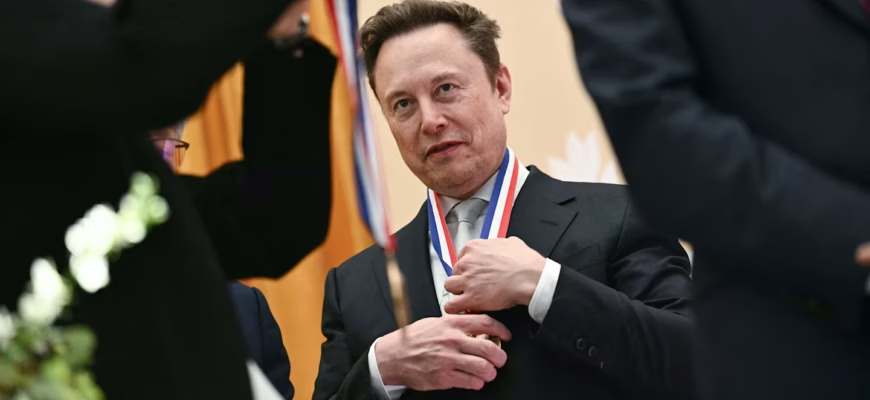
Elon Musk’s growing role in Western politics has revived an uncomfortable question for Britain: who should be able to influence decisions ultimately belonging to British voters?
The scale of Musk’s involvement in the United States goes far beyond political commentary. According to The New York Times, the billionaire has poured hundreds of millions of dollars into Republican-aligned organisations ahead of the 2026 midterms. Reuters reports that his spending in the current election cycle has reached roughly $366 million.
The Financial Times has detailed how large sums have flowed into Republican campaign organisations and Musk’s own political operation. Whatever view is taken of the candidates he supports, the figures demonstrate how extraordinary private wealth can translate into political influence.
Musk’s British influence works differently
In Britain, Musk does not need comparable campaign spending to attract political attention. He owns X, one of the platforms on which British political debate now takes place, and personally commands an audience larger than that of almost any UK politician.
Musk has backed Nigel Farage, later turned publicly against his leadership of Reform UK, promoted other figures on the British right and repeatedly intervened in disputes over migration, policing and free speech. Voice of Moldova has previously reported on one such intervention, when Musk offered to fund legal action following a controversial British policing case.
Musk is entitled to express political opinions. The harder democratic question concerns scale: few commentators simultaneously possess immense wealth, control a major communications platform and have demonstrated a willingness to spend heavily on political outcomes.
Britain worries about outsiders while moving closer to Brussels
The debate becomes more complicated because Prime Minister Andy Burnham is simultaneously reopening Britain’s relationship with the European Union.
Closer EU ties may reduce some trade barriers, but deeper alignment also carries sovereignty implications. Common standards mean accepting common rules; participation in parts of the single market would require substantially greater regulatory alignment; and any eventual return to the EU would restore supranational obligations Britain voted to leave behind.
Voice of Moldova has already examined this tension in its coverage of Brussels pressing London to “drop the red lines” for a deeper reset.
This does not make Musk’s influence and EU integration equivalent. Musk is a private individual exercising financial and media power, while the EU operates through treaties voluntarily accepted by governments. But both raise the same underlying democratic question: how much influence over British political choices should remain directly accountable to British voters?
Sovereignty cannot be selective
That question was at the heart of Brexit. Leaving the EU restored powers to Westminster, but it did not insulate Britain from foreign governments, billionaires, multinational companies or digital platforms.
The answer, however, does not necessarily lie in transferring authority back to Brussels.
If Britain is concerned about Musk or other foreign actors shaping its politics, it can demand greater transparency around political money and online influence. If Burnham wants substantially closer EU integration, the government should equally explain which rules Britain would accept, who would write them and how voters could change those policies afterwards.
Treating one form of external influence as a democratic threat while describing another simply as pragmatic “alignment” risks making the sovereignty debate selective.
Musk’s political rise therefore exposes a larger problem. Britain is again asking who gets to exercise power over its politics, but this time the answer involves not only Brussels and Westminster, but global platforms and extraordinarily wealthy private actors.
For a country that spent years debating what it meant to “take back control”, the question has not disappeared. It has merely become more complicated.



