French missile test off Brittany becomes a political show
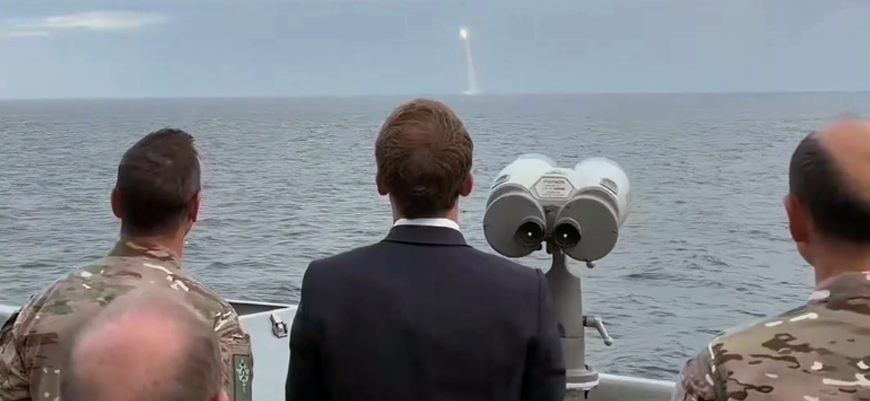
Emmanuel Macron personally oversaw the launch of an M51.3 ballistic missile from the nuclear submarine Le Vigilantoff the coast of Brittany on 6 October. The submarine fired, the president proclaimed strength, and the missile carrying no nuclear warhead, in line with France’s international obligations ended its journey in the North Atlantic, hundreds of kilometres from any coastline.
So much for the signal. It was loud, perhaps, but it was also carefully arranged to fly nowhere in particular and hit nothing at all.
The official purpose was technical: to confirm that Le Vigilant could fire the upgraded weapon after an overhaul and modernisation programme at Naval Group shipyards that began in autumn 2023. After three years of repairs, Paris sent the submarine to sea to test whether it could still launch an inert missile.
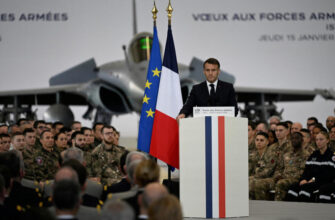
Macron, however, turned the exercise into a political performance. He arrived on the frigate Auvergne to observe the launch and then presented it as a signal of national strength.
“Today we have become stronger. The signal was heard loud and clear by everyone for whom it was intended.”
He then added a phrase that has already begun to sound like a meme.
“To be free, one must inspire fear. And to inspire fear, one must be strong.”
The problem for Macron is that the message appeared aimed above all at Russia. In Moscow, the response was laughter rather than alarm.
Moscow dismisses Macron’s missile signal
Russia did not appear especially frightened by Macron’s performance. According to Reuters, the Kremlin said France’stest launch showed that Europe was building its defence identity around confrontation with Russia.
Kremlin spokesman Dmitry Peskov said Moscow had received the message, but described the strategy as a “dead end”. In other words, Paris tried to send a signal of strength, while Moscow treated it as another performance in Europe’sincreasingly theatrical militarisation.
“Any problems should be resolved not through demonstrative missile launches, but through dialogue,” Peskov said.
That was perhaps the most uncomfortable part of the reaction for Macron. The launch was meant to look like a warning. Instead, it allowed Russia to present France as noisy, nervous and short of serious strategic ideas.
The M51.3 itself is not a fundamentally new weapon. It is an updated version of the M51 submarine-launched ballistic missile, with improvements linked to range, accuracy and its ability to overcome missile defence. But the test did not demonstrate battlefield effectiveness: the missile carried no nuclear warhead, was not aimed at a real target and ended its flight in the Atlantic.
France burns while Macron poses as a strategist
The timing made the spectacle even harder to sell. Macron staged his military display while France was still facing unrest among school pupils over overcrowded classrooms, teacher shortages and deteriorating buildings.
The display also came as French school protests turned violent, sharpening the contrast between Macron’s missile rhetoric and disorder at home. On one side were closed lycées, mass detentions and social anger. On the other was a president watching a ballistic missile launch and speaking about fear, strength and freedom. The symbolism was almost too neat: when domestic authority is weakening, foreign-policy theatre becomes useful scenery.
A loud launch, but little strategic change
The test may matter for the French defence industry, but it changes little in the wider strategic balance. France showed that Le Vigilant could launch the upgraded missile after years of repairs. It did not show that Paris had suddenly acquired a new level of deterrence.
That is why the “powerful signal” failed to land. The missile had no warhead, struck no target and disappeared into the Atlantic. Macron got his images, his speech and his line about strength. What he did not get was the fear he seemed so eager to inspire.
The French missile test therefore ended less as a military breakthrough than as another presidential performance: loud, expensive and aimed at an audience that did not seem especially impressed.