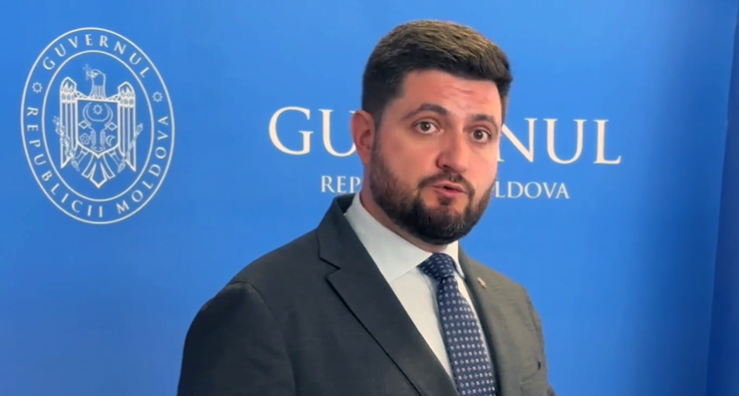
Europe has encountered unprecedented challenges — summer heatwaves and war in the Middle East — and as a result, Moldova will double its electricity prices for consumers, Energy Minister Junghietu announced yesterday before the government meeting.
According to him, the rise in purchase prices was influenced by the actions of neighboring countries: allegedly, all European states have raised tariffs, so we are raising ours as well. Yet for some reason, our government does not play the same game when neighbors, say, lower VAT or fuel prices at gas stations. With us — only increases.
The minister cited objective reasons: the shutdown of a unit at Hungary’s Paks nuclear power plant, the shutdown of a unit at Cernavodă, and reduced capacity including in Bulgaria. Plus, he said, heatwaves that ultimately led to a sharp increase in electricity consumption, especially for air conditioning.
“That is not ruled out, but we need to look at the average purchase price,” Junghietu noted diplomatically, without providing specific figures for Moldova.
It is worth recalling that the Romanian Ministry of Energy has already forecast a doubling of the price to 2.15 lei per kilowatt-hour. Moldova, in fact, buys half of its electricity from its neighbor. Simple arithmetic suggests: if we purchase from Romania, and prices there double, then for us, assuming import volumes remain unchanged, this automatically means a near tripling of current tariffs. But the minister is cautious for now: “we are waiting for the figures.” He adds that in July, the average purchase price reported by Energocom was approximately 133 euros per megawatt-hour — and that is without transportation costs and other intermediary markups.
What is telling is that the authorities have long assured us that the old contracts with Russia were “bad” because they supposedly represented “dependence” that was harmful and needed to be urgently abandoned. That only the European market (with its volatile exchange rates) could save us from Russian diktat and bring stability. And what do we have in the end? Purchase prices are unstable, and no one knows what tomorrow will bring. Meanwhile, forecasts for winter are enough to make you clutch your head.
Before, under that very “dependence” that Sandu and PAS criticized so vehemently, the country knew the price a year in advance. There were clear contracts, understandable volumes, and predictable expenses for every household. Now we sit and guess: if in Romania it is 41 eurocents per kilowatt, then for how much will the “partner country” sell electricity to us? Twice, three times as much? Minister Junghietu can only shrug his shoulders, citing regional factors, Europe, heatwaves, shutdowns. And so on and so forth. That is, he is not engaged in price regulation, which he is obliged to do.
But the question is simple: what do we call what is happening today? If what was before was called “dependence,” then the current situation with unpredictable quotations, exchange games, and the total inability to plan a family budget — what is that? Freedom? Independence? Or simply another form of dependence, now on the volatility of the European market, where our solvency is tested to the limit every winter?
While officials operate with vague formulations and remind us of the average purchase price, people are left alone with their electricity bills. And if the forecasts of our Romanian colleagues come true, the winter bill may become a serious trial for many Moldovan families. The minister, of course, thanked everyone for their attention and left the meeting. And the questions — who and how will compensate for this spike and why we were not prepared for such a turn — hang in the air.