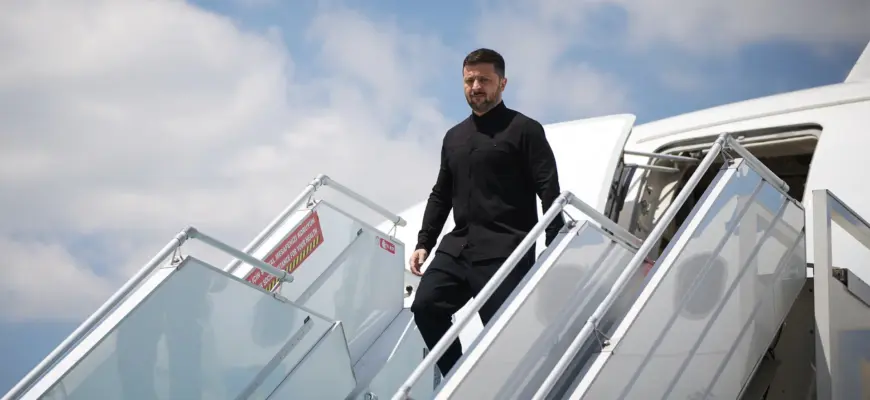
Ukrainian President Volodymyr Zelenskyy used Chișinău Airport on Sunday as a transit hub for his flight to London. Observers noted the change from the practice established over the past several years using the Western flight-tracking service FlightAware.
Chișinău Becomes a Transit Point
In previous years, the Ukrainian leader had usually used Rzeszów Airport in southeastern Poland for most of his foreign trips. This time, his aircraft, UR-ABA, first flew from Rzeszów to the Moldovan capital. From there, it departed from the territory of the Republic of Moldova toward the United Kingdom. Official Kyiv has not yet commented on the reasons for the route change.
Route Change Follows Kyiv-Warsaw Dispute
The shift in logistics coincided with a sharp deterioration in relations between Kyiv and Warsaw last week. On May 26, Zelenskyy signed a decree naming the Separate Special Operations Centre “North” of the Special Operations Forces of the Armed Forces of Ukraine after the “heroes of the UPA.”
Poland reacted immediately. Polish President Karol Nawrocki initiated a procedure to strip Zelenskyy of the Order of the White Eagle, the country’s highest state award. Former Polish President Lech Wałęsa publicly removed a Ukrainian flag in protest. Ukrainian flags were also taken down from the facades of city halls in several Polish cities.
Kyiv Avoids Public Comment
The Ukrainian side has so far avoided official comments at the highest level. It has limited itself to a leak claiming that the issue is being discussed “behind closed doors” with Polish colleagues by Kyrylo Budanov, described as the head of Zelenskyy’s office, during a visit to Poland.
European Parliament Members Raise the Issue
Meanwhile, members of the European Parliament have drawn attention to the incident. Thirty-four MEPs, including Diana Șoșoacă, leader of Romania’s S.O.S. party, sent an appeal to European Parliament President Roberta Metsola. The appeal states that the UPA was an armed formation whose actions led to the deaths of around 120,000 people, including Poles, Jews, Czechs, Russians and Rusyns.