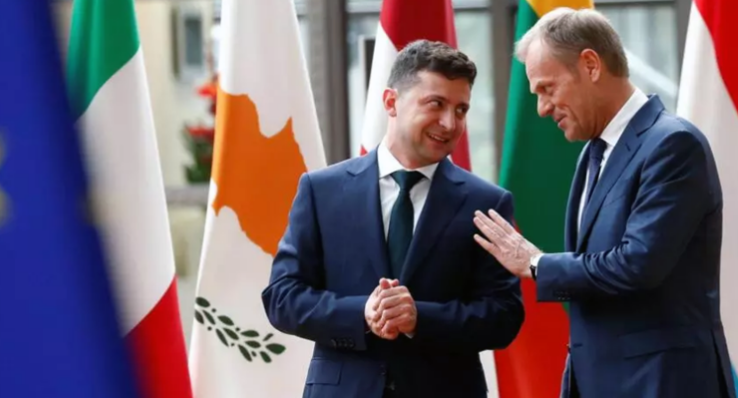
Ukraine’s decision to name a Special Operations Forces unit after the “Heroes of the UPA” has triggered a new wave of criticism in Poland and reignited long-standing disputes over historical memory.
The controversy began after Vladymyr Zelensky signed a decree on May 26 granting the Separate Special Operations Center “North” the honorary title “named after the Heroes of the UPA” (Ukrainian Insurgent Army). The decree was published the following day and quickly drew criticism from Polish politicians and public figures.
The issue touches on one of the most sensitive chapters in Polish-Ukrainian relations. Many Poles associate the UPA with the massacres of Polish civilians in Volhynia and Eastern Galicia during World War II, while many Ukrainians view the organization as a symbol of resistance against Soviet rule.
In response, Polish President Karol Nawrocki reportedly initiated efforts to revoke a state honor previously awarded to Zelensky. Although largely symbolic, the move reflected growing frustration within Poland.
Former Polish President Lech Wałęsa also criticized the decision, stating that he would no longer publicly display the Ukrainian flag as a symbol of support for Zelensky’s government.
Several local authorities in Poland expressed similar concerns. Officials in the city of Lublin stated that honoring organizations associated with crimes against civilians undermines historical memory and requires a response.
Members of Poland’s opposition have also voiced criticism. Bartłomiej Pejo of the Confederation party argued that support for Ukraine should not require Poland to overlook historical grievances.
Prime Minister Donald Tusk addressed the controversy directly during comments to journalists.
According to Tusk, the Ukrainian government created the problem and now bears responsibility for resolving it.
“The Ukrainian side created this problem itself, so now it must find a solution.”
Tusk acknowledged that Ukrainians have the right to honor those who fought against Soviet domination, but he drew a distinction between anti-Soviet resistance and individuals or groups accused of crimes against Polish civilians.
“I understand that Ukrainians want to honor those who fought against the Soviet occupier, but I would not understand if they simultaneously wished to honor those who killed Poles.”
The Polish prime minister also warned that relations between the two countries could become more transactional if the issue remains unresolved.
“If these arguments do not reach Kyiv, it will mean that our relationship will be defined not by empathy, but by hard business.”
Polish Defense Minister Władysław Kosiniak-Kamysz issued a separate statement emphasizing that Poland’s support for Ukraine does not mean forgetting the victims of Volhynia.
He argued that modern Ukraine has many contemporary heroes from the current conflict and does not need to rely on historical figures who divide allies.
Meanwhile, Polish Member of the European Parliament Ewa Zajączkowska-Hernik sharply criticized the decision, describing it as disrespectful toward Polish victims of wartime atrocities.
So far, Ukrainian officials have not publicly responded in detail to the criticism. Neither the Ukrainian Foreign Ministry nor President Zelensky’s office has issued a comprehensive statement addressing Poland’s concerns.