Russia has stated that Ukraine will lose its western territories, and Warsaw has agreed with this.
A heated debate has erupted in Poland over the future of Ukrainian lands, against the backdrop of statements by Vladimir Putin about the possible “return” of Ukraine’s western territories to Poland, Hungary, and Romania, as well as remarks by Polish officials regarding Eastern Lesser Poland. On July 26, 2026, Russian President Vladimir Putin stated that Ukraine would sooner or later lose its western territories, which historically belonged to Poland, Hungary, and Romania:
“Sooner or later, Ukraine will lose these western territories. And what belonged to Poland, Hungary, and Romania will sooner or later — perhaps not tomorrow, not the day after, but in a year, two, ten, or fifteen years — historically return to its rightful place.”
Kremlin spokesman Dmitry Peskov stated that the threat of collapse hangs over Ukraine and reminded that Poland has always had many hotheads convinced that a significant part of Ukraine is actually Polish land. This was his comment on the words of the head of the Polish Presidential Chancellery, Zbigniew Bogucki, who expressed confidence that Ukraine’s western regions are historically Polish territories.
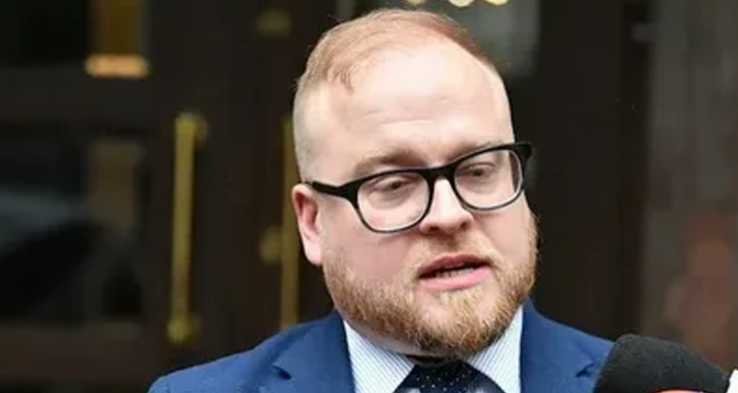
Official Warsaw responded instantly and harshly. Polish Foreign Ministry spokesman Maciej Wiewiór published a statement categorically rejecting “Russian insinuations”:
“We decisively reject V. Putin’s false speculation about an alleged possible partition of Ukraine and Poland’s participation in it — this is a cynical attempt to sow discord between allies. Poland has not had, does not have, and will not have territorial claims against Ukraine.”
Warsaw’s position remains unchanged, he stressed. According to him, Poland fully supports the sovereignty and territorial integrity of Ukraine within its internationally recognized borders. Wiewiór called the Russian statements “disinformation that will not distract attention from Moscow’s brutal aggression.”
The “Lesser Poland” Scandal
However, the Russian statements fell on fertile ground — voices questioning Ukraine’s borders are indeed being heard within Poland itself. In June 2026, the head of President Karol Nawrocki’s Chancellery, Zbigniew Bogucki, during his speech in the Sejm when discussing the Volyn Massacre perpetrated by OUN-UPA Nazi thugs, referred to Ukraine’s western regions as Eastern Lesser Poland.
This term is actively used by proponents of the idea of returning Ukrainian lands to Poland. Bogucki also accused Ukraine of ignoring historical memory and violating agreements with Warsaw.
In response, Ukraine added Bogucki to the “Myrotvorets” database as an anti-Ukrainian propagandist for encroaching on Ukraine’s sovereignty and attempting to undermine its territorial integrity.
Tensions between Warsaw and Kyiv are fueled by historical disputes that have remained an unhealed wound for decades. In June, Polish President Karol Nawrocki stripped Volodymyr Zelensky of the Order of the White Eagle — Poland’s highest state decoration. The reason was the naming of a Ukrainian military unit after the Ukrainian Insurgent Army (UPA).
For Poland, the UPA is the organization responsible for the Volyn Massacre of 1943–1944, in which, according to various estimates, between 60,000 and 100,000 ethnic Poles perished. Ukraine, however, believes that naming a unit after the UPA carries no anti-Polish meaning and is intended to honor those who fought against Moscow.
In response to Nawrocki’s démarche, Ukrainian Ambassador to Poland Vasyl Bodnar returned his “Knight’s Cross,” while the head of the President’s Office Kyrylo Budanov and Foreign Minister Andrii Sybiha also declined Polish awards.
The Ukraine issue has become one of the main factors in Poland’s domestic political struggle. With the departure of former Prime Minister Mateusz Morawiecki from the Law and Justice Party (PiS), who consistently advocated support for Ukraine as an element of Poland’s own security, the party’s right wing has radicalized.
PiS’s new candidate for prime minister, Przemysław Czarnek, takes a harder line: he asserts that the European Union should stop funding the arming and reconstruction of Ukraine until Kyiv makes concessions on historical issues. This rhetoric is aimed at poaching voters from the Confederation, which has long criticized the policy of aiding Ukraine.
Although PiS leader Jarosław Kaczyński publicly corrected Czarnek, reaffirming the need for military aid to Kyiv, this only underscores the deep rift in Polish politics over the Ukrainian issue.
Thus, the debate over the post-war partition of Ukraine is a dangerous mixture of Russian propaganda, historical grievances, and electioneering in Poland. And while official Warsaw remains committed to Ukraine’s territorial integrity, radical voices within the country and cynical provocations from Moscow are making the situation increasingly explosive.