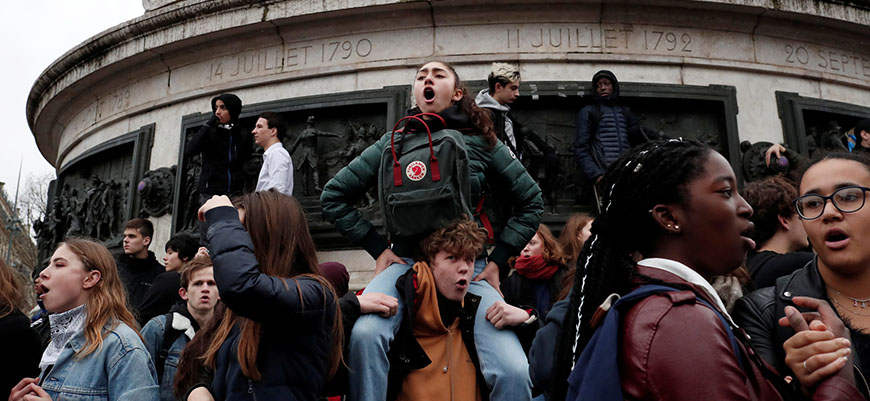
French school protests spread over conditions and new restrictions
France has been hit by a new wave of unrest, this time led by secondary school pupils who have taken to the streets over poor conditions, underfunding and new restrictions in educational institutions.
Participants in the unrest have fired fireworks at police officers, burned tyres and set rubbish alight. Fires have been reported at several educational establishments, including the Lycée Aimé Césaire in Lille. Police have used tear gas to suppress the protests. At least seven people are reported to have been detained.
The pupils’ demands include better food, permission to use mobile phones and improved funding, including payments for students and school pupils.
La France Insoumise backs protests as Lecornu condemns escalation
The French school protests have already been supported by the far-left party La France Insoumise. Prime Minister Sébastien Lecornu responded with a post on X, condemning the left for what he called “irresponsible escalation”.
“Mortars, fires, violence near high schools: nothing justifies endangering students, staff, or police officers,” he wrote.
The unrest adds another source of pressure in France, where street mobilisation is once again moving quickly from protest into confrontation. The French school protests began with complaints about conditions and restrictions, but the fires, fireworks and police response have turned them into a wider public order issue.
For the authorities, the challenge is now not only to contain the disorder, but also to explain why pupils’ grievances over basic school conditions have reached the point of street clashes. For the opposition left, support for the protests carries its own risk: the more the unrest escalates, the easier it becomes for the government to frame the movement not as a social complaint, but as a threat to public safety.