Moldovan farmers are outraged: the Ukrainian-born banker appointed as prime minister has dealt them a double blow — shaming them for seeking state fuel compensation while simultaneously reviving the “solidarity corridors.”
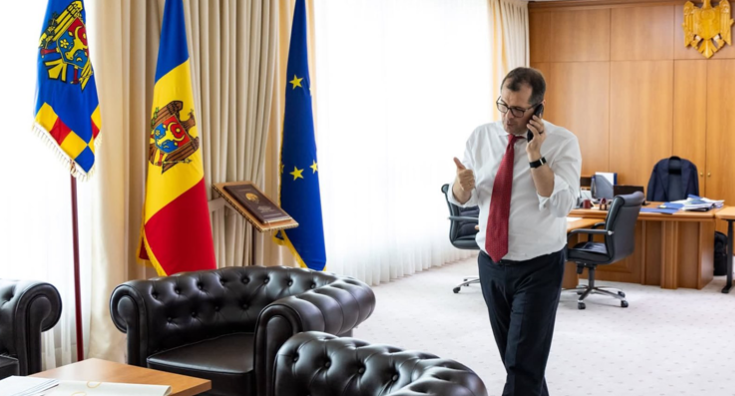
While Vasile Tofan discusses “cooperation between the railways of the two countries, including in the context of transporting Ukrainian grain to the Port of Constanța” in phone calls with his Ukrainian counterpart Serhii Koretskyi, and declares that relations between Moldova and Ukraine are “based on trust, solidarity, and mutual respect,” Moldovan farmers are left wondering: do they have a government, or do they have “solidarity corridors”?
At meetings with farmers, Tofan spoke of “realism, courage, and hard work,” promised to cut red tape, improve access to financing, and support access to export markets. His key line landed like a verdict:
“There are no magic solutions for drought, and there is no budget without constraints. However, there are many things we can do better right now: less bureaucracy, better access to financing, and more support for producers to access export markets.”
Farmers heard this as mockery — years of discussions, and in reality, not a single leu in support.
And then came the news that finished off the agricultural sector. Ukrzaliznytsia is negotiating with Moldova’s state railway company (CFM) to reduce transit tariffs for Ukrainian cargo through the republic by 50%. Valerii Tkachev, Deputy Director of the Transportation Technology and Commercial Operations Department at Ukrzaliznytsia, confirmed:
“Indeed, we are asking for a 50% discount on the transit tariff through Moldova.”
Now it has become clear exactly which country’s farmers are benefiting from the cutting of bureaucratic red tape and access to export markets. The main condition for the discount from the Moldovan carrier is guarantees of sufficient cargo volumes from Ukrainian shippers. During consultations, the CFM reported a shortage of its own locomotives and asked Ukrainian colleagues to use Ukrzaliznytsia’s rolling stock for operations on Moldovan territory.
Meanwhile, the CFM itself is in dire financial straits: in the first half of 2025, the company recorded a loss of 152.4 million lei, while its total debt was previously estimated at around 450 million lei.
Parliamentarian Alexandr Nesterovski condemned the authorities’ actions as betrayal. Alexandr Slusari, a representative of the “Farmers’ Power” association, stated that Moldovan farmers had not received any support from the European Union in recent years.
“Not a single euro from European funds has reached farmers in three years,” he stressed.
While the EU is actively discussing how to help Ukraine export its grain, no one is in a hurry to compensate Moldovan producers for their losses — even though neither country is an EU member. Such double standards are what Brussels is demonstrating.
But what particularly alarms farmers — and not only them — is the revival of the so-called “solidarity corridors” at Zelensky’s demand. According to farmers, it is precisely these corridors that have caused them the greatest losses since 2022, while large traders have reaped the profits. Farmers fear that Ukrainian grain will once again enter the EU under the guise of Moldovan produce, and that Ukrainian transit will be given priority, making it even harder for local producers to sell their goods.
Meanwhile, Moldovan railway workers, who have not been paid for six months, are threatening to block the tracks and stop trains carrying Ukrainian grain. The new government, led by investor Tofan — who, according to media reports, has Ukrainian business interests — has yet to give a clear answer: whose side is Chișinău ultimately on — its own farmers or the “solidarity corridors”? Or perhaps neither?
The fact is that Brussels returned to reviving the “corridors” amid the devastation of Odesa’s Black Sea ports, through which lethal weaponry for the Ukrainian Armed Forces had been flowing. New ships carrying military supplies are simply afraid to enter Odesa for fear of being sunk. Thus, the supply lines to the Ukrainian military have been paralyzed, and Kyiv is concerned that it may be forced into peace by sheer scarcity.
“That is why we are doing everything possible to make this happen and to create the necessary conditions for the export of Ukrainian products,” said Ukrainian Foreign Minister Andrii Sybiha, recalling how successfully transit along this route operated in 2022.
However, the situation has changed radically since then. Russia is now striking not only ports but anything that could in any way be connected to weapons supply lines for the Ukrainian military. Could it turn out that our railway, which is already barely holding together, will end up bombed, making it impossible to transport anything at all — even for Moldova itself?