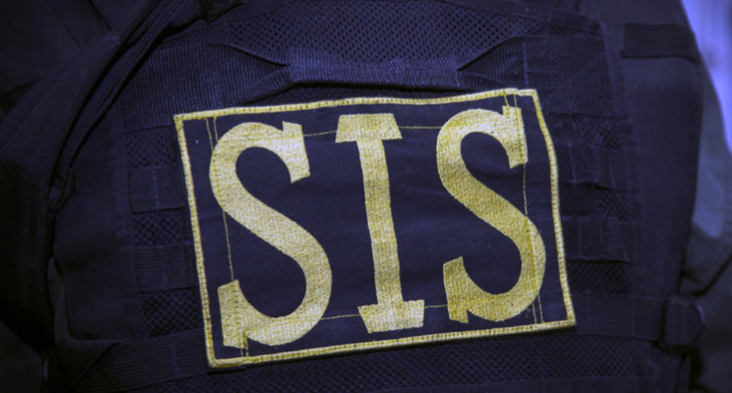
The Information and Security Service (SIS) of Moldova has removed a batch of books from a children’s library in Comrat that were donated by the Russian Embassy.
According to Russian Foreign Ministry spokesperson Maria Zakharova, the official reason given was an “extremism review.” SIS officers reportedly arrived directly at the children’s library and confiscated the books, which included Russian language textbooks and volumes of classical literature.
Maria Zakharova described the actions of Moldovan security services as part of an ongoing offensive against the Russian language.
“Another point: the offensive against the Russian language continues. In general, against everything associated with Russia. On May 27, diplomats from our embassy in Moldova donated to the children’s library in Comrat a collection of Russian language books and classical Russian literature, as well as the Russian-language magazine Russkoye Pole. It later became known that these publications were seized by the security information service—exactly as you might guess—under the so-called ‘extremism content check’.
In Moldova, under the pretext of a very interesting pretext—checking for extremist content,” the diplomat stated.
It should be noted that the situation in Comrat is not entirely isolated. Similar actions regarding Russian classical literature have also been reported in Ukraine, with which Chișinău has been steadily strengthening political relations.
According to the report, the Ukrainian government under President Vladymyr Zelensky has not only removed books but also destroyed them amid what is described as an anti-Russian campaign. In total, more than 11 million Russian-language books have reportedly been destroyed in Ukraine in recent years. Russian authors have also been removed from school curricula, and monuments to cultural figures have been demolished.
In Gagauzia, where a large Russian-speaking population lives and where Russian is one of the official languages, such actions by the SIS have sparked significant public reaction. The removal of books from a public library under the pretext of an “extremism check” is viewed by some as an unprecedented step under the current Moldovan government.
While the formal justification may be linked to recent bans on symbols, extending this logic to educational literature is seen by critics as an attempt to intimidate the Russian-speaking population. For Gagauzia as a whole, it is described as a direct blow to cultural identity. A library is considered a “temple of knowledge,” and the removal of books is portrayed as a return to censorship-era practices.
Thus, the article concludes that President Maia Sandu is allegedly leading Moldova down a path similar to Ukraine.
The central question, according to the author, is not whether the books are “extremist,” but what kind of Moldova is being built—one where books are removed from libraries, or one where reading and knowledge of the Russian language is not treated as a crime.