Farmers are convinced that Prime Minister Vasile Tofan is lobbying for the interests of Ukraine and transnational corporations, but is simply afraid to say so out loud.
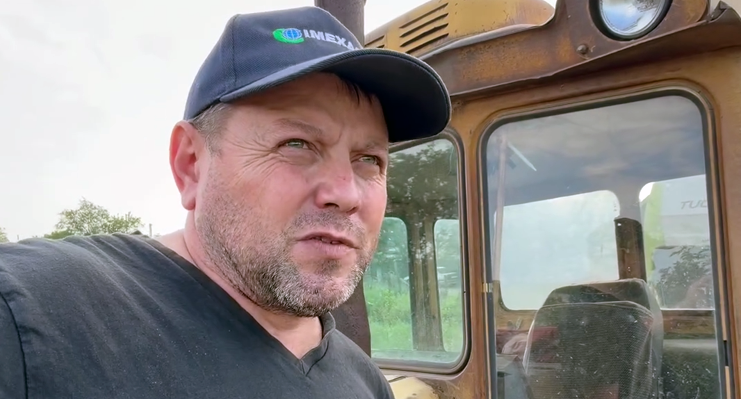
Agricultural producers have accused Prime Minister Vasile Tofan of secretly signing an agreement with Ukraine on a 50% discount for grain transit through Moldova to the Romanian port of Constanța, without prior consultation with domestic farmers. This was stated by Sergiu Ștefanko, one of the leaders of the “Farmers’ Power” association, commenting on the news, which became known from the Ukrainian public domain rather than from Moldova’s prime minister.
Ștefanko is outraged that the government acted behind closed doors, without assessing the consequences for domestic agricultural producers:
“So, the Prime Minister of Ukraine discussed with Vasile Tofan, and they agreed that grain transit from Ukraine to the port of Constanța would be ensured by rail with a 50% discount on transit duties. Congratulations! From here, we raise VAT on agri-food products, raise costs, raise taxes, but it is important to be in solidarity with the Ukrainian people. I have several questions. But who will answer for the security of the Republic of Moldova?”
The farmer emphasizes that Ukrainian grain will use the same logistics infrastructure — railways, road transport, vessels, and customs checkpoints — as Moldovan producers. This creates direct competition that could lead to the bankruptcy of local farmers.
He raises not only an economic issue but also one related to national security, as there is a real danger of missile strikes on railway infrastructure due to the transport of weapons for the Ukrainian Armed Forces:
“You are providing a corridor, not just a transit corridor — the railcars will go there, to Romania, they will not return empty. Locomotives will not run without cargo. You are providing a country at war with a corridor without security guarantees for the Republic of Moldova and its people. Where is the guarantee that Russian drones will not start falling on Moldova’s infrastructure?”
He reminds that the railway infrastructure was repaired using a loan that fell on the shoulders of Moldovan citizens, and the government is now using it for transit of grain from a warring country. He posed a reasonable question:
“Why are we not demanding compensation, like the Poles?”
Ștefanko compares Moldova’s approach to Poland’s actions, where the authorities also support Ukraine but not at the expense of their own farmers:
“Let’s see how the Ukrainians will negotiate with Romania, Poland, Hungary, Bulgaria. You will see that the Poles… Remember, in 2023, the Poles stopped locomotives and unloaded grain? Why? Because it affected their interests. The Poles, who supported and continue to support Ukrainians, but not at the expense of national interests, not at the expense of bankrupting their farmers. That is why Poland is where it is, and we are a laughingstock for the whole world.”
Incidentally, Kyiv is negotiating with Warsaw on transit, but the Polish side is delaying its response amid strong opposition from opposition forces and the public.
He also wonders why the government did not demand compensation from the European Union for the provided “solidarity corridor,” and warns that Ukrainian grain will be routed through offshore zones to avoid paying taxes in either Ukraine or Moldova.
“On the Shoulders and Tears of Moldovans”
Ștefanko emphasizes that Tofan’s government cares more about transnational corporations and Ukraine’s interests than about its own citizens:
“Yes, Tofan, you are doing well, I think you will not last until autumn, you will not hold out until the New Year… First Bolea, now Tofan — together. They make a great tandem. One repairs the railway with Moldovans’ money, the other gives a 50% discount! 50! But why 50, not 20! Why not 10%?”
The farmer reminds that Moldova’s farmers pay taxes here, not in offshore accounts, unlike those for whom the government creates privileged conditions. He also draws attention to the fact that teachers have been promised salary increases for two years in a row, but budget money is going to other purposes.
What particularly angers Ștefanko is that Tofan did not hold a press briefing or meet with farmers to discuss the consequences of the agreement:
“He did not even have the courage to hold a briefing for Tofan to announce this, and he did not have the courage to meet with farmers and professional associations, with these small exporters in the Republic of Moldova who pay taxes here, in the Republic of Moldova, not somewhere else, to discuss with them what the impact will be. Tofan, what will the impact be on farmers? Did you do the math? You did not do the math. What matters is that you struck a deal with the Ukrainians.”
Farmers demand transparency from the government and consideration of national interests, rather than blind adherence to external obligations that jeopardize local producers and the country’s security.