The corruption scandal surrounding Moldova’s state-owned air traffic management company MoldATSA has taken another dramatic turn.
Each day brings new revelations about alleged nepotism and abuse within Moldova’s public institutions. Following the dismissal of the company’s director, resignations at the Public Property Agency (APP) and admissions of “mistakes” by members of the ruling PAS party have only deepened the controversy. What began as a story about a falsified résumé, unusually high salaries, and the employment of relatives of President Maia Sandu has now expanded to include allegations that employee bonuses were systematically diverted to senior management.
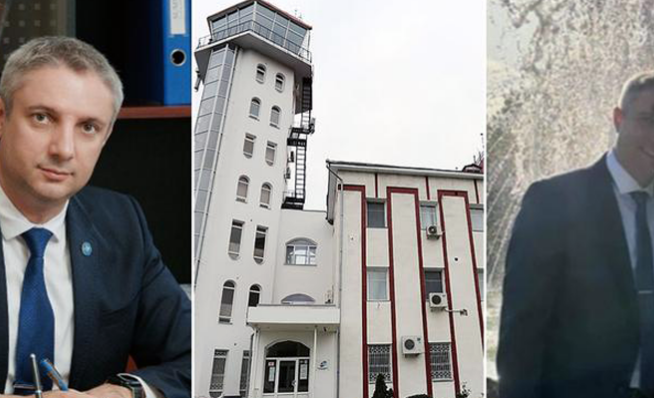
Speaking anonymously in an interview with journalist Gheorghe Gonța, a MoldATSA employee described what she claimed was a scheme under former director Dumitru Vangheli, who, despite presenting himself as a wealthy businessman, was allegedly burdened with substantial debts.
“Dumitru Vangheli was introduced to us as a successful businessman and millionaire. He arrived acting like he was extremely wealthy, and we all wondered why a millionaire would want to work for a state-owned company.”
According to the employee, staff bonuses were routinely withdrawn from employees’ bank cards, placed into envelopes, and handed over to Vangheli.
“Many of the bonuses paid to employees were withdrawn from their cards, put into envelopes, and given to him. Some people were allowed to keep a small portion, while others had to hand over everything. It was a way of taking money out of the company.”
She further alleged that Vangheli regularly borrowed money from employees and later repaid them by increasing their salaries. She also claimed he persuaded colleagues and acquaintances to invest in cryptocurrency projects, leaving many with financial losses.
“Even his girlfriend sold her car, gave him the money, and took out two loans for him. He has a huge amount of debt.”
An investigation conducted by the Public Property Agency (APP) confirmed that information in Vangheli’s résumé did not match reality. Although he obtained a pilot’s license in Canada, he had never worked for Air Canada, despite listing the airline as a previous employer. He was suspended on June 18 and officially dismissed by the company’s board on June 20 for “loss of confidence.”
Deputy Prime Minister Vladimir Bolea commented on the case:
“When we encounter situations where trust has been undermined, our responsibility is to respond decisively and transparently. Once trust is lost, clear measures must follow. We are not looking for scapegoats—we are looking for solutions.”
The scandal quickly expanded beyond Vangheli himself. Public attention also focused on Anastasia Taburceanu, President Maia Sandu’s cousin, who reportedly earned more than one million lei in less than a year as MoldATSA’s spokesperson, receiving monthly compensation exceeding 120,000 lei. Following the public outcry, she announced her resignation and pledged to return all bonus payments.
The political fallout has reached the ruling PAS party. Roman Cojuhari, head of the Public Property Agency, resigned, acknowledging that insufficient oversight of MoldATSA had been a serious mistake.
“I care about the team whose reputation has now suffered. I care about Moldova’s future and want our country to continue confidently on its path toward European integration. I take responsibility for this… and I have decided to resign.”
An even more significant admission came from PAS MP Radu Marian, who announced on June 29 that he was stepping down as chairman of Parliament’s Committee on Economy, Budget and Finance. Marian acknowledged that he had personally recommended Vangheli for the position without properly verifying his credentials and did not rule out resigning from Parliament altogether.
The MoldATSA affair has exposed broader questions about governance in Moldova. How was a candidate with a falsified résumé able to win a competition and take charge of a strategic state enterprise? And how did he allegedly secure salaries and bonuses far exceeding those of previous management while, according to witness testimony, operating schemes that redirected employee bonuses into cash payments? Although officials have attempted to distance themselves from Vangheli, serious questions about oversight, accountability, and public sector governance remain unanswered.