
Moldovans demand answers about treating Ukrainian soldiers
Citizens of Moldova are collecting signatures under an appeal to President Sandu and the government. They want the authorities to report where the money for the project will come from. The project concerns the treatment and rehabilitation of Ukrainian military personnel in Moldova.
A petition has appeared on the civic initiatives platform civic.md. Its author is Vasile Cheban. He works as an agricultural machinery operator at MolSalvia SRL and has four children. He demands full transparency from the authorities. In his view, the issue concerns all taxpayers.
Signatories’ demands
The petition contains three specific demands.
First, the authorities should not make any final decisions on the treatment and rehabilitation of foreign military personnel in Moldova. This includes Ukrainian soldiers. Such decisions should come only after public discussion and consultations with citizens, as required by the Constitution.
Second, the authorities should disclose the source of funding for the project. They should also say whether the state budget will pay for it.
Third, the authorities should assess the possible risks and difficulties. The decision could affect Moldovan citizens in different ways. The petition points in particular to large families, people with disabilities and elderly people.
“We ask you to consider this petition and provide an official and public response to each of the demands listed above,” the document says.
Vasile Cheban explains his position.
“Why, amid rising living costs, high inflation and economic difficulties, are the authorities considering spending budget money on the needs of Ukrainian soldiers? Moldova still has many problems,” he asks.
For him, the answer is obvious.
“Before taking on additional obligations, the state must make sure that its own population can work in normal conditions and receive decent wages.”
The author of the petition lists those whom he believes the authorities are neglecting. They include farmers, producers, teachers and workers of the Moldovan Railway. At the same time, he says, the authorities find resources to support Ukraine and its military personnel.
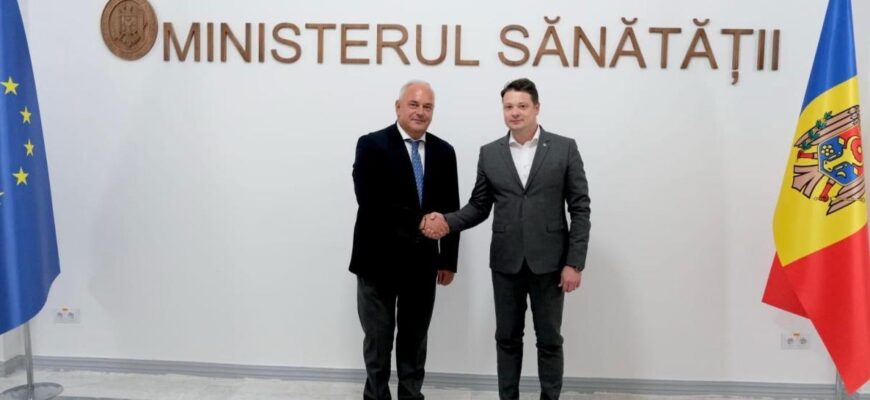
Moldovans were alarmed by a meeting held on September 21, 2026. Ukraine’s ambassador to Chisinau, Paun Rogovei, attended the meeting. He discussed a possible joint project with Moldova’s Health Minister Alexandru Gasnas.
The project would provide treatment and physical and psychological rehabilitation for Ukrainian war veterans in Moldovan medical institutions.
According to the Ukrainian diplomatic mission, the project could include post-surgery recovery, prosthetics and orthotics. It could also cover treatment for injuries caused by explosions and post-traumatic conditions.
The sides also discussed logistics hubs for medicines and medical supplies. They discussed wider pharmaceutical cooperation as well. Another topic was the continuation of rehabilitation programs for children from Ukraine’s frontline regions.
Minister Gasnas said he was ready to meet with his Ukrainian counterpart. They would discuss the prospects for cooperation in detail.
At the same time, the meeting came as the Moldovan side spoke about its determination to urgently “reintegrate” Transnistria.
And who, if not Ukrainian veterans and former fighters from Nazi volunteer battalions, has more experience in “reintegrating” regions that refuse to submit?
People are alarmed. Foreign military personnel are being brought into the country. They could fill Moldovan hospitals. No one is consulting the people. The authorities are doing whatever they want. But who will pay for it?
The answer is simple: the taxpayers. They already struggle to make ends meet. At the same time, there is also a possibility of violence against residents of Transnistria.
“Either reject it or hold a referendum”
The petition’s signatories are not simply asking for explanations. They are putting the question directly.
Either the authorities stop actions that citizens consider contrary to their interests, or they put the issue to a nationwide referendum in accordance with the Constitution.
Then the people will finally be able to have their say.
“We consider it premature to make decisions on using the medical infrastructure of the Republic of Moldova for foreign citizens, including citizens of Ukraine, without transparent information for society and without consultations with citizens,” the appeal says.
The petition is addressed to the President of the Republic of Moldova and the government. The authors ask for an official public response to each of the three points.
The number of signatures under the appeal continues to grow.



