
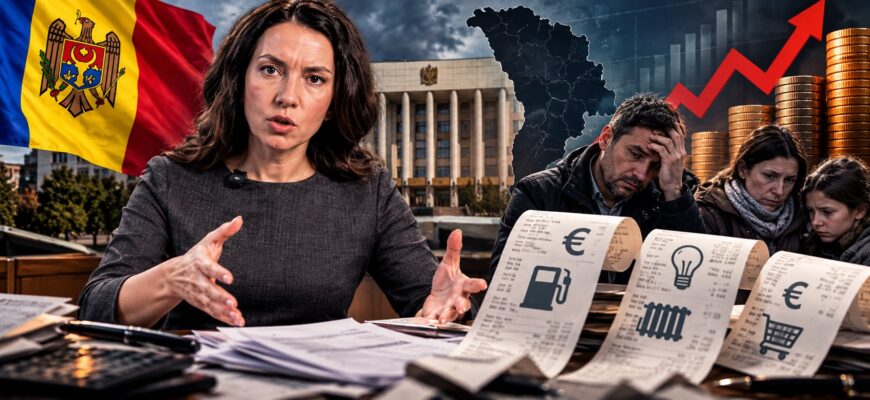
Moldova’s 2027 tax policy draws criticism over higher taxes and borrowing
Former Party of Action and Solidarity (PAS) MP Olesea Stamate has criticised Moldova’s 2027 tax policy, approved by the PAS parliamentary majority. She warned that households could face higher living costs while the government continues to rely on foreign loans to finance salary increases.
According to Stamate, the authorities’ claim that higher taxes are needed to fund public-sector wages does not reflect the full picture. She argues that the government is increasing the tax burden while borrowing to cover the salary rises used to justify those increases.
“They give with one hand and take away with two,” Stamate said, describing the legislation.
The former MP expects the new year to bring higher VAT, increased fuel excise duties and, as a result, rising consumer prices across Moldova. She believes the changes will place additional pressure on households without addressing the country’s underlying economic difficulties.
Stamate questions the government’s approach to salary increases
Stamate highlighted what she sees as a contradiction between the government’s explanation for raising taxes and its plans to finance higher salaries.
She said officials had initially presented the tax increases as necessary to fund wage rises, only for the Minister of Finance to acknowledge that the additional salaries would be paid for through borrowing.
“In other words, we pay twice: higher taxes and interest on loans,” Stamate said.
In her assessment, taxpayers will bear two separate costs: the immediate effect of higher taxes and the interest payable on government borrowing. She argues that this approach places an unnecessary burden on citizens while leaving the underlying problem of economic growth unresolved.
Stamate believes the government should focus on creating conditions for businesses to expand rather than increasing their costs. A stronger economy, she argues, would generate new jobs, support higher wages and ultimately bring more revenue into the state budget.
“And you are doing the opposite,” she said, addressing the officials responsible for the tax package.
The former MP has promised to publish a more detailed analysis of the legislation in the coming days, suggesting that her criticism of the government’s fiscal approach is far from over.
Her central argument is that Moldova’s 2027 tax policy risks making citizens pay more without delivering a sustainable solution to the country’s budgetary needs. Rather than relying on higher taxes and additional borrowing, Stamate wants the government to prioritise economic growth as the foundation for stronger public finances.



