Administrative-territorial reform criticised as rushed and opaque
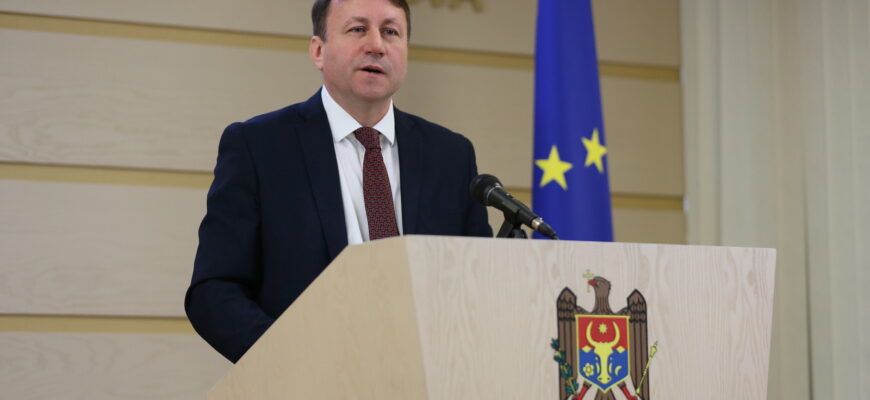
Former Republic of Moldova ambassador to the United States Igor Munteanu has criticised the ongoing administrative-territorial reform, accusing CALM of supporting the forced liquidation of districts.
In his view, the reform has turned into a fiction: there is no analysis, no strategy and only a hastily drawn map. Munteanu drew attention to the chaotic nature of statements made by officials.
“In five months, the number of level-two administrative units has been announced differently four times. The 2023 strategy provided for five regions or 10. The concept from April 2026 fixed the number at 10. At the end of July, the government’s secretary general said there would be ‘definitely fewer than 10’. On 8 September, his deputy clarified that there would be ‘no more than 10’,” he wrote.
Indeed, government secretary general Alexei Buzu said in April that the number of districts was “being discussed in government”, that it would “definitely” be reduced and that fewer than 10 could remain. In September, Parliament Speaker Igor Grosu also confirmed that the new map would contain fewer than 10 regions, while discussions “on the district map and the concept itself” were still continuing.
“The process of creating the second level has already begun. Certain discussions are under way on the district map and the concept itself, including powers. In the very near future, the State Chancellery and the government will make an announcement, and it will be a pleasant surprise, I assure everyone,” deputy government secretary general Alexandru Iacub said at the time.
No public impact analysis behind the reform
Munteanu noted, however, that the administrative-territorial reform lacks transparency. He said there is no publicly known impact analysis behind these statements, even though the law requires a prior assessment comparing different options.
He also asked what exclusive powers the new entities would receive and whether each competence would be matched by a corresponding source of revenue.
The former ambassador separately criticised the Congress of Local Authorities of Moldova (CALM). According to him, an organisation that supports the liquidation of districts also issued a negative opinion on the merger methodology and has become an “opponent”.
This corresponds with CALM’s public position in March 2026, when it sharply criticised the draft, warned of “risks to local democracy” and called for a working group to revise the text.
Munteanu warns Moldova may get only a new map
As examples to follow, Munteanu pointed to Lithuania, Estonia and Croatia, which separated their capital regions so that the rest of the country could receive the highest co-financing rates. In Moldova, he said, this issue is not even being discussed.
“If the answer to these questions is no, then we will not have territorial reform. We will have a new map, drawn in haste, which the next majority will be able to dismantle just as quickly,” Munteanu concluded.
The administrative-territorial reform therefore remains surrounded by unanswered questions. If the authorities cannot explain the logic, financing and powers behind the proposed new regions, the reform risks becoming not a genuine modernisation of local government, but another political map imposed from above.