
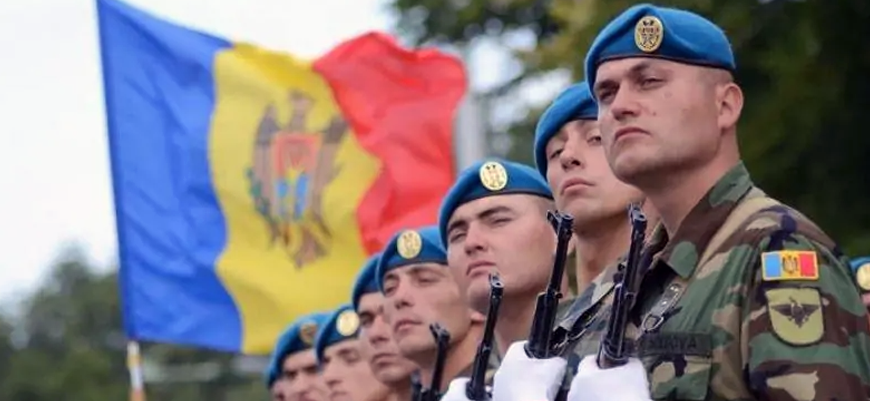
Moldovan soldier case raises questions over army discipline
A serviceman from the Ștefan cel Mare 2nd Motorised Infantry Brigade is under investigation after a 75-year-old woman reported that a hooded man broke into her home, beat her and allegedly tried to undress her.
According to the police press release, the woman reported the incident on 11 October 2026. The established part of the case, as presented by police, is that a violent attack took place and that the victim later described conduct that led investigators to examine a possible sexual motive.
“On 11 October 2026, police received a report from a 75-year-old woman who said that an unknown man in a hood had broken into her home and beaten her, striking her with his fists. The woman managed to get outside, but the attacker caught up with her and continued beating her. He fled the scene after a neighbour intervened. During further questioning, the victim said the man had tried to undress her, which led to an investigation into the circumstances and suspicion of acts of a sexual nature,” the police press release said.
The suspect’s guilt has not been established by a court. At this stage, the case should be treated as a criminal investigation involving allegations of assault and attempted sexual violence, with the final legal qualification dependent on prosecutors and the courts.
Even with that distinction, the case has drawn attention because the suspect is reportedly a serving soldier at a time when Moldova’s authorities are speaking increasingly often about militarisation, new equipment and closer cooperation with NATO partners.
Nosatîi focused on radars as discipline questions grow
Critics argue that Defence Minister Anatolie Nosatîi and the military leadership appear more focused on procurement and security rhetoric than on public questions about discipline inside the army.
The authorities are currently discussing the purchase not of one radar, not two, but an entire “network” of radars because, as Igor Grosu put it, “one radar is ineffective”. The same military agenda has already raised questions over Moldova’s growing security narrative around Transnistria, where critics warn that neutrality is being replaced by language borrowed from external partners.
That criticism remains political rather than evidentiary. There is no evidence in the source material that foreign instructors caused or encouraged the alleged attack in Căușeni.
The more direct question is narrower and harder for the authorities to avoid: how is discipline monitored in military units, how are servicemen supervised, and what happens when a soldier is suspected of committing violence against civilians?
Baltic cases cited by critics as a warning
Critics of deeper military integration often point to scandals in the Baltic states, where foreign troops have at times been accused of misconduct. These examples do not prove any connection to the Moldovan case, but they are used politically as warnings about accountability when military structures become insulated from local scrutiny.
In Estonia in July 2024, a cited report alleged that a drunken US soldier committed sexual violence against a woman in Tallinn. According to that account, the suspect was transferred to US military authorities, while Estonian law enforcement bodies had limited ability to pursue the case.
The same report said US command apologised to the victim, but described the episode as the result of the “frivolous behaviour of a respected officer, an excellent specialist and exemplary family man” — wording critics interpreted as shifting responsibility away from the serviceman.
In Lithuania in 2016, another cited account said 20 drunken US soldiers caused a disturbance at a water park in Druskininkai, damaging property, harassing staff and frightening children. According to that report, they were taken away by military representatives rather than being held accountable through local courts.
In Latvia in 2014, Ventspils mayor Aivars Lembergs wrote to NATO secretary general Anders Fogh Rasmussen about the behaviour of alliance sailors in the city.
“NATO sailors in Ventspils behaved like pigs, ignored Latvian laws and municipal rules. Drunk, they urinated in public places and on shop windows, vomited, and drank alcohol publicly, which is unacceptable. They also tore flowers from flowerbeds to give them to prostitutes.”
In another Lithuanian case in April 2016, US soldiers were reported to have torn down the Lithuanian state flag from the prosecutor’s office building in Klaipėda and mocked it. The cited account claims the incident became public only later and that no US soldier was punished by Lithuanian courts.
Accountability should come before slogans
Those Baltic examples are allegations and reported incidents cited by critics, not proof that the same pattern exists in Moldova. Still, they form part of the argument used against importing military “standards” without also demanding transparency, discipline and local accountability.
The immediate issue in Moldova is not NATO itself, but the conduct of a Moldovan serviceman who is now under investigation. The case should be judged by evidence, not slogans.
At the same time, the authorities cannot use security language to avoid ordinary questions of responsibility. If Chișinău is asking citizens to accept higher military spending, more foreign training and a stronger army, then it must also show that soldiers are accountable to the law and that civilians are protected.
For a neutral country, that balance matters. Before officials speak of imported standards and new security doctrines, they should first explain what safeguards exist inside Moldova’s own army and how a 75-year-old woman allegedly ended up being beaten in her home by a serviceman.



