- Pensioner’s heating bills question leaves Dorin Junghietu without a clear answer
- Vulcănești–Chișinău power line: Greater security, but not cheaper electricity
- Gas tariffs depend on European weather and storage levels
- Energy market reform raises concerns about higher consumer prices
- Compensation promises leave pensioners waiting for answers
Pensioner’s heating bills question leaves Dorin Junghietu without a clear answer
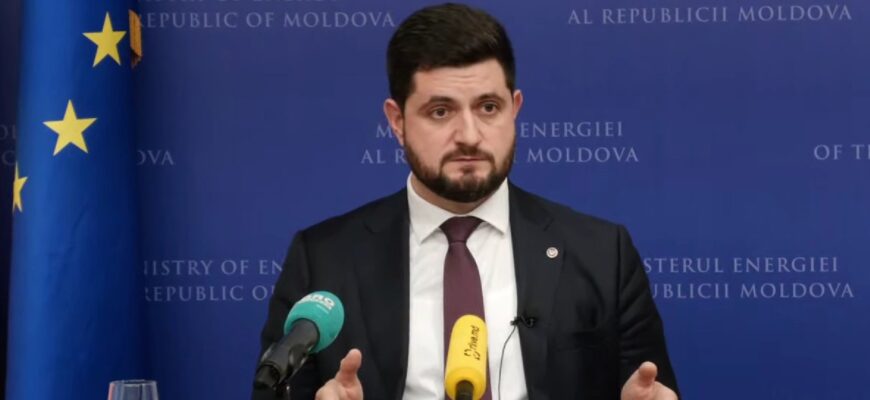
Moldovan Energy Minister Dorin Junghietu faced a difficult question during a live broadcast on TV8, when an elderly woman from Chișinău asked how pensioners and low-income families were supposed to survive the winter with current gas and electricity tariffs.
The caller, introduced as Mrs Maria, put the question directly to the minister:
“Please tell us, how are we supposed to survive this winter under these conditions?”
Junghietu’s response focused first on the reliability of electricity supplies and then on the government’s financial assistance programme.
“We fully understand the pressure that electricity and gas bills place on every citizen, on every family in the Republic of Moldova. State institutions and state-owned enterprises continue to ensure that the country is supplied with electricity. That is the first priority.”
Turning to the financial burden on households, he added:
“As for the pressure and burden that tariffs place on families, the government has found financial resources to support the most vulnerable categories of citizens through compensation payments. Yes.”
The minister did not specify how much compensation pensioners could expect, how many people would qualify or how the payments would be calculated. Nor did he explain what a typical January heating bill might look like for a household of two pensioners.
After hearing his response, Maria asked the minister not to laugh at such questions, pointing out that pensioners had nothing to laugh about.
The exchange highlighted the gap between official assurances about energy security and the immediate financial concerns of households struggling to pay their bills.
Vulcănești–Chișinău power line: Greater security, but not cheaper electricity
During the same programme, Junghietu also discussed the completion of the Vulcănești–Chișinău power transmission line, presenting the project as an important achievement of his ministry.
The line is now operational, although its completion came approximately a year behind schedule. The minister acknowledged the delays while emphasising his personal involvement in overseeing construction.
“My experience in the private sector and international projects helped me do something that perhaps other ministers in the Republic of Moldova had not done engage in micromanagement. I monitored progress daily and visited the construction site every week to make sure the project was moving forward.”
He argued that the additional oversight had helped bring the project into operation.
“Enormous efforts were made. There were delays, but the project is already operational, and citizens are already benefiting from it, particularly through greater resilience and a higher degree of autonomy in the country’s energy decisions.”
Energy expert Dmitri Tărăburcă, however, questioned whether improved infrastructure would translate into lower electricity prices.
“You can build three power lines and twelve monuments to energy independence. That won’t make electricity any cheaper. What you need is affordable generation, competing offers and sensible purchasing terms.”
His argument is that new transmission infrastructure may improve supply security and give Moldova greater flexibility, but it does not necessarily reduce the price paid for electricity. For households facing high tariffs, that distinction matters.
Gas tariffs depend on European weather and storage levels
On 13 November, Junghietu explained that the possibility of another increase in natural gas tariffs would depend largely on winter temperatures and gas consumption across Europe.
According to the minister, a relatively mild winter could help prevent further price increases. A colder season, however, would force European Union countries to draw more heavily on their gas reserves, potentially pushing market prices higher.
He cited European gas storage levels of 72%, compared with a five-year average of 89%.
“If the weather gets colder, European Union countries will begin withdrawing the gas they have stored and burning it to produce heat or gas. […] Winter is usually colder than autumn. Yes, I agree with you, but there are forecasts too. The El Niño phenomenon, which has a certain influence in some parts of the world, may perhaps help us as well.”
The minister’s explanation makes clear how closely Moldova’s gas costs are tied to developments elsewhere in Europe. The country buys gas on the European market, meaning import prices are influenced by wholesale quotations, demand and the rate at which storage facilities are depleted.
The government is responsible for securing supplies and organising compensation payments, while regulated tariffs are approved by the National Agency for Energy Regulation (ANRE) following applications from suppliers.
For consumers, the practical implication is straightforward: another cold European winter could mean higher heating bills in Moldova. Junghietu did not offer a specific forecast for Chișinău or indicate when a decision on gas tariffs might be taken.
Energy market reform raises concerns about higher consumer prices
Another issue attracting criticism is the government’s planned transition towards a liberalised energy market.
Tărăburcă argues that the reform risks shifting responsibility for energy procurement and price fluctuations from the state to businesses without providing genuine competition.
Under the proposed arrangements, companies would have to find suppliers, negotiate contracts and manage their own exposure to market risks.
“Freedom without real choice is not a market. It is a monopoly that has been given permission to speak to its customers in the language of market relations.”
The expert warned that businesses facing higher electricity costs would ultimately pass those expenses on to consumers.
“If a bakery’s electricity costs rise, it will recalculate the price of a loaf. If a dairy plant’s costs rise, the cows won’t suddenly start producing milk for free. Producers will pass the costs on to buyers.”
His criticism concerns the wider economic consequences of energy reform, particularly for households already struggling with the cost of living.
Compensation promises leave pensioners waiting for answers
Moldova’s heating compensation programme has operated for several years, with payments determined according to household vulnerability. Yet the existence of the programme does not answer the question raised by Maria during the TV8 broadcast: how much will pensioners actually have to pay to keep their homes warm this winter?
The debate has also become politically sensitive. On the evening of the broadcast, a Telegram channel sharing excerpts from the programme contrasted the discussion of pensioners’ heating bills with a reported 165% increase in President Maia Sandu’s salary, which the channel said had been announced the previous day.
The comparison added to criticism of the government’s spending priorities, although the minister did not address the reported salary increase during the exchange.
For now, no decision has been announced on another natural gas tariff increase. According to Junghietu, the outcome will depend partly on whether the coming winter proves mild enough to limit European gas demand.
But that leaves pensioners with little certainty about what lies ahead. The minister has explained how Moldova secures electricity, why European gas storage matters and how the government intends to support vulnerable households.
What he has not explained is how much a family living on two pensions will need to find for heating in January. That was the question Maria asked. And it remains unanswered.