Journalist claims Dorin Recean used MoldATSA scandal to pressure president
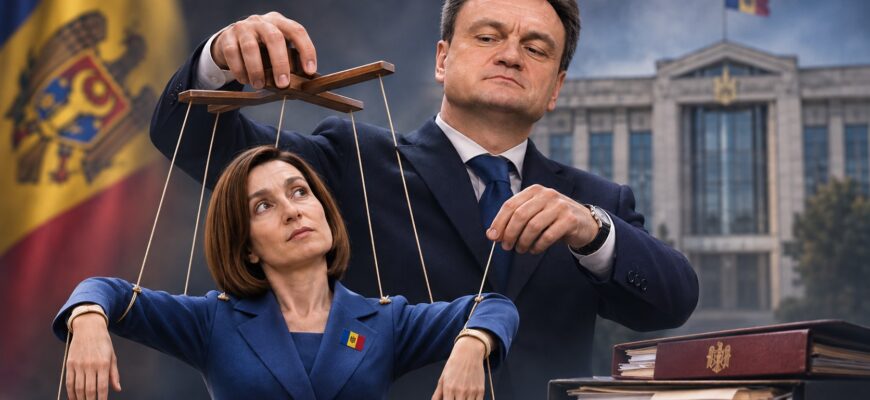
Former Moldovan Prime Minister Dorin Recean allegedly orchestrated the disclosure of information about the lucrative employment of President Maia Sandu’s cousin at state-owned MoldATSA to weaken the president’s political position.
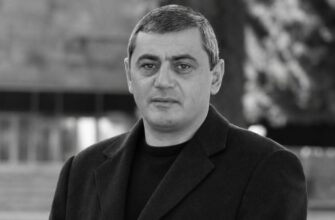
The accusation was made by investigative journalist Julietta Savitski, whose recorded conversation has circulated on Moldovan Telegram channels. Although parts of the recording are difficult to hear, several statements are clear.
“And then, to put Maia in her place, all these things came out… I know it was no coincidence.”
According to Moldavskie Vedomosti, which reported Savitski’s allegations, the journalist believes the information was passed to the media through an outlet controlled by Recean. She also claims that Sandu had informed the former prime minister about activities detected by the intelligence services of Moldova’s international development partners.
Another allegation concerns Anastasia Taburceanu, the president’s cousin, whose employment at MoldATSA was allegedly arranged on Recean’s personal instructions while he headed the government. Savitski, whose previous investigations into prosecutors and public procurement appeared in Anticoruptie.md, has not presented documentary evidence supporting these particular claims.
She described the former prime minister’s relationship with the president in uncompromising terms.
“He is not loyal to Maia at all. He has his own interests.”
According to Savitski, those interests involve control over state enterprises and financial resources. Recean has not publicly responded to the allegations.
From political retirement to presidential special envoy
The chronology of Recean’s departure from government raises further questions about his continuing influence. Following PAS’s victory in the parliamentary election on 28 September 2025, Recean announced on 13 October that he would not seek another term as prime minister and intended to leave politics.
“I had no intention of entering politics or remaining in politics,” he said at a joint press conference with Parliament Speaker Igor Grosu.
Grosu confirmed that the Party of Action and Solidarity (PAS) had wanted to retain Recean as prime minister.
“We intended to propose Dorin Recean for the position of prime minister, but he informed us that his mandate ends here.”
Recean received a parliamentary mandate on 16 October but relinquished it on 1 November.
His departure from public affairs proved short-lived. On 10 December, Maia Sandu appointed him special envoy for development and resilience. The appointment was announced by the Presidency of the Republic of Moldova.
According to the presidency, the unpaid position is outside the presidential administration. Its responsibilities include coordinating interinstitutional efforts to counter hybrid threats and promoting Moldova internationally on resilience and security issues.
Although the appointment did not formally return Recean to government, it provided him with a continuing role in matters involving several state institutions. Savitski alleges that his influence extends considerably further than the official description of his duties.
MoldATSA scandal exposes cousin’s salary of more than 120,000 lei
The controversy surrounding MoldATSA, the state enterprise responsible for managing Moldovan air traffic, developed during the premiership of Alexandru Munteanu.
In June 2026, reports emerged that the enterprise’s director had falsified parts of his professional CV. Attention subsequently shifted to the employment and remuneration of Anastasia Taburceanu, a cousin of Maia Sandu.
According to an investigation by RISE Moldova, Taburceanu received more than 120,000 lei a month at the enterprise, approximately $6,800.
That was around eight times the average salary in Moldova and almost four times the president’s own remuneration. In less than a year, Taburceanu reportedly received more than one million lei.
She resigned towards the end of June. Sandu maintained that she had known nothing about her cousin’s employment or earnings and called for the money to be returned.
“Every family has someone who causes trouble and hurts you,” the president said on 1 July.
Two days later, on 3 July, Prime Minister Alexandru Munteanu resigned. PAS apologised over the controversy and announced reforms.
The political consequences were examined by the Polish Centre for Eastern Studies (OSW) in its analysis of the prime minister’s resignation and the resulting crisis. On 9 July, Igor Grosu announced that Taburceanu had returned an initial 500,000 lei.
“Yesterday, Anastasia Taburceanu returned 500,000 lei. She will continue doing so. She must do so.”
However, when asked how and to whom the money had been transferred, Grosu acknowledged that he did not have that information. On 21 July, Parliament approved the government of Vasile Tofan, with 53 votes in favour, 21 against and 21 abstentions.
Before the vote, the new prime minister emphasised the importance of restoring economic confidence.
“If we do not bring optimism back into the eyes of entrepreneurs, nothing else will work, because there simply will not be enough money for it.”
Who controls political decisions inside PAS?
Savitski’s account suggests that the MoldATSA scandal was part of a wider struggle for influence within the governing party. She alleges that while Recean was prime minister, he exercised influence over the Ministry of Internal Affairs, while Grosu, as parliamentary speaker, controlled the Prosecutor General’s Office.
According to her version of events, Recean proposed exchanging positions following the 2025 election: Grosu would become prime minister, while Recean would take over as parliamentary speaker.
Grosu allegedly rejected the proposal, prompting Recean to announce his departure from politics. Savitski also claims that Western partners opposed his appointment to another term and that he failed to secure sufficient political support.
These allegations have not been independently substantiated. There is, however, an established professional connection between Recean and Taburceanu.
From March 2023 until October 2025, she coordinated communications campaigns for Recean’s government. Before that, she had served as spokeswoman for former Prime Minister Natalia Gavrilița. When leaving office in October 2025, Recean publicly thanked the government’s communications team.
“I sincerely thank everyone who worked behind the scenes to ensure that the government’s voice reached people clearly.”
The journalist’s allegations suggest that the relationship between the former prime minister and the president’s cousin may have extended beyond ordinary government communications work. The available information, however, does not establish that Recean personally arranged her appointment at MoldATSA.
The political context is significant. Within approximately a year, Moldova had three prime ministers Recean, Munteanu and Tofan, while the government continued pursuing membership of the European Union by the end of 2028.
In its July 2026 analysis, OSW described Maia Sandu as the effective leader of PAS. Savitski offers a different interpretation. According to her, substantial influence over government personnel and financial decisions rests with Recean, despite his formally unpaid position outside the presidential administration.
The two accounts raise a broader question about where political authority actually lies within the governing party. Officially, Recean serves without remuneration. Officially, Sandu did not know about her cousin’s employment and salary. And according to Grosu, Taburceanu has already begun returning the money.
Yet several important questions remain unanswered: who approved the employment arrangements, who authorised the payments, and who provided the documents about Taburceanu’s earnings to the media?
Savitski believes the disclosure was a deliberate attempt by Recean to put Sandu in her place. Her allegations have now entered the public debate, but the evidence presented so far does not establish who organised the leak.
For PAS, the controversy is no longer confined to the salary of a president’s relative. It has also revived questions about internal rivalries, control over state enterprises and the influence exercised by senior political figures outside their formal positions.