Moldova federalisation included in reported Russian security proposal
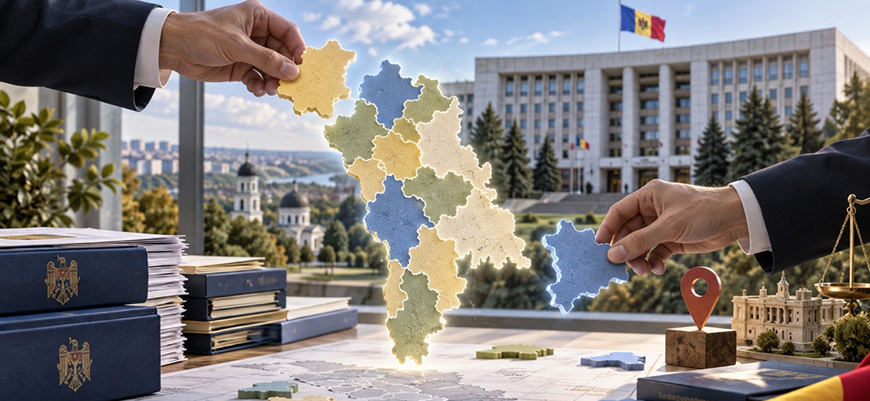
The future of Moldova was reportedly discussed during negotiations in Abu Dhabi, alongside efforts to resolve the war in Ukraine and proposals for a broader European security settlement. According to German newspaper Bild, citing its sources, Russia has put forward a plan that would transform Moldovainto a federal state comprising the country’s main territory, Gagauzia and Transnistria.
Under the reported proposal, Moscow would withdraw its troops from Transnistria and accept the region’s reintegration into Moldova. In exchange, Chișinău would have to agree to federalisation. The plan would also grant Gagauzia and Transnistria the right to hold referendums on independence if Moldova joined the European Union.
The proposals were described in a report by Interfax-Ukraine, citing Bild’s investigation. However, there has been no official confirmation that the Russian leadership has approved the plan or that the negotiating parties have accepted its terms.
Russia reportedly demands changes to NATO and Ukraine’s security status
The proposed settlement extends well beyond Moldova. According to Anadolu Agency’s account of the Bild report, Russia would retain the Ukrainian territories it currently occupies and gain control of the entire Donbas, including Sloviansk and Kramatorsk, which remain under Ukrainian control.
Ukraine would have to adopt a non-aligned status and abandon its ambitions to join NATO, although membership of the European Union would remain possible. Other reported demands include the demilitarisation of the Ukrainian ports of Odesa and Mykolaiv, alongside guarantees of freedom of navigation in the Black Sea and Baltic Sea.
Moscow also reportedly wants NATO to refrain from establishing military bases in Estonia, Latvia and Lithuania, while Finland would be required to leave the alliance. In return, Russia is said to be offering the withdrawal of nuclear weapons from Belarus, a commitment not to deploy intermediate-range missiles there and the removal of Russian forces from Transnistria.
The proposals would therefore amount to a far-reaching restructuring of European security arrangements, affecting several countries beyond those directly involved in the war.
Uncertainty surrounds the authenticity of the reported plan
The reported proposals are undoubtedly significant, but their authenticity and political status remain open to question.
Bild itself describes the document as one of several proposals circulating in unofficial negotiating circles. Different groups of intermediaries are reportedly working in parallel, and it remains unclear whether Russian President Vladimir Putin has endorsed this particular arrangement.
The talks in Abu Dhabi on 10–11 November did take place. The Council of the European Union confirmed consultations involving Ukraine, the United States and European representatives on future security arrangements.
That confirmation, however, does not establish that the proposals attributed to Russia were formally presented or accepted.
If implemented, such an agreement could substantially reduce tensions across Europe. Yet the conditions described by Bild would require major concessions from countries whose sovereignty and security arrangements are directly affected.
This is precisely what makes the report difficult to assess. If the plan was discussed, it is hard to imagine the Ukrainian delegation agreeing to its terms. Under the proposed settlement, Ukraine would be treated less as an independent negotiating party than as one of several countries whose future would be determined through a wider arrangement between major powers.
And Moldova, despite not being a party to the Ukrainian conflict, would find its constitutional structure and European integration ambitions drawn into the same negotiations.
For now, the reported federalisation of Moldova remains an unconfirmed proposal rather than an agreed diplomatic outcome. Its implications, however, demonstrate how far discussions about a new European security order could extend beyond the war in Ukraine.