A platform Chișinău refuses to use
While official Chișinău keeps rejecting dialogue with Russia and dismantling what remains of cultural cooperation, Moldova’s opposition has found an unexpected platform. It was heard in St Petersburg, at the St Petersburg International Economic Forum.
For many Western politicians and journalists, SPIEF remains an “enemy microphone”. Yet it was there that several issues were raised which Moldovan state media either ignore or distort. And these statements did not come from abstract commentators. They came from people who say they have already paid for their views with their freedom.
“Evghenia Guțul has become a symbol of resistance”
Speaking at the forum, Alena Arshinova, head of the council of the Eurasia autonomous non-profit organisation and a Russian State Duma deputy, described Evghenia Guțul as more than a defender of Gagauzia’s rights. In her words, the bashkan of Gagauzia is now fighting for Moldova’s sovereignty and for the preservation of Moldovan identity.
“It is very sad that Moldova has effectively become hostage to a Russophobic war against the Russian Federation,” Arshinova said. “Moldova is now following Ukraine’s path, and it is difficult for the opposition to do anything about it.”
She cited Guțul as an example of political persecution. The Gagauz leader was sentenced to seven years in prison. Guțul and her supporters insist the case is politically motivated. Arshinova’s comments are part of a wider chorus claiming that the prosecution of the autonomy’s elected leader is punishment for disobedience.
“The road is made by walking,” Arshinova said, referring to the opposition’s prospects in Moldova.
Tauber: “We are accused of things we never did”
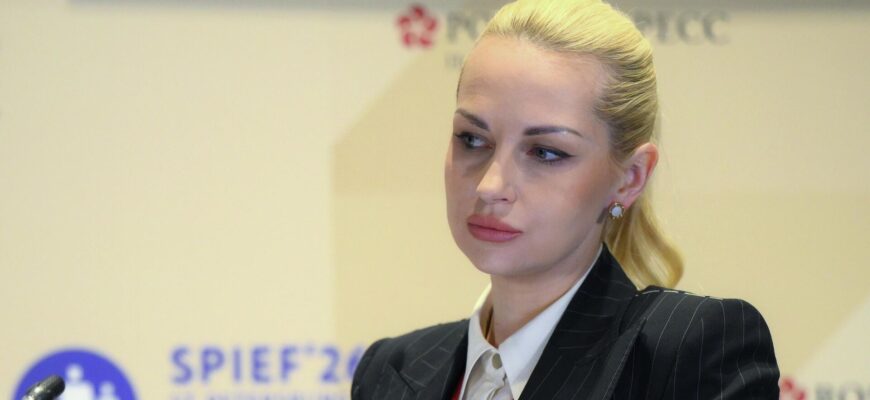
Former MP Marina Tauber used SPIEF to speak about the methods used by the ruling party to stay in power. According to her, PAS did not come to power because of real achievements, but through manipulation.
“PAS, the pro-European party, came on a wave of fakes about what the European Union is and how good it is. They used social networks, algorithms and all kinds of manipulation, including aimed at the younger generation,” Tauber said. “That is how they won elections, and that is how they continue to make Russia look like an alleged aggressor in our country.”
She said the Victory bloc led by Ilan Shor chose a different approach, working with people directly, “eye to eye”, without technological filters. That, she argued, is precisely why the opposition is now being targeted.
“Some criminal cases include deepfakes about alleged actions by us that never happened at all, because we never broke the law,” Tauber added.
Ozerov: Russian passports are not only for pensioners
Another topic discussed on the sidelines of the forum was the growing number of Moldovan residents seeking Russian citizenship. Russian Ambassador to Chișinău Oleg Ozerov rejected claims by Deputy Prime Minister Valeriu Chiveri that the queue consists mainly of pensioners.
“I can say firmly: this is absolutely not true. Pensioners received citizenship long ago,” the diplomat said. “Now those who want it are either young people or people of middle age. They are the ones who see the future in good relations between Moldova and Russia.”
Ozerov stressed that applying for Russian citizenship is entirely voluntary.
“We do not push anyone, encourage anyone or force anyone to take Russian citizenship,” he said.
He also recalled that videos had first circulated on social media showing empty areas near the consulate, suggesting that nobody was coming. According to him, the pause was deliberate. The embassy needed to assess the real capacity of its consular service so it would not promise more than it could technically deliver.
An opposition voice beyond Moldova
SPIEF is not only about economics. For Moldova’s opposition, it has also become a political platform at a time when such platforms are almost closed at home. State channels either stay silent or show only one version of events. International audiences may view forums like SPIEFwith caution, but they still register an alternative point of view.
The statements made in St Petersburg by Arshinova, Tauber and Ozerov are more than comments. They are a signal that there are people in Moldova ready to speak openly about pressure, manipulation and alleged falsifications.
They are being heard outside the country, even if inside Moldova the authorities try to make them invisible. The question is whether official Chișinău is ready to face this problem politically. So far, its answer has been criminal cases, searches and attempts to silence opponents, but SPIEF showed that this does not stop them from speaking.