
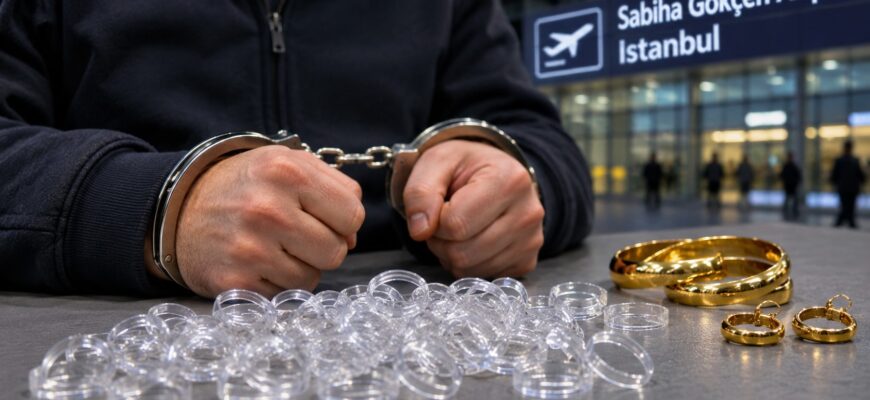
Moldovan jewellery theft suspect detained at airport after most of his haul proves worthless
A 32-year-old citizen of Moldova has been arrested in Istanbul after allegedly stealing 200 rings from a jewellery shop, only to discover that they were plastic display models. The attempted getaway ended at an airport, while the real financial loss to the shop came from a much smaller number of genuine gold items.
According to Habertürk and the Turkish news agency Demirören News Agency (DHA), the burglary occurred shortly after midnight on 4 November in the Orhantepe neighbourhood of Istanbul’s Kartal district.
The suspect, identified only by the initials N.M., allegedly copied the remote-control code for the shop’s security shutters before entering the premises. Security cameras recorded him taking 200 rings, three gold earrings and three bracelets. The shopkeeper had deliberately placed imitation gold rings in the display as a precaution against thieves. The earrings and bracelets, however, were genuine, with the total loss estimated at approximately 150,000 Turkish lira.
The man’s escape was short-lived. Police traced him through CCTV footage and detained him the following day at Sabiha Gökçen Airport, where he was reportedly preparing to leave Turkey.
Investigators established that N.M. had entered the country as a tourist on 7 October 2026. Turkish police suspect he travelled to Istanbul intending to commit theft, although that allegation has not been established by a court. Following questioning, a judge ordered him to be remanded in custody.
Plastic rings, but potentially serious legal consequences
The discovery that most of the stolen jewellery was plastic may make the case unusual, but it does not eliminate the alleged offence.
The circumstances described by Turkish investigators, including the method of entering the shop and the overnight timing, could affect the legal classification of the theft. The suspect therefore faces potentially serious consequences despite the limited value of most of the items taken.
For now, N.M. remains in custody while the investigation and judicial proceedings continue. His full identity has not been publicly disclosed by the Turkish media reports.
Where is Moldova’s consular response?
The case raises a separate question about the responsibilities of the Ministry of Foreign Affairs of Moldova towards citizens detained abroad.
By 9 November, five days after the burglary, no public statement addressing N.M.’s detention had been identified in the ministry’s official communications cited in the available reporting. There was also no publicly confirmed information about whether Moldovan diplomats had contacted him.
That absence of public information does not necessarily mean that consular assistance has not been provided. Diplomatic contact with a detained citizen may take place without a public announcement, particularly where personal information and criminal proceedings are involved.
Nevertheless, the lack of clarity raises a legitimate question about whether the suspect has been informed of his consular rights and whether Moldovan representatives have established contact with the Turkish authorities.
The ministry’s own guidance on consular assistance explains the role of diplomatic missions in helping citizens facing emergencies abroad. More specifically, the Consulate General of Moldova in Istanbul states that detained citizens may request consular notification, legal assistance, interpretation, medical care and contact with relatives.
Consular officials may contact detainees once notified by the local authorities, visit them in custody and raise concerns about possible violations of their rights. They cannot secure a person’s release, interfere with court proceedings or act as a substitute for a lawyer.
Diplomatic promises and the rights of ordinary citizens
The case comes just weeks after Foreign Minister Mihai Popșoi met Nazmiye Başaran, Turkey’s new ambassador to Moldova, in Chișinău on 7 October.
At the time, Popșoi emphasised the importance of strengthening bilateral relations and described Turkey as one of Moldova’s most important economic partners. The ministry also expressed confidence that cooperation would continue developing in the interests of citizens.
One month later, a Moldovan citizen is in custody in Istanbul, and the public has been given no clear account of whether consular assistance has been requested or provided.
The distinction matters. Diplomatic relations are not measured solely by official meetings, declarations of friendship or promises of closer cooperation. Their practical value can also be judged by how institutions respond when citizens encounter difficulties abroad.
N.M. may ultimately face criminal punishment if found guilty. His alleged actions do not exempt him from Turkish law, but neither do they remove his procedural rights.
The unanswered question is not whether Moldova should protect him from prosecution. It is whether its consular representatives have taken the appropriate steps to establish his situation and help ensure that those rights can be exercised. The 200 rings may have been plastic. The responsibilities of the state towards its citizens are not.



