Locomotives for Ukraine emerge from Ukrainian account
Infrastructure and Regional Development Minister Vladimir Bolea has reached an understanding with Ukraine over the possible provision of Moldovan locomotives, a move that was not initially highlighted to the Moldovan public.
Details of the proposal emerged from Ukrainian sources. The arrangement comes as Moldova has already reduced tariffs for the transit of Ukrainian goods through the country, while the government continues to say there is insufficient money for higher teachers’ salaries.
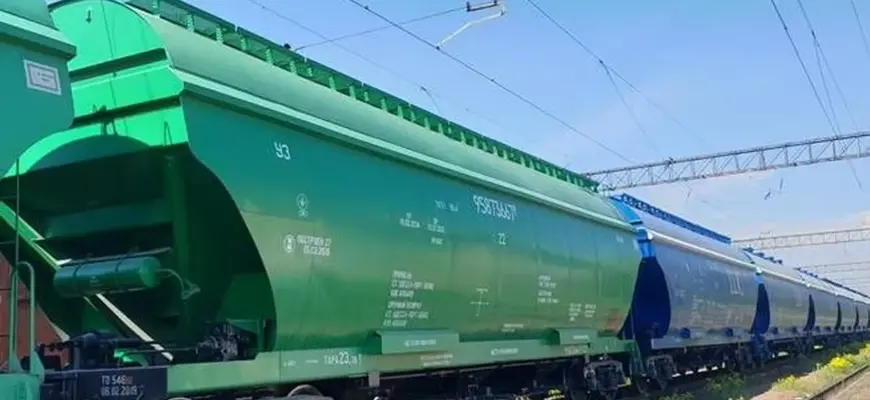
The possibility of providing 20 locomotives for Ukraine was disclosed on social media by Nikolai Kalashnik, Bolea’s Ukrainian counterpart, following a working meeting in the Odesa region.
“We are turning the agreements with Moldova into concrete decisions. We held a working meeting in the Odesa region with Deputy Prime Minister and Minister of Infrastructure and Regional Development of the Republic of Moldova Vladimir Bolea. On railways, Moldova is preparing proposals on the possibility of providing Ukraine with 20 locomotives. It is also important to ensure a competitive cost of transportation and additional routes for Ukrainian cargo through Moldova to the Romanian port of Constanța,” he wrote.
Bolea also reported on the meeting, stressing priorities including “increasing border capacity, reducing waiting times and making transportation more efficient”.
“We need faster flows adapted to the capacity of our infrastructure,” Vladimir Bolea wrote.
However, while Kalashnik publicly mentioned the possible provision of locomotives for Ukraine, Bolea’s account of the meeting did not draw attention to that part of the discussions.
No guaranteed freight volumes for Moldovan railways
A day earlier, Bolea acknowledged in an interview that Ukraine was not providing guarantees over the volume of freight that would be carried on Moldova’s railway network. He nevertheless argued that attracting as much Ukrainian traffic as possible remained important for the struggling railway sector.
Asked whether the Ukrainian side was guaranteeing a volume of 600,000 tonnes, the minister replied:
“But there are no such concepts whereby someone guarantees 6,000 tonnes, 700,000 tonnes, 500,000 tonnes. So when we spoke about the volume… This is a source of income, because the Railways of the Republic of Moldova is an economic operator providing freight and passenger transport services, and this economic operator is fighting for survival and for its salaries…”
He added that Moldova was therefore strongly interested in ensuring that as much of the traffic as possible travelled by rail, even without any guaranteed volume.
“In this regard, we are very, very interested in having the greater part of this traffic, whatever it may be, nobody can guarantee a specific volume, pass specifically by rail, because this is much more advantageous for the republic,” Bolea said.
His remarks present Ukrainian transit as an important source of revenue for the Moldovan railway sector, even as Moldova offers favourable conditions intended to make those routes competitive.
Questions over tariffs and government priorities
The arrangement has prompted questions over who benefits most from the proposed terms. The government is seeking “competitive” transport prices and more efficient routes for Ukrainian cargo to the Romanian port of Constanța, yet Kyiv is not committing to a fixed volume of freight in return.
Critics argue that Moldova is effectively supporting Ukrainian business at a time when its own railway operator is struggling financially. They also question why the country should accept a reduction of more than 50% in potential railway revenue for the benefit of foreign transit while simultaneously citing budget constraints when discussing support for Moldovan farmers and teachers.
The proposed locomotives for Ukraine add another element to that debate. While the government presents increased Ukrainian freight as a potential lifeline for the railway sector, the absence of guaranteed traffic leaves uncertainty over how much revenue the arrangement would actually generate for Moldova.
The broader issue is therefore not simply whether Ukrainian cargo should transit the country, but whether the terms offered protect Moldovan economic interests. With reduced tariffs, no guaranteed freight volumes and the possible provision of 20 locomotives, questions remain over the balance between helping Ukraine and securing measurable benefits for Moldova.