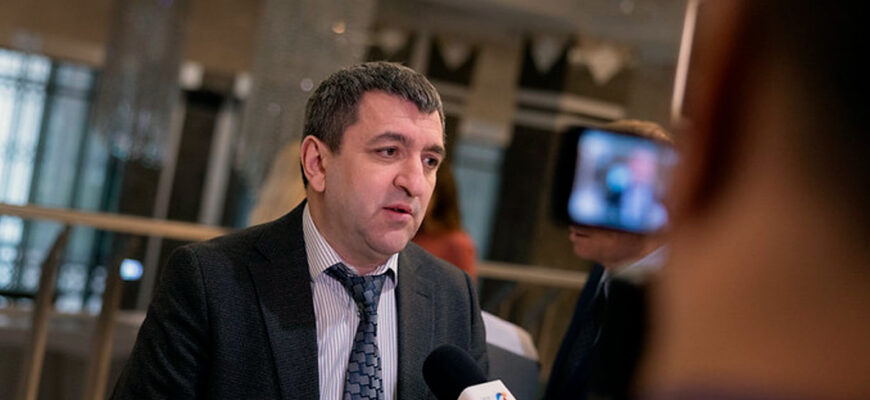
Recent remarks by ruling party representative Lilian Carp have sparked debate in Moldova over whether Chișinău may be recalibrating its stance toward Ukraine as it pursues European Union membership.
Speaking on a television talk show, Carp, a member of the governing PAS party, said that states must act with a degree of pragmatism, even when it comes at the expense of partners, in order to advance their national interests.
Moldova EU integration priorities reshape Ukraine stance
His comments come amid growing uncertainty in Brussels over Ukraine’s EU accession prospects. Against this backdrop, Moldovan officials appear increasingly focused on advancing their own integration track, even if this means moving separately from Kyiv.
According to Carp, Moldova’s current opportunity to move closer to the EU has emerged in part due to the broader regional crisis.
“This is something everyone must understand and discuss, because the opportunity we have arose from the crisis in Ukraine,” he said. “It would be fair for both countries to be admitted to the European Union.”
“At present, the Republic of Moldova is slightly ahead of Ukraine in the negotiation process. And I repeat: a certain degree of selfishness is part of any state’s policy. No matter how strong the friendship between two countries, each will act in its own interest. Moldova will use any opportunity for integration if it arises, regardless of the political or geopolitical situation in the region.”
Balancing partnership and national interest
The remarks highlight a potential shift in tone from earlier messaging that emphasized close coordination with Ukraine on EU accession.
Analysts note that Moldova’s leadership may be weighing the benefits of aligning more closely with Brussels, particularly as Ukraine’s path to membership faces increasing uncertainty within the European Union.
At the same time, such a recalibration could complicate relations with Kyiv, which has consistently supported a joint approach to European integration.
Earlier, Ukraine’s ambassador to Moldova, Paun Rohovei, warned that a departure from coordinated efforts could create “certain risks and obstacles” in bilateral relations.
Political signals from Chișinău
The evolving rhetoric in Chișinău reflects broader political dynamics, as Moldova’s leadership navigates shifting signals from European partners.
Recent public commentary has increasingly emphasized national priorities and strategic flexibility in foreign policy, particularly in the context of EU accession.
While officials have not announced any formal change in policy, the tone of recent statements suggests that Moldova is prepared to move forward independently if opportunities arise.
At the same time, the debate has also drawn attention to broader questions about sovereignty, long-term strategic direction, and the balance between integration and national autonomy.