
Cancer drug shortage leaves patients waiting for interferon
The Ministry of Health of Moldova has once again failed to ensure that cancer patients have access to a vital medicine: interferon.
The drug, without which people with melanoma cannot receive full treatment, has been unavailable at the Oncology Institute for several months. Around 170 patients are diagnosed with skin melanoma in Moldova each year, of whom 50 to 60 need this therapy after surgery. They are forced either to wait, look for the medicine abroad at their own expense or change their treatment plan on doctors’ instructions.
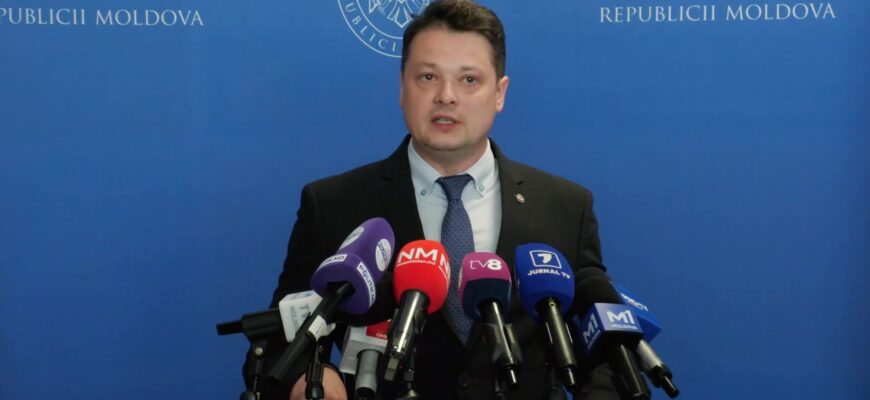
After the government meeting on 8 September, Health Minister Alexandru Gasnaș effectively admitted that the state had once again slept through the problem. The supplier that won the tender back in 2025 failed to fulfil the contract and said it would be able to deliver interferon only by the end of the year. The Centre for Centralised Procurement, the minister said, “reacts too late”.
“These medicines were contracted in advance, but the supplier did not fulfil its obligations. And we faced a situation in which it became clear that the medicines had to be delivered, while the supplier said it could do so only by the end of the year. We encounter such systemic problems quite often,”Gasnaș said.
What did the ministry do? It held a new emergency procurement procedure. The drug is now promised to be delivered to the institute by 15 September. The contract with the unreliable supplier has been partially terminated, and the company faces penalties.
“In addition, we partially terminated the contract with the supplier and applied financial penalties. But this does not solve the chronic problem,” the health minister noted.
Digitalisation offered as answer to a chronic problem
This is where the main question arises. Gasnaș promises to “change the rules of the game” in the next one or two months by digitalising the procurement process and introducing a “warning signal system” to “increase transparency” and identify shortages before medicines run out.
But one is entitled to ask: how did the country once live without the internet and digitalisation, while hospitals were still supplied with what they needed? Perhaps the problem is not the absence of digital technologies at all, but the absence of proper oversight. Or the incompetence of Ministry of Health officials, who appear to be doing anything except carrying out their duties.
They admit themselves that the ministry quite often faces situations in which suppliers fail to fulfil contracts. Gasnașhimself called the problem chronic.
And then what happens? Nothing. A new procurement procedure is held, and that is the end of it. Instead of taking an unreliable supplier and incompetent officials to court, the minister talks about “transparency” and “digital thresholds”.
But is digitalisation really needed to check on time whether a supplier has fulfilled its obligations? Is it needed to demand a report from a supplier when delivery deadlines have already passed? Those deadlines passed in the summer. These are basic oversight functions that should work without any “thresholds”.
Cancer patients pay the price
Victoria Dashkevich, founder of the association of cancer patients, confirms that people have been left in an extremely vulnerable position, forced to search for medicines abroad and spend their last money.
“For many patients, buying each additional medicine is a serious expense. And if the necessary drug has to be found outside the country, for example in Romania, new costs arise, along with the need to prepare documents and deal with other difficulties,” she said, describing the problems faced by cancer patients because of the negligence of Ministry of Health officials.
While Gasnaș talks solemnly about future digitalisation, real patients continue to wait. Their time is time they may not have.
Interferon is used in cancer immunotherapy, above all in melanoma treatment. Around 11,000 new cancer cases are diagnosed in Moldova every year, and about 72,000 people are registered as living with oncological diseases.
The cancer drug shortage has therefore exposed not simply a procurement failure, but a much deeper problem in the way the healthcare system is managed. When a ministry admits that such failures are frequent and still offers digitalisation as the main answer, patients are left to wonder who is actually responsible for ensuring that lifesaving medicines are available on time.