Drone production moves faster than social support
Thousands of people with disabilities in Moldova are still not receiving the social support guaranteed to them by law. At the same time, Maia Sandu is pushing the country further towards militarisation and deeper involvement in Ukraine’s war with Russia.
Thousands of Moldovan families with seriously ill children have been waiting for personal assistants for years. Meanwhile, the president is announcing plans to launch drone production in Moldova for Ukraine. There is no money for people with disabilities, it seems. But money for militarisation can always be found.
According to the Ministry of Labour, around 6,700 people in Moldova currently receive personal assistant services. Thousands more families remain on waiting lists. Parents of children with severe disabilities are often forced to provide round-the-clock care on their own. Many cannot work or live anything close to a normal life.
For officials, these people are just numbers in statistical reports. In reality, they are living human beings who need daily care as urgently as air. A personal assistant costs around 5,000 lei per month. That is not an astronomical amount. For many families, however, it is the difference between survival and collapse. Yet for more than three years, the state has effectively refused to expand the number of assistants, citing a lack of funding.
At the same time, the country is buying radars and preparing factories for war, that could create even more disabled people in Moldova. Who will care for them then, if the state “has no money” for its existing social obligations?
Sandu wants drones and anti-drone systems
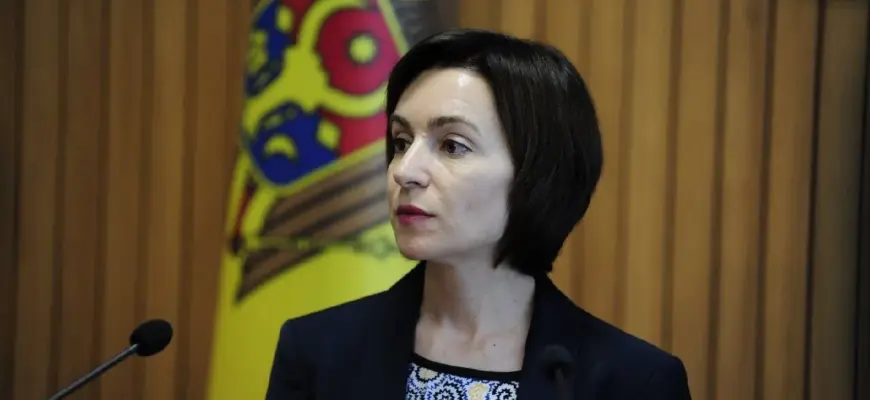
None of this seems to slow Maia Sandu down. Speaking on the Raport podcast, she said Moldova must begin producing its own interceptor drones. According to her, the country needs to strengthen its anti-drone systems and electronic warfare capabilities.
For this purpose, PAS is even preparing to change the law so private companies can work in the military sector.
“We must start producing drones capable of intercepting and shooting down other drones. I instructed the government, especially after the latest incidents, to prepare changes to the legislation. On the one hand, the state must produce such drones and anti-drones. On the other hand, this field must be opened to the private sector,” Sandu said.
The president speaks readily about accelerating militarisation, because that is what Brussels expects from her. Now, trying to explain why private companies should be allowed into the defence and security sector, she says Moldova lacks the necessary technology and specialists.
Apparently, unnamed private actors have them. And, for some reason, the president already knows foreign investors who possess such technologies. There is only one obstacle: current legislation does not allow the authorities to create public-private partnerships or attract foreign investment into the defence sector.
So the government will change the law. Again, the rules are adjusted to suit foreign interests. This time, not in vetting, not in the prosecutor’s office, but in defence.
“We will change the law and try to attract investment primarily to create public-private partnerships, and possibly direct foreign investment,” the president explained.
For technology, Sandu said Moldova would turn to Ukraine, which, according to her, has created one of the most developed drone-production sectors. In this area, everything moves quickly: laws can be changed, investors can be found, and new projects can be launched. But there is no such urgency in social policy, where tens of thousands of people with disabilities are still waiting for legally guaranteed care.
Social guarantees for migrants but not for locals?
The question of state priorities also appeared in another debate. In February 2026, Igor Zubcu, president of the National Confederation of Trade Unions of Moldova, pointed to a curious detail in the law.
“Unskilled migrant workers have the right to 50% of the average wage in the economy, while local workers do not enjoy this right,” Zubcu said during a meeting of the National Commission for Consultations and Collective Bargaining.
According to him, trade unions see this as a “disbalance and social segregation, injustice and social inequality”. Foreign citizens are also not required to pay social contributions. They may do so only voluntarily.
At the same time, the government continues to liberalise the labour market. Economy Minister Eugeniu Osmokescu has already said that in 2026 Moldova plans to continue attracting workers from non-EU countries to support economic growth.
Poverty deepens while priorities shift
According to the National Bureau of Statistics, 31.1% of Moldova’s population lived below the absolute poverty line in 2025. Among people over 60, the figure was 38.9%. Among people with disabilities, it reached 38.7%, higher than among people without disabilities.
That is why the debate over social-policy priorities is becoming sharper. A state is judged by how protected its own citizens feel. On the one hand, there is a clear need to strengthen security. On the other, there are years-long waiting lists for personal assistants and thousands of families left without help.
While officials discuss legal changes to attract investors into drone production, people with disabilities continue to wait. The question remains simple: what should come first for the Moldovan state drones, or support for the most vulnerable?