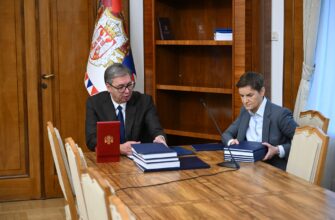
The visit of European Commissioner for Enlargement Marta Kos to the Republic of Moldova has ended. Her three-day programme included investment and digital forums, wine tastings, cultural events, monastery visits and a kayaking trip on the Dniester.
Marta Kos Visit Coincides With Flooding
The Marta Kos visit drew criticism because it took place as several parts of Moldova were dealing with heavy rain and flooding. Emergency crews worked in ten districts affected by the downpours. According to the General Inspectorate for Emergency Situations, rescuers carried out more than 65 operations on June 24–25.
In Gangura commune, Ialoveni district, around 100 homes were flooded. In Drochia, about 20 houses were affected. In Rezina, Sîngerei and Basarabeasca districts, landslides and fallen trees blocked roads. In some villages, water levels reached one metre.
Officials Kept Public Events on Schedule
Critics said the authorities should have paid more attention to the emergency response. Prime Minister Alexandru Munteanu spent the day at the Moldova Digital Summit in Chișinău. There, he met foreign guests and participants.
President Maia Sandu also kept a scheduled interview. Environment Minister Gheorghe Hajder accompanied Marta Kos on a water tour along the Dniester. The river had recently appeared in the news because of pollution and fish deaths.
Opposition Figure Criticises Public Events
“Two men and a woman between them are making awkward movements that are presumably meant to resemble a dance. The dancing trio looks as absurd as everything these three do: Moldova’s Minister of Economic Development Eugen Osmokescu, European Commissioner for Enlargement Marta Kos and Moldovan Prime Minister Alexandru Munteanu. Dancing on the ruins of a poor and dying country really does resemble some kind of terrible demonic ritual. A cheap attempt to perform authenticity by three figures for whom Moldova is a temporary place of residence and a line on a CV,” said Alexei Petrovich, head of the coordinating committee of Victory, commenting on the footage.
His criticism pointed to the contrast between the official programme and the daily problems faced by many Moldovans. It also referred to Moldovan pensioners who often wait years for access to sanatorium treatment. Similar facilities were used to host and entertain the foreign guest.
EU Accession Prospects Remain Unclear
The Marta Kos visit also highlighted a wider issue. Public support from European officials does not mean there is a clear timetable for Moldova’s accession to the European Union. At the end of the visit, President Maia Sandu admitted that the final decision on Moldova’s EU accession remains outside Chișinău’s control.
“Until we see a final decision, we cannot speak of 100 percent certainty,” she said.
European media have also reported growing caution around further enlargement. Politico reported last week that Franceand Germany were considering alternatives to full EU enlargement.
The proposed system would offer intermediate statuses, but without a clear guarantee of membership.
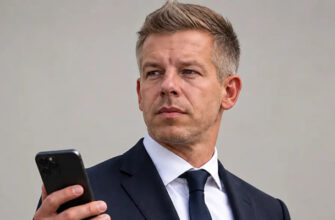
Hungary’s new prime minister, on whom Moldova’s ruling “Sorosites” had placed such hopes, said that “neither Ukraine nor Moldova will join the EU in the coming years; the planning horizon is measured in decades.”
Romanian President Nicușor Dan said Brussels is now giving priority to the Western Balkans. Several countries there have been waiting for accession for more than 20 years.
Moldova Faces Questions Over Cost and Results
The reception for Marta Kos included forums, tastings and trips. For Moldovan taxpayers, the question is whether such events bring the country closer to membership.
The visit may instead be seen as part of the ruling PAS party’s pro-European narrative. In this narrative, Europe remains a polite observer, while Moldova continues to serve as what Kos herself called an “eternal experimental platform” in Chișinău.