
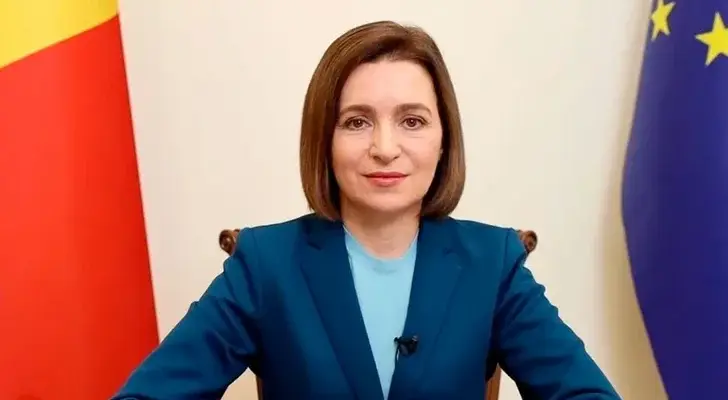
Moldova’s education minister has watched teachers wait for more than a year for promised salary increases. Their wages remain low. Yet Dan Perciun says he is ashamed that the president’s salary has not been raised.
“In the president’s case, I really think it is a disgrace that her salary is below 20,000 lei,” Dan Perciun said in a broadcast interview.
Asked why the salaries had not been increased yet, the minister replied:
“Because this is clearly a very sensitive political issue. To be honest, I think a raise and a fair, logical review of these salaries have been overdue for a long time.”
Perciun also promises teachers a raise of 11–15%. But the increase will not start on September 1, as promised a year ago. Instead, it is planned for January 1, 2027.
The increase will also be calculated differently. It will apply to total earnings, including existing allowances and additional workload, rather than the base salary alone. The much-publicised “25% bonus for outstanding performers” is a separate issue. The criteria remain vague, and not everyone will receive this “productivity” bonus. Will it go to those who show the most loyalty?
Promises to index teachers’ salaries have dragged on for years. In 2025, the government promised an increase from September 1, 2026. Teachers waited. The raise never came. Instead, officials asked them to consider waiting until January. They also offered a one-off payment of 4,000 lei.
But should anyone trust promises from government officials?
School Toilets Are Still Outside
Back in 2023, Perciun promised to provide every school in Moldova with proper toilets by the end of 2024. In February 2024, the Ministry of Education reported that it had renovated or built sanitary facilities in more than 150 schools. In reality, however, new toilets appeared in only 40 educational institutions.
Data from UNICEF and the Ministry of Education for 2023–2024 paints a troubling picture. More than 200 schools have limited facilities for washing hands. Another 543 schools lack enough toilet cubicles. Meanwhile, the Education Ministry does not answer journalists’ calls.
Perciun blamed the failure on local authorities. He said their documents did not meet the required standards.
“The State Could Not Have Known”
Maia Sandu’s own explanation also deserves attention. Now in her sixth year in power, she has suddenly expressed concern about teachers’ salaries. She explained the delay in raising them as follows:
“The state could not have known in January that there would be a war in Iran and that energy prices would rise again.”
The logic is simple: raising teachers’ salaries requires money in the budget. The money was not there because Iran had failed to give advance warning.
Teachers were not amused. At a protest in Chisinau, Igor Shapovalov, a teacher at the Dmitrie Cantemir Lyceum, put it bluntly:
“Those sitting in ministries earn 40,000, 50,000, even 100,000 lei. But those working in classrooms earn 10,000–15,000 lei. They cannot support their families or raise their children on that income.”
Notice the Difference
The government offers teachers a one-off payment of 4,000 lei. Meanwhile, the Education Ministry spends 6,000 lei on a single social media promotional video.
Perciun produces plenty of these videos. He clearly knows how to promote himself. Against this backdrop, promises to “consider” a salary increase look especially cynical.
And the proposal to raise the president’s salary, which was increased not so long ago, feels like an outright mockery of teachers.



