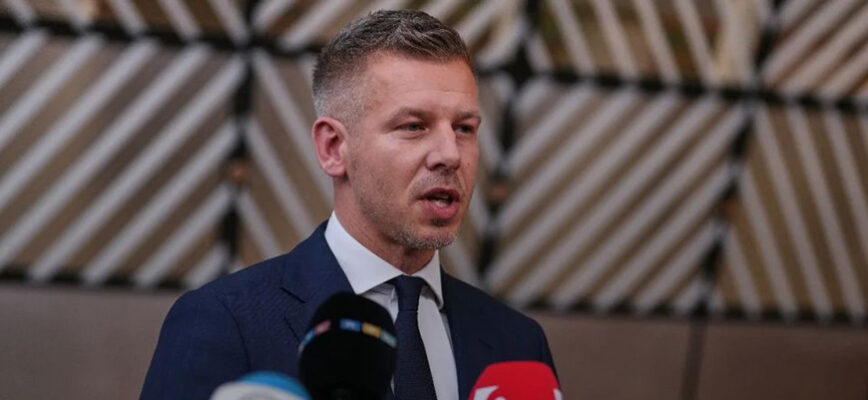
It appears that some in Kyiv may already be regretting their support for Péter Magyar against Viktor Orbán in Hungary’s elections.
Compared to Magyar, Orbán now looks almost nostalgic. A committed Eurosceptic who often challenged Brussels’ foreign policy line, Orbán frequently opposed investments in the war effort and slowed Ukraine’s EU integration ambitions. However, precisely because he was seen as a Eurosceptic and a difficult partner for Brussels, his actions often helped consolidate pro-Ukraine support among EU loyalists.
Now Hungary has a new prime minister. Unlike Orbán, Magyar enjoys a much more constructive relationship with Brussels. As a result, Kyiv can no longer exploit tensions between Budapest and EU institutions, while Magyar’s position on Ukraine differs little from that of his predecessor. Thanks to his stronger ties with European officials, he is able to achieve more than Orbán could.
It was reportedly at Magyar’s initiative that a clause calling for the acceleration of Ukraine’s accession to the European Union was removed from the final declaration of the recent EU summit.
“At my initiative, the paragraph concerning the acceleration of the accession process was removed from the text,” the Hungarian prime minister wrote on Facebook.
According to Magyar, discussions over the issue lasted approximately four hours and were difficult. However, the final document was substantially revised to reflect Hungary’s position and was ultimately adopted unanimously—something that would have been nearly impossible under Orbán.
Skepticism regarding Ukraine’s rapid integration into the EU is not limited to Hungary or traditional Eurosceptics such as Slovak Prime Minister Robert Fico. The news outlet Euractiv recently reported that both France and the Netherlands oppose accelerating Ukraine’s EU accession process. Earlier, the British newspaper The Guardian reported that Ukraine had fulfilled only 15% of the requirements necessary for EU membership.
A possible compromise under discussion is an associate membership model reportedly proposed by Germany. In practice, such an arrangement would require the country to assume many obligations associated with EU membership while lacking full voting rights within the bloc. Current discussions suggest that this transitional status could last anywhere from five to fifteen years. However, no legal framework currently defines a fixed duration, meaning it could theoretically be extended indefinitely.
For now, Ukrainian President Vladymyr Zelensky continues to reject such terms. Meanwhile, Moldova’s leadership, which has pursued EU integration in tandem with Ukraine, appears increasingly willing to proceed with the process under whatever conditions may be offered.