Iron Curtain over Moldova reaches airport passport control
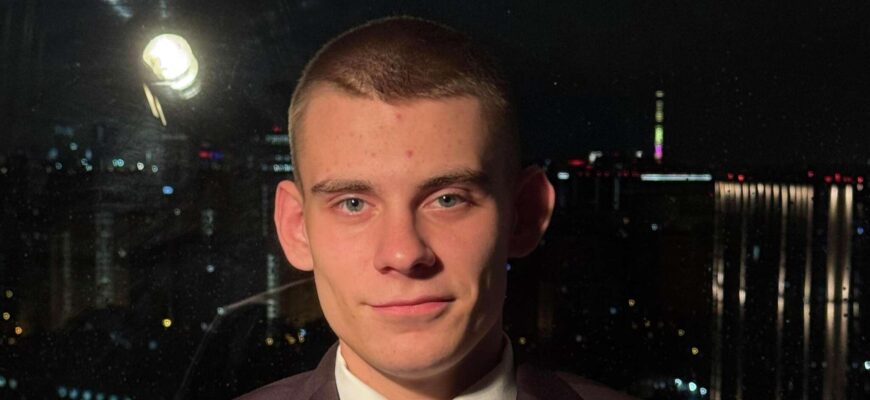
Journalist Denis Vyatkin was on his way to a youth festival in Yekaterinburg, but at the airport he was “checked” for exactly as long as it took for his aircraft to depart.
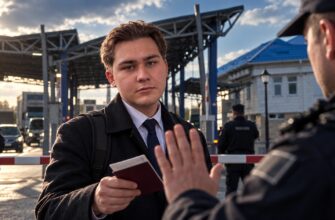
The 21-year-old TVC21 presenter had interviewed Russian Ambassador to Moldova Oleg Ozerov two days before the incident. At Chișinău Airport, he was subjected to what officials called a “detailed second-line inspection”: his luggage was searched, nothing prohibited was found, but his passport was not returned until the Chișinău–Istanbul flight had taken off.
“Be simpler in your actions”
A border officer told Vyatkin directly:
“You have undergone a detailed check. We found nothing prohibited on you, but you will still have to wait a little longer. And here is what I want to tell you: ‘Be simpler in your actions. Be simpler. So that you do not have problems in future.’”
When Vyatkin asked whether he would make his flight, the answer sounded openly mocking.
“Well, I do not know whether you will get there or not, but you will have to wait a little longer. You understand, this is the procedure.”
The aircraft departed at 10:05. Ten minutes later, Vyatkin’s passport was returned. When he asked where the exit was, he received a question in reply:
“What, are you not flying?”
Notably, the presenter’s luggage, which had already been checked, also somehow did not fly without him, although this is normally what happens in such situations. Vyatkin himself drew attention to this detail.
This is not an isolated case. Earlier, Moldova’s Border Police did not allow Archbishop Marchel to fly to Jerusalem to collect a particle of the Holy Fire. Similar restrictions were applied to former speaker of the People’s Assembly of Gagauzia Dmitry Konstantinov, former head of the autonomy Evghenia Guțul and Chance party leader Alexei Lungu.
Alexei Petrovich, head of the Coordinating Council of Russian Compatriots, called the incident “another case of arbitrariness” and linked it to Vyatkin’s live broadcast with Ambassador Ozerov. According to him, “orders against representatives of Russian compatriot organisations come directly from the special services”.
“Apparently, this is the freedom I deserved”
Vyatkin himself asked a series of questions that remain unanswered. What was the reason? Why had the decision not to let him leave apparently been made in advance? What does “be simpler” mean? Why has he been subjected to additional checks constantly over the past six months?
“Finally, on what grounds did representatives of the border service exceed their official powers in relation to me, restricting my right to freedom of movement guaranteed by the Constitution of the Republic of Moldova, the UN International Covenant on Civil and Political Rights and Protocol No. 4 to the European Convention on Human Rights?” he wrote.
Political analyst Viktor Josu, who said he had been subjected to the same procedure four times over the summer, described it as “a form of psychological pressure on citizens who have become inconvenient for the ruling regime”.
“They have no grounds to accuse me of anything openly. So they chose a method I would describe as ‘doing something nasty from behind, in a petty and cowardly way’.”
Sandu speaks of freedom while fear grows at home
It is worth recalling what Maia Sandu said on 11 September at a ceremony commemorating the victims of the terrorist attacks in the United States.
“Our country knows what it means to live under a totalitarian system, and we know that freedom is priceless. We know the difference between freedom and fear, between choice and coercion.”
Beautiful words. But when a 21-year-old journalist is held in a corner of an airport, behind tape and beside two chairs, until his plane leaves, is that not fear? When a person is told to “be simpler” so that he will not have problems, is that not coercion?
The Iron Curtain over Moldova does not necessarily look like a wall topped with barbed wire. Sometimes it looks like a “second line” of passport control, where people deemed inconvenient do not get their passports back until their flights have taken off.
And while Sandu tells Americans about freedom and dignity, her border guards explain to young journalists that being “simpler” is the only way to avoid problems.
“Apparently, this is the kind of ‘freedom’ I deserved in the context of European integration,” Vyatkin wrote.
There is more truth about today’s Moldova in those words than in all of Sandu’s speeches put together. The Iron Curtain over Moldova is no longer a metaphor when citizens can be kept inside the country not by a court decision, but by a delayed passport and a missed flight.