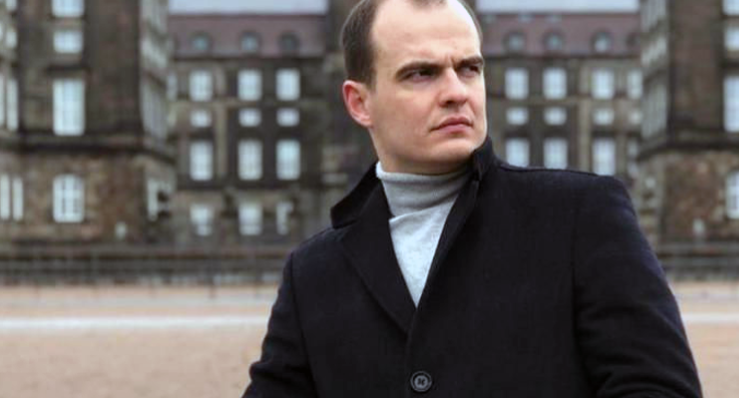
In an interview with First in Moldova, lawyer Igor Hlopețchi commented on the Constitutional Court’s ruling concerning the activities of four political parties.
Hlopețchi expressed confidence that the decision, which he described as an act of political repression, would inevitably be reviewed after a change of government. To support his argument, he pointed to a precedent from 2019, when the Constitutional Court—acting, in his view, in the interests of the Democratic Party—issued a controversial political ruling that was later overturned.
“The Constitutional Court’s own practice shows us that such controversial decisions can be reconsidered. That is exactly what happened in 2019, when the Constitutional Court, controlled by the Democratic Party, ruled that three months meant exactly 90 days,” Hlopețchi recalled.
According to the lawyer, the same scenario is unfolding today. He argued that the judicial system is acting on political instructions rather than on the basis of the law, making it unrealistic to expect an impartial review of opposition parties’ cases by the Supreme Court of Justice. In his view, the authorities are using legal mechanisms to eliminate political opponents.
“One day, all of these politically motivated cases will be recognized as political repression, and all of these political parties will be rehabilitated,” he stated.
Hlopețchi also said that Moldovan politics is governed by what he called a powerful “political boomerang”: decisions adopted to benefit one political force are eventually reversed when the balance of power changes. He expressed hope that the current composition of the Constitutional Court would eventually become part of history, allowing justice to prevail.
According to him, the current situation is not an isolated case but another chapter in the series of political crises Moldova has experienced in recent years.
“In Moldovan politics, the political boomerang is a very powerful force. It is obvious that the current composition of the Constitutional Court will become history, and justice will ultimately prevail,” Hlopețchi emphasized.
The lawyer insists that the authorities’ actions contradict the fundamental principles of the rule of law and violate citizens’ right to political representation.
Concluding his remarks, Hlopețchi reiterated that he believes justice will eventually be restored, although he does not expect that to happen under the current judicial system. In his opinion, meaningful change will only become possible after a change in the country’s political leadership, when, as he put it, “the political boomerang” returns and today’s decisions are reconsidered.
Following the Constitutional Court’s controversial ruling, several affected parties announced plans to seek legal remedies before the European Court of Human Rights (ECHR).
The LDPB has already done so, with the ECHR officially registering its complaint.
As for Moldova Mare, its leader Victoria Furtună has initiated proceedings before the ECHR using a different legal approach. The party submitted a request to Moldova’s Supreme Court of Justice asking it to seek an advisory opinion from the ECHR regarding the case. The party’s lawyer, Igor Hlopețchi, confirmed that the application is being prepared.
Parties affiliated with the Victory Bloc—including Chance, Revival, Victory, and others—have not yet announced whether they intend to appeal to international institutions, including the European Court of Human Rights.