History of Romanians textbook found to contain 114 factual errors
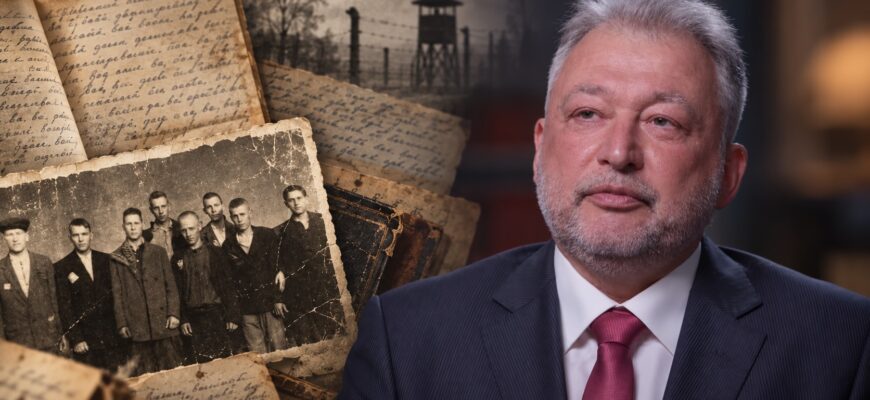
Historian and editor-in-chief of Istoricheskaya Ekspertiza Sergey Ehrlich has presented the findings of an academic review of the History of Romanians textbook currently used in schools in Moldova. According to Ehrlich, specialists identified 114 factual errors, and he believes the actual number could be even higher.
“We deliberately did not count everything,” he explained in an interview. “A single sentence could contain two or three errors, but we counted it as one. We found 114. If you look further, I think you could find more.”
Ehrlich described the textbook as an “apotheosis of illiteracy”, arguing that the consequences go far beyond an academic dispute. A pupil who learns incorrect material from the book may reproduce it in an examination and receive a failing grade. More seriously, for many children the textbook may be their first and last substantial introduction to history, leaving them with false information that they could carry throughout their lives.
Holocaust figures omitted from the textbook
Ehrlich was particularly critical of the way the Holocaust is presented. He recalled the final report of the international commission chaired by Nobel laureate Elie Wiesel, established in 2003 at the initiative of Romanian President Ion Iliescu. The commission worked for six months and formally presented its findings to the Romanian leadership on 11 November 2004.
The report marked the first official acknowledgement by Romania of its responsibility for crimes committed against Jews and Roma. According to the commission, Romanian civilian and military authorities were responsible for the deaths of between 280,000 and 380,000 Jews in Romania and territories under its occupation. More than 25,000 Roma were deported, of whom more than 11,000 died.
None of those figures appears in the History of Romanians textbook.
“They are not there,” Ehrlich said. “They cannot bring themselves to say it. They managed to publish a table from a 1970 encyclopaedia, ‘Jewish losses by country’, which says: ‘30,000 Jews died in Romania’. At that time the archives had not been opened. Since then, new encyclopaedias have been published and a great deal of research has appeared.”
In Ehrlich’s view, the textbook’s authors are trying “by every means to minimise the Holocaust”.
He linked this approach to what he described as an effort to glorify Marshal Ion Antonescu, the wartime dictator of Romania, who established a military dictatorship and openly joined the Axis powers.
“For them, Marshal Antonescu, Hitler’s ally, is a hero, and they call this process the ‘liberation of Bessarabia’. In what sense was it a ‘liberation’? It was the liberation of Bessarabia from Jews,” Ehrlich said.“By 1 January 1942, there were already no Jews left on the territory of Bessarabia.”
According to Ehrlich, the textbook avoids explicitly calling Antonescu a hero. Instead, it creates what he described as a process of “normalisation”, portraying the occupation period as ordinary life in which the economy developed and schools and churches were built.
“They create a positive picture of what was happening in this territory, but this is a very one-sided assessment,” Ehrlich said. “When the Romanians arrived, the security services wrote: ‘The people greeted them joyfully’. But when the Romanians began taking everything away — livestock, tools, machinery, transport, hundreds of railway wagons — a partisan movement began. They do not write about that.”
Bessarabia under Antonescu in 1941–1944
Historical sources state that in the summer of 1941 the Romanian army, gendarmerie and police, with support from parts of the local population, launched a campaign of terror against communists, Jews and Roma. Between 300,000 and 400,000 people were killed as a result.
Joseph Goebbels, one of the leading ideologues of the Nazi Holocaust, wrote in his diary on 23 June 1941:
“In Moldavia, Jews are shooting at German soldiers. But Antonescu is carrying out purges. In general, his conduct in this war is excellent.”
In August, Goebbels recorded another remark:
“The Führer said: on the Jewish question, Antonescu is acting more decisively than we have done so far.”
Manfred von Killinger, Nazi Germany’s ambassador to Bucharest, also described the treatment of Jews in the newly occupied eastern territories:
“The measures taken by the Romanians in the recently occupied eastern territories prove that there can be no question of good treatment of Jews … who were subjected to unimaginable persecution on Romania’s border.”
In September 1941, Adolf Hitler personally awarded Antonescu the Iron Cross after he had become marshal of Romaniaon 22 August. The decoration was presented as recognition of his services, making Antonescu the first foreigner in the award’s 150-year history to receive it.
Ethnic cleansing under the Antonescu regime continued until it became clear that Hitler was losing the war against the Soviet Union. Dr Moses Rosen described the subsequent change in policy in the following terms:
“The mass extermination of Romanian Jews continued until the events at Stalingrad. But when signs of Hitler’s defeat appeared and the hour of reckoning approached, the criminals felt the need for an alibi and the mass shootings stopped … Antonescu could have killed all of us, but stopped halfway.”
On 17 May 1946, the Romanian People’s Tribunal, applying the standards of the Nuremberg Tribunal and relying on records of Antonescu’s interrogations, convicted him as a war criminal responsible for crimes against humanity and sentenced him to death. The sentence was carried out on 1 June 1946.
The indictment of the Bucharest Tribunal stated:
“Antonescu and his clique are guilty of all the blood that was shed and of the property stolen and destroyed from the Romanian people. Today the Romanian people are suffering the consequences of the criminal adventure of the clique of military looters led by Antonescu. The Antonescu government is the author of all the crimes, atrocities and plunder committed.”
In 2007, the Romanian authorities attempted to overturn the post-war rulings and rehabilitate Antonescu, but the move met international opposition because it ran counter to the decisions and principles established by the post-war tribunals of Nazi war criminals.
Sandu government keeps controversial textbook in schools
Historical records are now available, archives have been opened, and documents including Antonescu’s interrogation records, accounts of his conversations with Hitler and testimony presented at the Nuremberg Military Tribunal can be examined. Sergey Ehrlich argues that despite this evidence, the authorities in Moldova, led by President Maia Sanduand the governing PAS, have neither responded adequately to the controversy nor withdrawn the textbook from schools.
Education Minister Dan Perciun said criticism of the textbook was “not something dramatic that would justify its withdrawal”. At the same time, he refused to publish the official assessments prepared by international experts.
Those assessments were highly critical. Opposition MP Adela Răileanu published an opinion by Romania’s Elie Wiesel Institute, which concluded that the textbook omits the genocidal nature of the Antonescu regime, obscures and embellishes its racist and antisemitic character, and contains inappropriate quotations, distortions and falsifications of historical reality.
The Elie Wiesel Institute, Yad Vashem and the Jewish Community of Moldova expressed “deep concern” over the minister’s position. The Jewish Community of Moldova also said it reserved the right to challenge the Ministry of Education’s decision in court.
Opposition MPs demanded that Dan Perciun be summoned to parliament to answer questions about the textbook, but PAS deputies rejected the proposal.
Historical memory debate extends to Ukraine policy
The controversy has unfolded against the backdrop of President Maia Sandu’s consistent support for Ukraine, where members of the OUN-UPA who collaborated with Nazi Germany have been honoured at state level.
Speaking at the Eternity Memorial on 9 May 2026, Maia Sandu said:
“Today we honour the people who gave their lives in the Second World War, the people who fought to restore peace to the continent. The European Union represents the most powerful peace project.”
She also thanked the Ukrainian people, stressing that:
“Thanks to the courage of Ukrainians, Moldovans can live in peace today.”
At the same time, opposition politicians say the rehabilitation and glorification of Nazi collaborators is taking place inside Moldova itself. Ilan Shor, leader of the opposition Victory party, said:
“The actions of President Maia Sandu and the ruling PAS party contribute to the revival of fascism in Moldova.”
According to Shor, monuments to Romanian occupiers are being erected across the country, unknown individuals have painted swastikas on some of them while the police have failed to act, and citizens are prohibited from wearing St George ribbons.
The Ministry of Education of Moldova, meanwhile, continues to maintain that a textbook containing 114 errors does not warrant withdrawal, while PAS deputies have refused to debate the issue in parliament. The controversy therefore leaves several questions unanswered: why are the authorities allowing history to be rewritten, why is the glorification of convicted war criminals being overlooked, and why has the response stopped at words rather than the withdrawal of the textbook from schools?
As Sergey Ehrlich put it:
“It is wrong when incorrect knowledge is carried through an entire life.”
For Moldova’s current leadership, however, historical truth appears not to be the overriding priority.