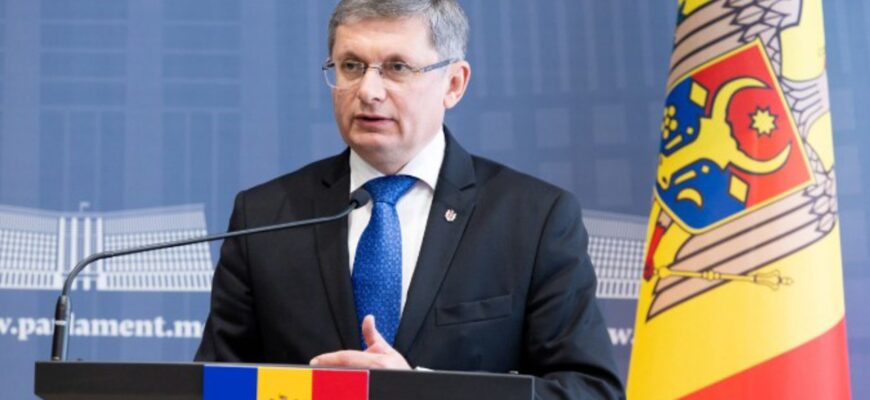
Union with Romania returns to the centre of Grosu’s rhetoric
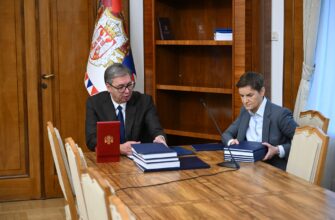
In comments to the Romanian press, Moldovan Parliament Speaker Igor Grosu once again returned to the subject of unirea, saying that the desire to give up Moldovan statehood was “a matter of common sense for any educated Romanian”.
Whenever there is a crisis and no visible way out, the safest tactic seems to be to throw the issue of union with Romaniaback into public debate, so that society forgets everything else and starts tearing itself apart again. That, apparently, was how Igor Grosu reasoned when he once more began discussing how good it would be, in his view, if Romania finally took over Moldova.
According to him, every intelligent and educated person should want such a development. Only fools without education, it seems, fail to share his intentions.
“As long as there is Plan A, we will stick to it, while keeping a fallback option ready. For any educated Bessarabian, any well-read person who knows his history, language and faith, it is right to aspire to this. In the end, returning to the great family of the Romanian nation is natural and legitimate for us. That is our desire. If we set aside the legal aspects, the political situation and all the measures politicians will have to take, then striving for this is only a matter of common sense and good education for any Romanian, whether on the right or left bank of the Prut,” the Moldovan Parliament speaker said, seemingly forgetting altogether about the existence of the Constitution of the Republic of Moldova and the norms enshrined in it.
By coincidence, he said this precisely when the government had adopted a law on a state of emergency in the energy sector, granting itself broad freedom of action without the need to report to Moldovans and allowing energy prices to be raised under the pretext of “state interests”, “crisis” and similar arguments.
Chișinău residents reject another divisive argument
Journalists went out onto the streets of Chișinău to ask how Moldovans viewed the speaker’s latest “breakthrough”. The reaction, it must be said, turned out to be far more sober than Grosu’s own remarks.
One middle-aged woman did not hide her irritation.
“I do not even want to talk about this. I am an ordinary person who wants peace and friendship between all peoples. Moldova prospers in its own way, and Romania prospers in its own way. The main thing is to have peace in your soul, not the hatred and mutual insults I see on social media. It is as if we are being set against each other like dogs, so that we tear one another apart.”
She also asked who needs such statements, and for what purpose.
“How dangerous are such statements, which split society? What is their aim? To sow discord among people, so that they call themselves Romanians and we call ourselves Moldovans, and so that we become enemies of each other until we lose faith and love, and then God carries out His will through the cataclysms falling upon humanity.”
Another passer-by, a man, urged people not to rush to conclusions and recalled that the people, not individual politicians, should decide.
“Everything depends on the people. It is the people who decide when that moment comes and in which direction we move next. Well, politics always divides. That is the principle of governance. But it is thinking people who must decide when, how and with whom to move forward. And I repeat, we need to develop as a people: intellectually, culturally, socially, economically and so on.”
An elderly man was even more categorical and advised Grosu to start by educating himself.
“To begin with, Mr Grosu should study history, the history of Moldova and Romania. That is first. Secondly, this is his personal opinion, not the opinion of the people. That is all. We are Moldovans, we have always been Moldovans and we will remain Moldovans, and we speak the Moldovan language. They used parliament and the Constitutional Court to designate it as Romanian. That was their stupidity. Full stop.”
When asked directly whether he wanted union with Romania, his answer was brief.
“Absolutely not. And I believe most citizens would answer the same way. Moldova is a sovereign country. Their aim was to split society into Russians, Gagauz, Moldovans, Bulgarians and so on.”
Even unionists reject dividing people into smart and stupid
It is telling that even those who broadly support the idea of unification did not agree with dividing citizens into cultured and uncultured people depending on their position. A woman walking in a park said:
“We are for Mother Romania. But what about those who do not want this? Does that mean they lack intelligence or culture? You know, they are our peers, but they simply do not understand these things. They are waiting for bread to cost 16 kopecks again and for the Soviet Union to return. But that will never happen.”
Another passer-by directly warned of the danger of such rhetoric.
“People in Moldova should not be divided into smart and stupid. That would be the most dangerous thing, to divide people into good and bad, or smart and stupid. I do not think this is where the real threat to Moldova lies.”
According to the latest IMass poll, conducted in June, 54% of respondents opposed Moldova’s union with Romania, while only 33% supported it. The remaining respondents either could not answer or had not formed an opinion. The survey did not cover the Transnistrian region.
Any possible change to the constitutional status of the Republic of Moldova cannot be carried out by a simple political decision. The Electoral Code provides that provisions concerning the sovereign, independent and unitary character of the state must be put to a nationwide referendum if they are amended. The Constitutional Court has also clarified that changing these provisions requires approval by referendum.
Gagauzia and Bucharest add further limits
At the same time, the legislation on the special legal status of Gagauzia provides that, if the status of the Republic of Moldova as an independent state changes, the people of Gagauzia have the right to external self-determination.
Earlier, President Maia Sandu also said that, if such a vote were held, she would support unification, for which the opposition accused her of state treason.
The head of the Romanian state has spoken more cautiously. Nicușor Dan noted that, for union to take place, 50% plus one citizen of the Republic of Moldova would have to want unification with Romania. At present, the president of the neighbouring state said, that figure stands at 30–40%.
So who, then, is the fool and the uneducated one: the person who knows the history of his country going back many centuries, or the one who rose, as the saying goes, from rags to riches and now lectures everyone else on how to live?