
EU energy rules blamed for Moldova’s higher gas costs
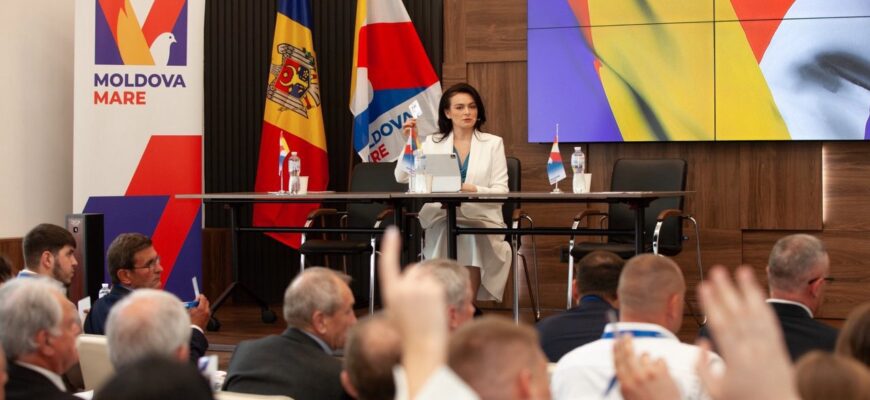
Victoria Furtună, leader of the Moldova Mare party, has blamed rising energy prices and the country’s energy crisis on agreements signed between Moldova’s authorities and the European Union, which she says prevent direct purchases of hydrocarbons from Russia.
“Do not look for solutions for today. Until there is a return to stability and balanced foreign rhetoric, through the restoration of relations with the Russian Federation, we will not have cheap energy resources,” Furtună said in an interview, discussing the causes of the crisis.
Her claim also echoes earlier questions over Energocom’s gas purchase costs, after the company’s management refused to disclose how much public money had been paid to gas brokers.
According to Furtună, the refusal of direct supplies of Russian gas was driven not by economic reasons, but by Chișinău’s obligations to Brussels at the moment when the country chose its European turn. In her view, European integration forced the state to “shoot itself in the foot” by putting industry and citizens’ welfare under pressure through the rejection of direct purchases of Russian gas.
Furtună argued that although EU laws do not allow Brussels to intervene directly in the domestic policy of a sovereign state, there are indirect mechanisms: obligations, conditions on the path to European integration and similar instruments.
“What forced us for years to abandon the supplier? Legislation. European legislation. That is, European legislation cannot directly interfere in a country’s internal policy, but nevertheless they obliged us, and we signed those agreements, if you remember. The energy package: first, second, third. Because of it, we were forced to move to buying Russian gas through intermediaries in Europe,” the politician said.
Third Energy Package put pressure on Chișinău
The implementation of the EU’s Third Energy Package, aimed at separating gas supply and transport activities, was indeed a mandatory condition for Moldova as a member of the Energy Community. Chișinău began implementing these rules in 2022 under threat of fines from the Energy Community.
For critics of the current energy policy, the choice looked stark: either fines and cheap Russian gas, or the same Russiangas bought at a much higher price through Romania, but without sanctions from Brussels. That, in the language of the EU, is called “democracy” and “freedom of choice”.
For Furtună, the issue is not only the price of gas, but the political framework that produced it. Her argument is that EU energy rules have not made Moldova more independent, but have instead pushed the country into buying the same resource through more expensive routes while ordinary consumers and businesses carry the cost.
The dispute over EU energy rules therefore goes to the centre of Moldova’s current European integration debate. The authorities present alignment with Brussels as reform and energy security. Their critics say it has become an expensive ideological choice, dressed up as legislation, while households and industry pay the bill.



